What Is Basement Waterproofing?
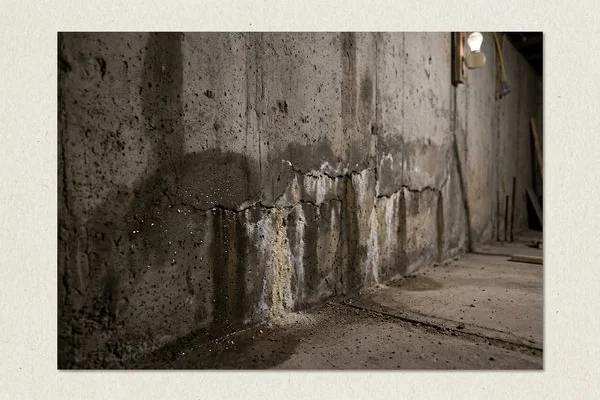
Basement waterproofing in Toronto is the process of stopping water infiltration through foundation walls and floors using a managed interior drainage system. Toronto’s heavy Leda clay soil holds moisture tightly against foundation walls year-round, and when that hydrostatic pressure exceeds the capacity of the original weeping tile (in most pre-1980 homes this is aged clay pipe), water forces its way through the wall-floor cove and into your basement.
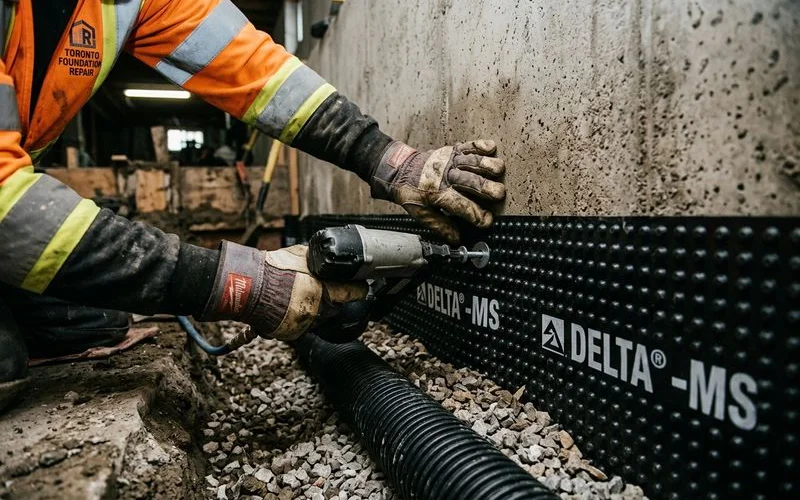
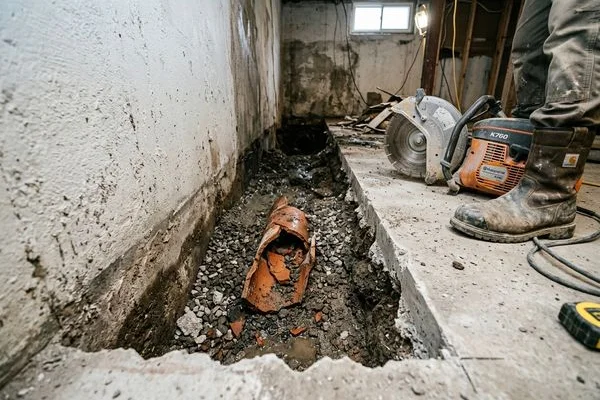
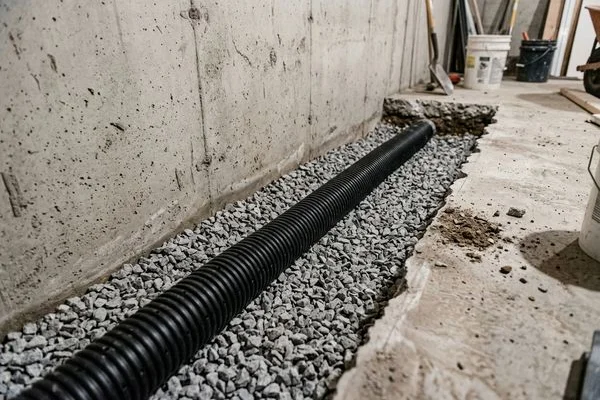
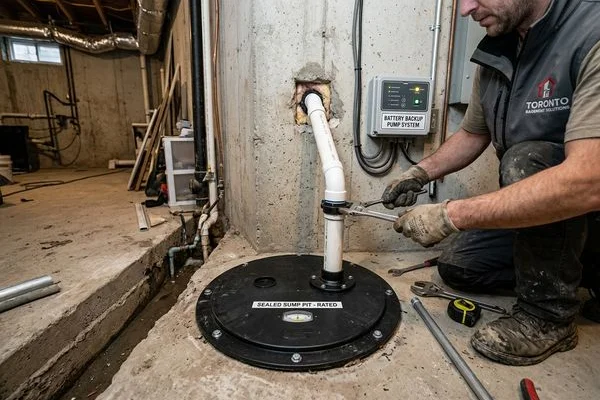
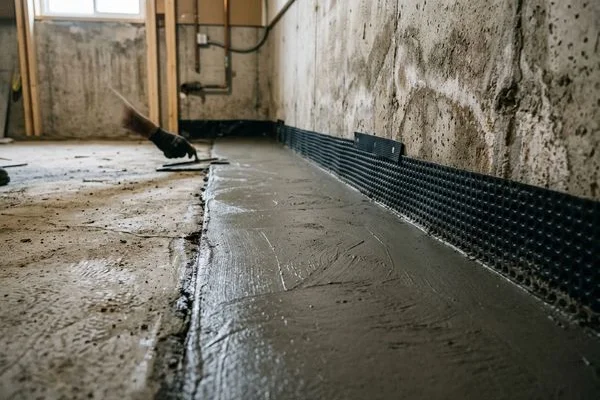
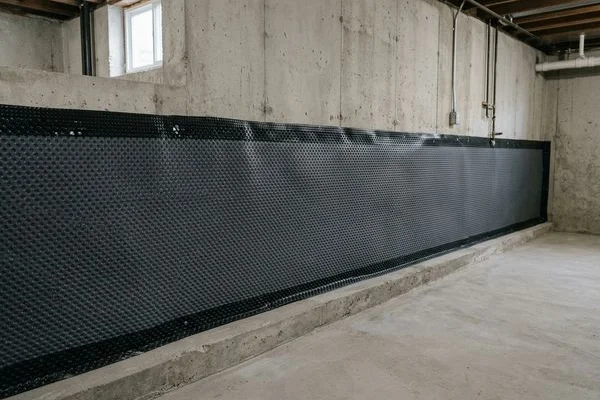
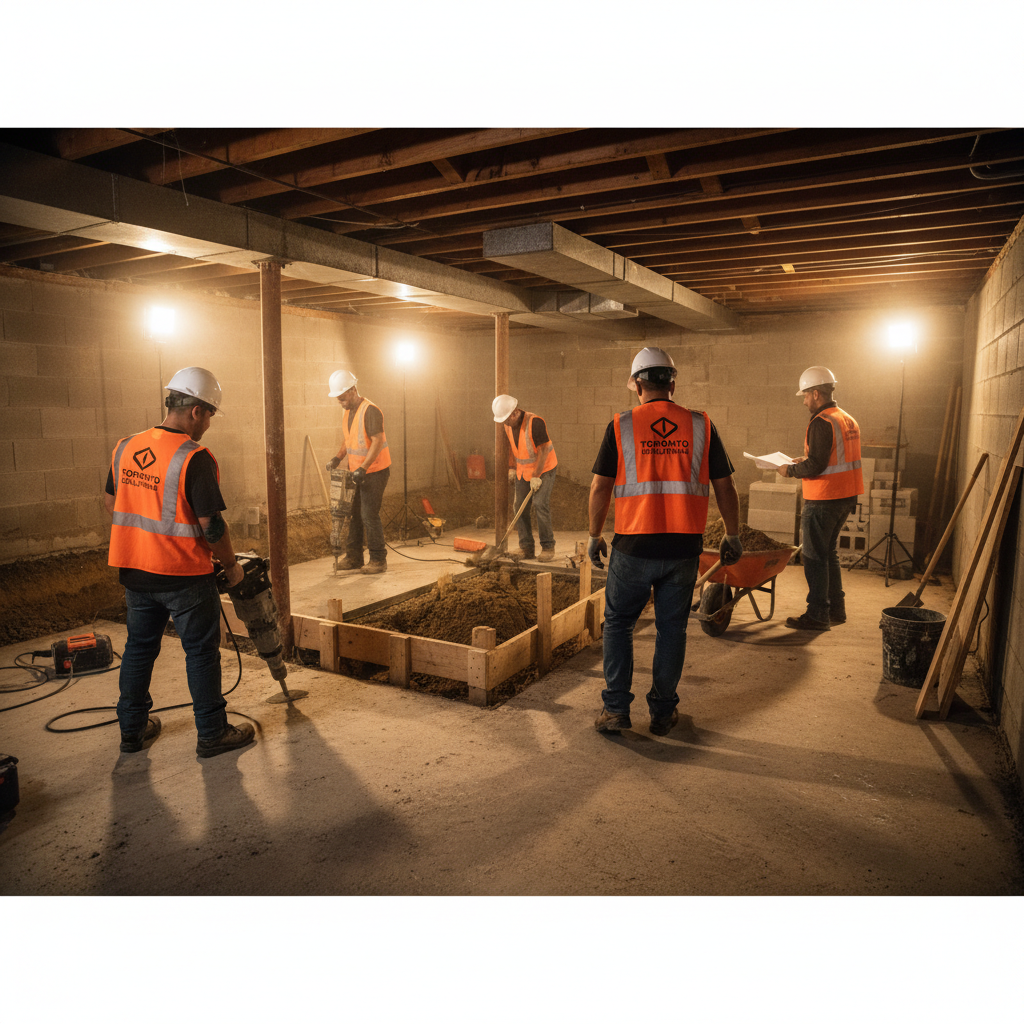
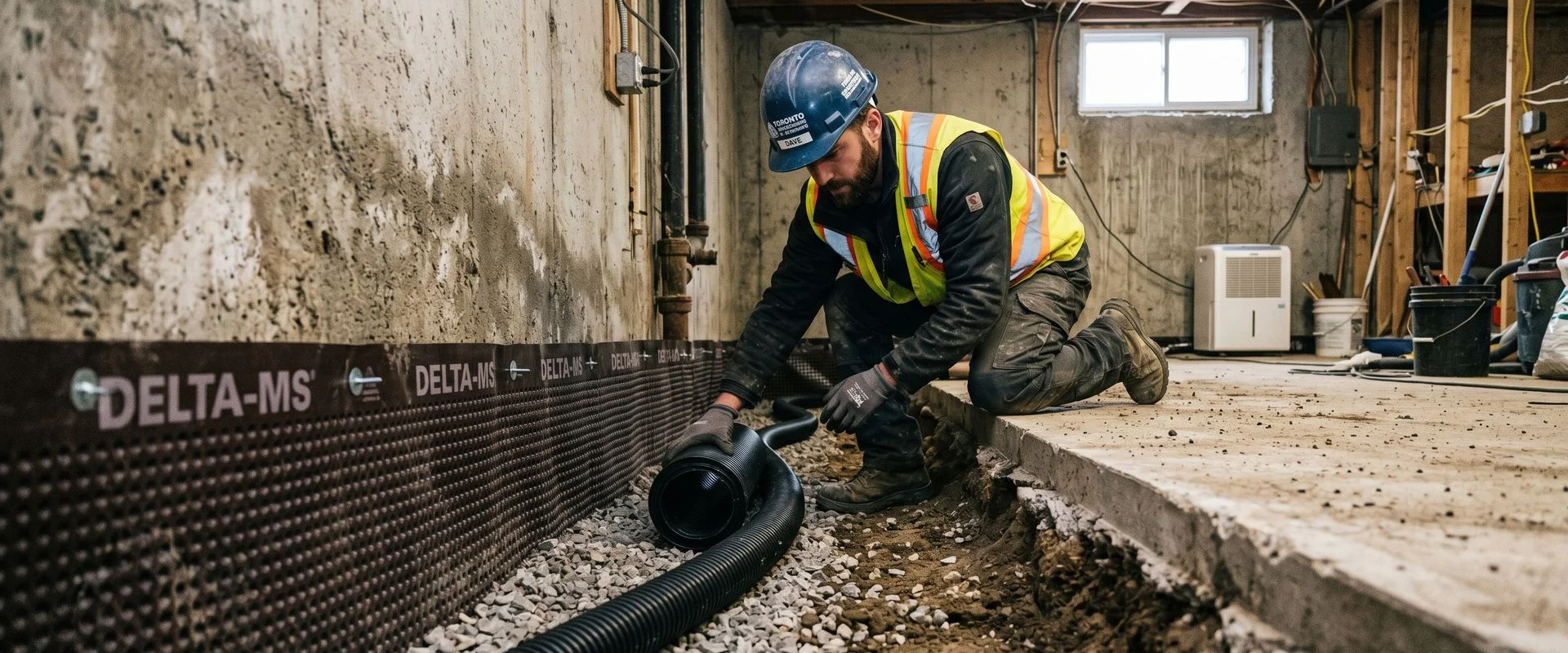
Interior basement waterproofing solves this from the inside. The crew saw-cuts the concrete slab along the perimeter, excavates a 12-18 inch trench, and installs a new perforated weeping tile in clean crushed gravel. A dimpled air-gap membrane goes against the foundation wall, channelling any residual seepage down into the new drainage system. Everything flows to a sealed sump pit in the lowest corner of the basement, where a high-capacity pump discharges the water away from the foundation. Finally, the slab is restored to its original elevation with a smooth concrete pour.
Most Toronto homes built before 1975 rely on original clay weeping tiles that have long since cracked, clogged with root intrusion, or collapsed from ground settlement. Replacing them from the inside avoids the enormous cost and disruption of exterior excavation: no driveway, no landscaping, no patio at risk. We routinely combine basement waterproofing with underpinning in a single project, which means one open trench serves both the new footings and the new drainage system, one concrete pour closes everything, and one warranty covers the complete assembly.
When You Need Interior Waterproofing
You might be wondering if a full waterproofing system is actually necessary for your home. Timing your upgrade correctly can save you from a major flooding disaster. Spring thaw cycles and intense autumn rainstorms put massive stress on aging Toronto foundations.
Our technicians look for a few key warning signs during an inspection. A musty smell or visible water pooling clearly indicates a failing system. You need interior waterproofing when:
- Water seeps through the wall-floor cove during heavy rain or the spring snow melt.
- Visible efflorescence (white mineral deposits) appears low on the basement wall.
- The original weeping tile is made of clay, is unverified, or is older than 50 years.
- You are planning to finish the basement and need a guaranteed dry envelope before drywall goes up.
- You are combining the work with underpinning to maximize efficiency and cost savings.
When to Skip a Full Perimeter System
Not every leak requires digging up your entire basement floor. Sometimes the issue is localized and easily fixed.
Our team will always tell you if a simpler solution makes more sense. You probably do not need interior waterproofing when:
- The water source is above ground, such as a flooding window well, poor surface grading, or a blocked downspout.
- The leak originates from a single, isolated foundation crack.
- This isolated issue is a perfect candidate for a crack injection repair, rather than a full trenching job.
- The basement is already completely dry and you just want preventative work.
- The return on investment for a dry basement is simply not high enough to justify the expense.
What’s Included in the Fixed Price
A clear, detailed quote gives you peace of mind before the project begins. Professional installation ensures your system functions flawlessly for decades.
We write out every single deliverable line-by-line so there are zero surprises. The standard waterproofing packages feature industry-leading materials. The High-Density Polyethylene (HDPE) membranes are incredibly durable. Every interior waterproofing project includes the following core components:
- Saw-cut and excavation of the slab perimeter, typically measuring 12 to 18 inches wide.
- New weeping tile encased in clean, three-quarter-inch crushed gravel.
- Dimpled air-gap membrane (Delta MS or a premium equivalent) installed on the inside foundation wall up to grade.
- Sealed sump pit with a check valve and discharge line, specifically sized for Toronto’s high water table.
- Slab restoration poured to the original elevation and finished with a clean broom texture.
- Dust isolation wall erected between the basement work zone and your upstairs living area.
- End-of-day site sweep to guarantee your home stays clean and safe.
- Final inspection accompanied by our workmanship warranty handover.
Premium Material Specifications
The products installed handle extreme water volume easily. The Delta MS membrane features an 8-millimetre studded profile. This specific design creates a massive drainage capacity of 2.25 litres per square meter.
Our suppliers back these premium materials with a 30-year product guarantee. Certain custom additions will appear separately on your estimate. If your scope adds a battery-backup sump pump, a backwater valve, or foundation crack injection, you will see exactly what each piece costs.
Toronto Basement Flooding Protection Subsidy
Upgrading your home’s flood defenses just became much more affordable. The City of Toronto recently announced massive updates to its rebate program. You can save thousands of dollars on essential plumbing upgrades.
Our staff handles the complicated municipal paperwork for you. The City of Toronto is increasing the maximum subsidy from $3,400 to an impressive $6,650 as of May 1, 2026. This new program even includes up to $300 in coverage for battery backup systems.
Understanding the 2026 Subsidy Limits
You qualify for these funds when your project includes a backwater valve, foundation drain disconnection, or a new sump pump. The rebate process requires a city inspection to verify the completed work.
Our project managers pre-fill the application and coordinate this inspection on your behalf. You never have to chase down city forms or deal with bureaucratic delays.
| Eligible Upgrade | Previous Maximum Rebate | New 2026 Maximum Rebate |
|---|---|---|
| Sump Pump Installation | $1,750 | $2,240 |
| Backwater Valve | $1,250 | $1,600 |
| Battery Backup System | Not Covered | $300 |
For a deeper walk-through of the subsidy and exactly which work qualifies, see our detailed Toronto Flooding Subsidy guide.
Combined With Underpinning vs Standalone
Are you trying to decide between standalone waterproofing and a full basement transformation? Standalone interior waterproofing systems in Toronto typically cost between $70 and $150 per linear foot. Upgrading both systems at the same time is the most financially smart decision.
Most older Toronto homes that need structural underpinning will also require waterproofing within the next ten years. Bundling the two services creates incredible economies of scale.
Our combined approach saves you real money by eliminating redundant labor.
- One open trench serves both the new footings and the new weeping tile, generating 15% to 25% in direct savings.
- One slab pour is required instead of two separate concrete finishing jobs.
- One engineered design covers both the structural enhancements and the complex drainage details.
- One warranty covers the entire system from end to end.
The Perfect Renovation Sequence
Planning the sequence of your renovation is critical to staying on budget. A poorly timed drywall installation can be ruined by a hidden foundation leak.
We coordinate all the heavy lifting under one dedicated project manager. If you are already considering basement finishing or buil