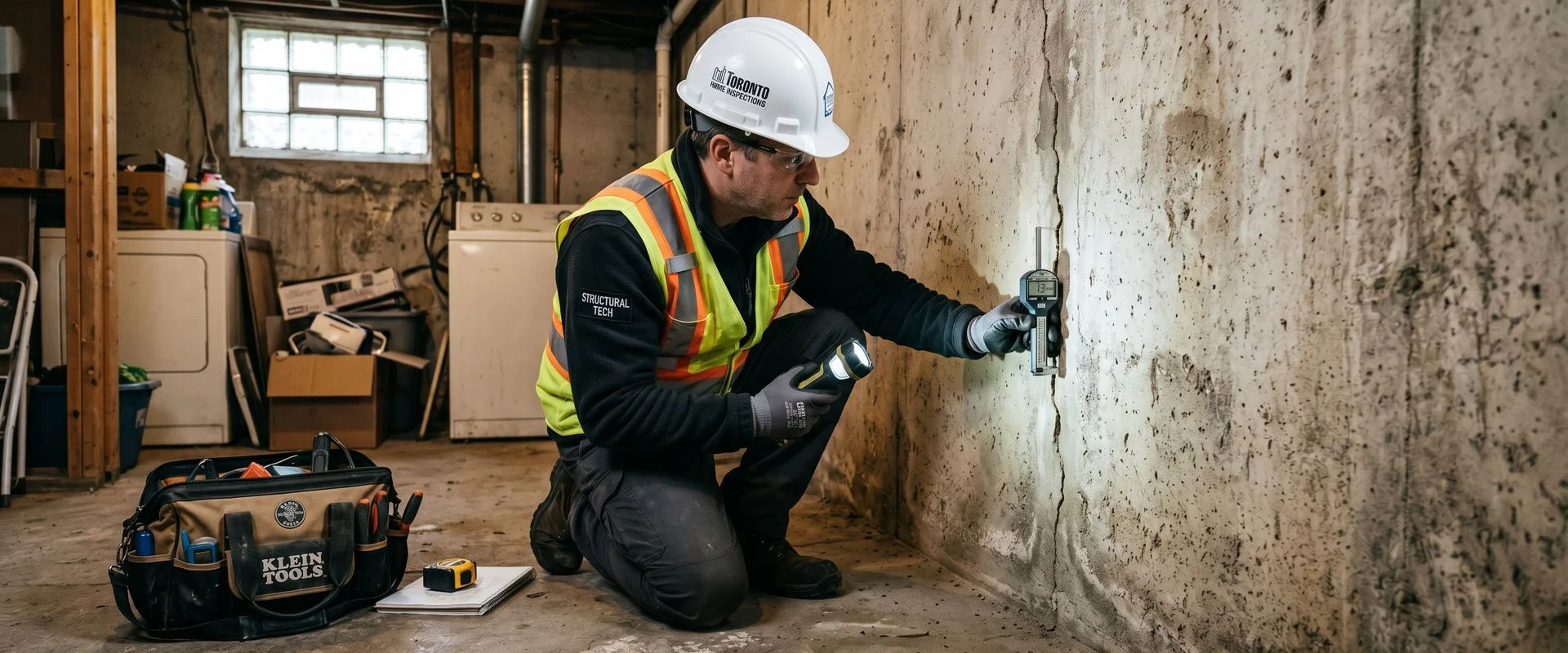
Primary Service

Toronto Basement Underpinning: Basement Lowering, Floor Excavation, and Concrete Underpinning for Residential & Commercial

At Toronto Basement Underpinning, our basement lowering service covers full-perimeter mass excavation, pin-by-pin concrete underpinning to engineered footing depths, new concrete floor pour, and complete slab restoration - all under a fixed-price contract that includes architect drawings, structural engineer stamp, and City of Toronto building permit. Toronto's pre-1960 housing stock was built with 6-foot basement ceilings never intended for living space, and basement lowering converts that dead storage into legal, rentable floor area. A standard Toronto basement lowering adds 12-18 inches of usable ceiling height and typically enables legal second-suite certification.

Basement lowering projects in Toronto run $20,000-$50,000 depending on foundation depth, perimeter footage, soil condition, and whether waterproofing, plumbing rough-ins, and finishing are included in the same scope. Combining trades in one project saves $8,000-$15,000 compared to sequencing them separately. Every quote is fixed-price with no excavation surprises - we include a geotechnical site assessment and review the existing foundation before committing to a number. Typical crew-start-to-slab timeline is 3-5 weeks.

Toronto Basement Underpinning provides basement lowering and underpinning across Toronto and the Greater Toronto Area, including North York, Scarborough, Etobicoke, Mississauga, Brampton, Markham, Vaughan, and Richmond Hill.

Typical project: $20,000 -$50,000 per project installed

4.9 on Google (49+)
Free Estimate Within 2 Hours
Licensed & Insured
20 Active Crews

Toronto Basement Lowering - Gain 1-3 Feet of Ceiling Height

Most Toronto homes built before 1960 have basement ceilings between 6 and 6.5 feet. That height was never designed for living space - it was built for coal storage, mechanical equipment, and the occasional utility run.

Basement lowering changes that permanently.

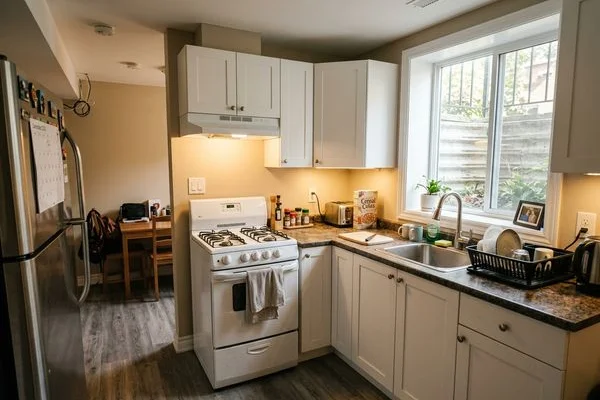
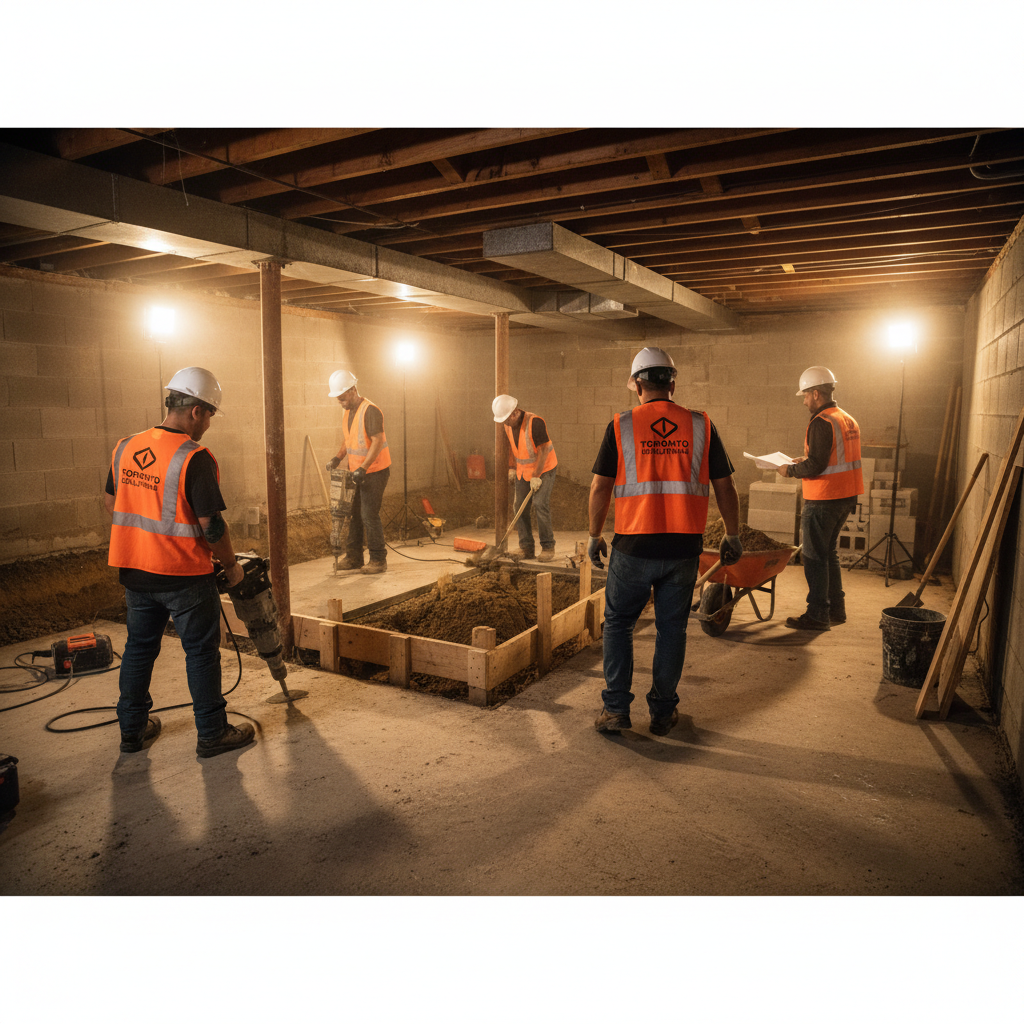
Our crew excavates below the existing slab and pours new concrete footings at a greater depth, converting a cramped utility space into 8 feet of livable ceiling clearance. The same project that gives you ceiling height also opens the floor for waterproofing, plumbing rough-ins, and finishing - trades that cost significantly less when bundled into one open-floor scope.

What Basement Lowering Involves

Basement lowering is a structural alteration under the Ontario Building Code. Every project requires a building permit and engineered drawings before a shovel goes in the ground.

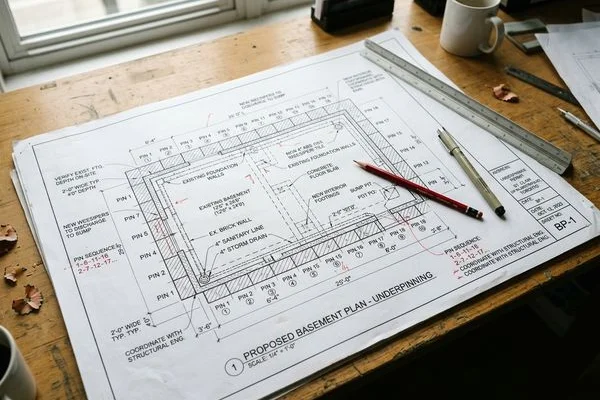
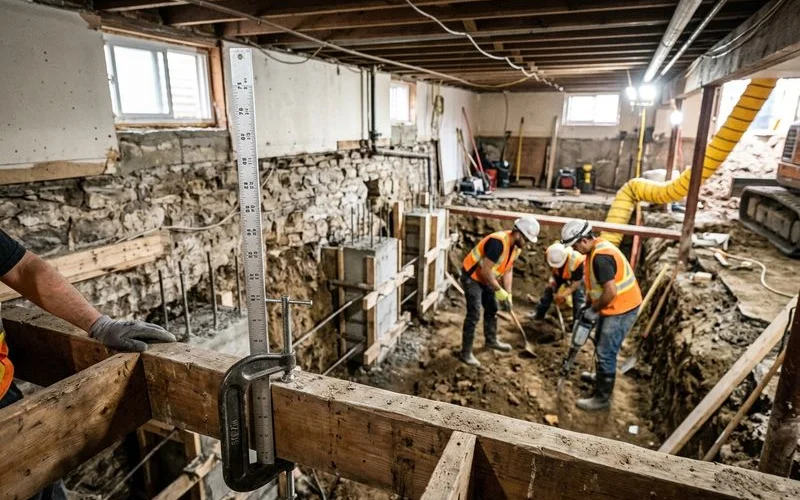
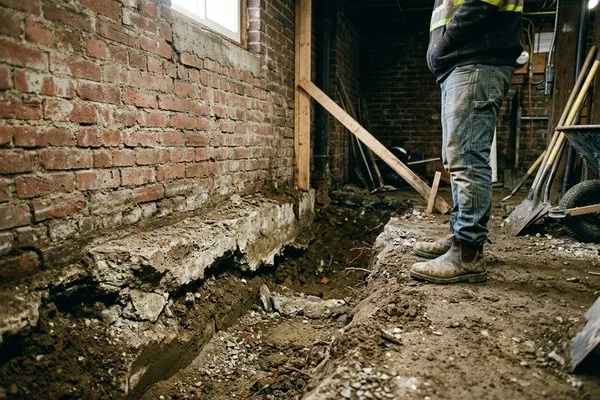
The construction sequence follows a strict pin-by-pin pattern required by the structural engineer:

  • The perimeter is divided into sections (pins), typically 4-5 feet wide
  • Each pin is excavated individually, never more than two adjacent pins open at once
  • A new concrete footing is poured and cured in each pin before the next one opens
  • The process rotates around the full perimeter until all pins are complete
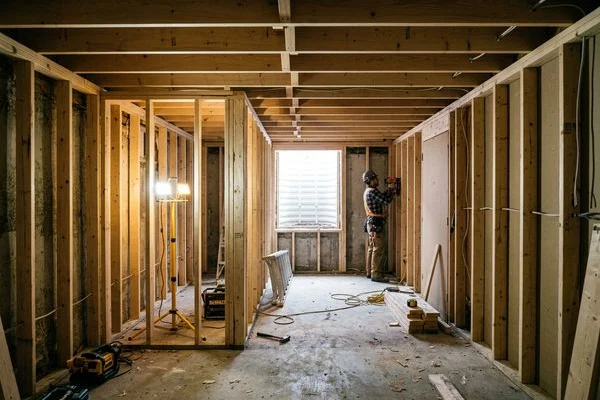
  • A new reinforced concrete floor slab is poured over the full basement area

This sequential pinning method keeps the building fully supported at every stage. It is slower than open excavation but it is the only method that satisfies Ontario Building Code Section 9.13 for buildings with occupied floors above.

How Much Does Basement Lowering Cost in Toronto?

Most Toronto basement lowering projects run $20,000-$50,000 installed. The range is driven by four main variables:

VariableLower EndHigher End
Foundation perimeterSmall detached (80 ft)Large detached or semi (140+ ft)
Existing foundation typePoured concreteRubble stone or brick
Soil conditionsSandy tillLeda clay or high water table
Bundled scopeLowering onlyLowering + waterproofing + rough-ins

A standard Toronto detached home in East York, Leslieville, or the Annex typically lands between $25,000-$38,000 for excavation, underpinning, and a new concrete floor. Semi-detached homes with party-wall engineering add $3,000-$8,000.

The most cost-effective approach is bundling. Interior waterproofing added during the same project costs $8,000-$18,000 incremental. Bathroom rough-ins cost $3,500-$7,000 incremental. The same work as a standalone project after the floor is poured would cost $15,000-$30,000 more in slab cutting, excavation, and concrete restoration.

Toronto Neighbourhoods - Basement Lowering Demand

Established Toronto neighbourhoods with pre-1960 housing stock drive the highest volume of basement lowering projects. The combination of low original ceiling heights, high property values, and strong secondary-suite rental demand makes the economics compelling.

Highest-volume Toronto neighbourhoods:

  • The Annex and Seaton Village - Victorian and Edwardian detached stock with rubble stone foundations common; underpinning converts rubble to engineered concrete footings
  • Leslieville and Riverdale - Pre-1940 semi-detached housing; party-wall sequential pinning is standard on these projects
  • East York (Leaside, Thorncliffe) - 1940s-1950s bungalows with 6-foot ceilings; legal apartment conversions drive most projects
  • Forest Hill and Rosedale - Larger detached homes; ceiling height gains often paired with high-end finishing and legal suite certification
  • High Park and Bloor West Village - Mixed pre-war stock; high demand for legal basement apartments given proximity to transit

North York, Etobicoke, and Scarborough account for a significant share of volume as well, particularly in post-war bungalow neighbourhoods where 6-foot ceilings are standard.

Basement Lowering vs Bench Footing

Toronto homeowners comparing options often ask about bench footing as a lower-cost alternative.

Bench footing creates a raised concrete ledge around the interior perimeter and excavates the central floor only. It is faster, cheaper by $5,000-$12,000, and does not require the same level of engineering review. The tradeoff is usable space: you lose 18-24 inches of width on every wall, which reduces the effective floor area and creates compliance issues for legal apartment minimum room dimensions.

Full underpinning excavates below the existing footing and pours a new footing at depth. The full floor area is usable at the new ceiling height. For legal second suites, most Toronto building inspectors require full underpinning to meet minimum bedroom dimension requirements.

The right choice depends on the existing ceiling height, target use, and room dimensions. We walk through both options during the site assessment so you can make an informed decision before committing.

Permits and Engineering - What Is Required

Every Toronto basement lowering project requires:

  • Architect drawings - site plan, existing and proposed foundation sections, dimensioned floor plan
  • Structural engineer drawings - footing design, reinforcement schedule, pin sequencing diagram, Ontario Building Code Section 9.13 sign-off
  • City of Toronto building permit - standard plan review runs 4-8 weeks; projects requiring Committee of Adjustment add 10-14 weeks
  • City inspections during construction - footing, pre-pour, and framing inspections are mandatory before each stage proceeds

We manage the full permit process in-house. The homeowner signs the permit application as the property owner and reviews the final drawings. Everything else - architect coordination, structural engineer stamp, city submission, inspection scheduling - is handled by our project coordinators.

Permit fees are typically $1,000-$2,500 for the City of Toronto and are included in our fixed-price quote.

Combined With Waterproofing and Finishing

The single best time to waterproof a Toronto basement is during an underpinning project. The floor is already open, the perimeter trench is already dug, and the waterproofing system integrates directly with the new footings under one warranty.

Interior waterproofing during underpinning typically adds $8,000-$18,000 to the project cost. The same waterproofing as a standalone project after the slab is poured adds $12,000-$25,000 because the floor must be saw-cut, excavated, and restored a second time.

Similarly, bathroom and kitchenette plumbing rough-ins are best installed during the open-floor phase. Underground rough-ins during underpinning cost $3,500-$7,000. The same rough-in after the slab is poured costs $8,000-$14,000.

We scope all three trades - lowering, waterproofing, and finishing rough-ins - under a single fixed-price contract. One project manager, one warranty, one city inspection process.

How do I know if my basement can be lowered?

Any basement can be lowered provided the soil conditions, water table, and adjacent structures permit the required footing depth. The limiting factors are: high water table (common near the lakeshore and ravine systems), Leda clay with high sensitivity (requires careful excavation sequencing), and party walls on semi-detached homes (requires party-wall agreement and sequential pinning). Our site assessment identifies all three before we quote.

Does basement lowering affect my neighbours?

For detached homes with no shared walls, the impact on neighbours is minimal - standard construction noise and occasional crew parking. For semi-detached and row homes, the shared party wall is monitored with settlement pins during construction. We notify adjacent property owners before work starts and provide a contact for any concerns. Party-wall agreements are standard practice and are included in our project documentation.

Can I stay in the house during basement lowering?

Yes. Basement lowering is an exterior-access project in most cases - the crew enters through the basement door or an exterior window well. The main floor and upper floors remain fully accessible throughout. Expect noise during working hours (7am-6pm). Dust penetration is controlled with temporary plastic sheeting at the basement stair entry.

What happens if they find unexpected soil conditions?

We include a geotechnical soil assessment for all projects where soil condition is a factor. For most Toronto projects in known soil zones, a visual inspection and existing geotechnical data from the City are sufficient. If unexpected conditions arise during excavation - buried debris, unknown utilities, or soil bearing significantly below design assumptions - we stop work, reassess, and present options before proceeding. Fixed-price contracts include a defined scope with a defined exclusion process for genuine unknown conditions.

Is there a resale value increase from basement lowering?

Toronto real estate appraisers typically attribute $40,000-$80,000 in additional value to a completed legal basement apartment. The underpinning project that enables it costs $20,000-$50,000. Certified legal suite rental income in Toronto runs $1,800-$2,800 per month depending on neighbourhood and suite size. Most Toronto homeowners recover the underpinning cost within 18-36 months from rental income alone.
What's Included

  • Full-perimeter mass excavation to engineered depth
  • Pin-by-pin concrete underpinning (Ontario Building Code Section 9.13)
  • Architect drawings and structural engineer stamp included
  • City of Toronto building permit coordination included
  • New concrete floor pour and full slab restoration
  • Waterproofing, plumbing rough-ins, and finishing available in same scope
  • Fixed-price contract with zero excavation surprises
  • WSIB certified crews, $2M liability

How Basement Lowering Works

Step 1

Site Assessment & Quote

We review the existing foundation, measure perimeter footage, and assess soil conditions. Fixed-price quote delivered within 48 hours of site visit.

Step 2

Drawings & Permit

Architect site plan, structural engineer footing details, and City of Toronto building permit submission. Standard plan review is 4-8 weeks.

Step 3

Excavation & Underpinning

Pin-by-pin perimeter excavation and concrete underpinning to engineered footing depths. City inspection at each stage before backfill.

Step 4

Floor Pour & Restoration

New reinforced concrete floor poured to grade, troweled smooth, and cured. Ready for waterproofing or finishing trades within one week.

Basement Lowering Project Gallery

Basement Lowering project 1
Basement Lowering project 2
Basement Lowering project 3
Basement Lowering project 4

See The Difference

Before Basement Lowering
Before
After Basement Lowering
After

For Your Basement Lowering

Fixed-Price With Permits Included

Every basement lowering quote includes architect drawings, engineer stamp, and city permit. No separate billing when the permit takes longer than expected.

20 Dedicated Crews

We run 20 underpinning crews across Toronto at any time. No subcontracting to unknown crews - same supervisors on every project.

Single-Contract Bundling

Waterproofing, plumbing rough-ins, and finishing can all be scoped under one contract and one warranty. Saves $8,000-$15,000 vs separate contractors.

Zero-Risk Warranty

Structural warranty on all underpinning work. If a pin settles or cracks within the warranty period, we repair it at no cost, no questions asked.

Get a Free Basement Lowering Estimate

Fixed price before work begins. Zero-risk warranty. Typical response: two business hours.

What Customers Say About Basement Lowering

“Leslieville semi-detached. The party wall made me nervous but TBU explained the sequential pinning method before we started. Six weeks start to finish on-site, permit included in the quote, ceiling went from 6'2 to 8 feet. Legal apartment is now rented.”

Marcus L.

Leslieville

“Annex Victorian - original rubble stone foundation. TBU converted the rubble perimeter to poured concrete footings during the lowering project and added interior waterproofing in the same scope. One quote, one crew, one warranty. Finished basement is now our main living space.”

Anita K.

The Annex

“North York bungalow. Needed 8-foot ceilings for a legal second suite. TBU handled the drawings, permit, excavation, underpinning, waterproofing, and bathroom rough-in under a single fixed-price contract. The bundling saved us at least $12,000 compared to the quotes we got from separate contractors.”

David C.

North York

Basement Lowering FAQs

How much does basement lowering cost in Toronto?
Most Toronto basement lowering projects run $20,000-$50,000 depending on perimeter footage, existing foundation condition, and soil type. A standard detached home in the Annex or East York is typically $25,000-$35,000 for excavation, underpinning, and new floor. Adding interior waterproofing runs $8,000-$18,000 more. Adding a legal bathroom rough-in adds $3,500-$7,000. All of these are most cost-effective when bundled in the same project since the floor is already open.
How long does basement lowering take in Toronto?
The on-site construction phase takes 3-5 weeks for a standard Toronto detached home. Add 8-14 weeks upfront for drawings preparation and City of Toronto plan review. Total timeline from first site visit to finished slab is typically 12-20 weeks. Projects requiring Committee of Adjustment hearings add another 8-12 weeks. We build your start date around a real permit approval timeline, not an optimistic one.
Do I need a permit for basement lowering in Toronto?
Yes, always. Basement lowering is a structural alteration under the Ontario Building Code - it changes the building's load path and requires a City of Toronto building permit with engineered drawings. Skipping the permit voids your home insurance for the work, makes the property legally unsellable until it is permitted retroactively (which typically doubles the permit fees), and triggers a stop-work order if the city becomes aware. We include permit coordination in every fixed-price contract.
How much ceiling height can I gain from basement lowering?
Most Toronto homeowners gain 12-24 inches of ceiling height. Pre-1960 Toronto homes typically have 6-foot basement ceilings. Lowering to 8 feet requires 24 inches of excavation below the existing slab. The maximum depth is determined by the water table, soil bearing capacity, and proximity to neighbouring foundations - our site assessment confirms what is achievable before you commit.
Can I lower my basement if I have a semi-detached or row home?
Yes, but it requires additional engineering. A shared party wall means the adjacent neighbour's foundation is affected by any underpinning below the shared wall. We use a sequential pinning method that temporarily shores the shared wall during excavation. Semi-detached underpinning in Toronto is common - we have completed dozens in Leslieville, East York, and the Annex. The process takes slightly longer and costs $3,000-$8,000 more than a detached home of the same footprint.
What is the difference between basement lowering and bench footing?
Basement lowering (mass excavation + concrete underpinning) removes soil below the existing footing and pours a new footing at a greater depth - gaining the full ceiling height across the entire floor area. Bench footing creates a raised concrete ledge around the perimeter and excavates the centre only - faster and cheaper but you lose 18-24 inches of usable width all the way around the room. For most Toronto legal apartment conversions, full underpinning is required to meet the minimum ceiling height across the full floor area.
Can basement lowering be combined with waterproofing and finishing?
Yes, and it is strongly recommended. The floor is already open during underpinning - adding interior weeping tile, a sump pit, and dimple membrane waterproofing costs a fraction of what it costs as a standalone project. Same for bathroom and kitchenette rough-ins. We can scope all three trades under one fixed-price contract with one warranty. Most of our Toronto projects include at least underpinning plus waterproofing.
What neighbourhoods in Toronto do you serve for basement lowering?
We serve all of Toronto and the Greater Toronto Area. Our highest-volume neighbourhoods for basement lowering are the Annex, East York, Leslieville, Riverdale, Forest Hill, High Park, and Little Italy - older detached and semi-detached stock with original 6-foot ceilings. We also serve North York, Etobicoke, Scarborough, and all 905 municipalities including Mississauga, Brampton, Markham, Vaughan, and Richmond Hill.

Free Tool

Toronto Underpinning Cost Estimator

Get a calibrated project range in 30 seconds. Underpinning, waterproofing, sump pump & finishing add-ons.

Use Estimator
Typical Response Time: 2 Hours

Ready For Basement Lowering?

Free engineered estimate within two business hours.

Zero-Risk Warranty Licensed & Insured 20+ Years Specialty