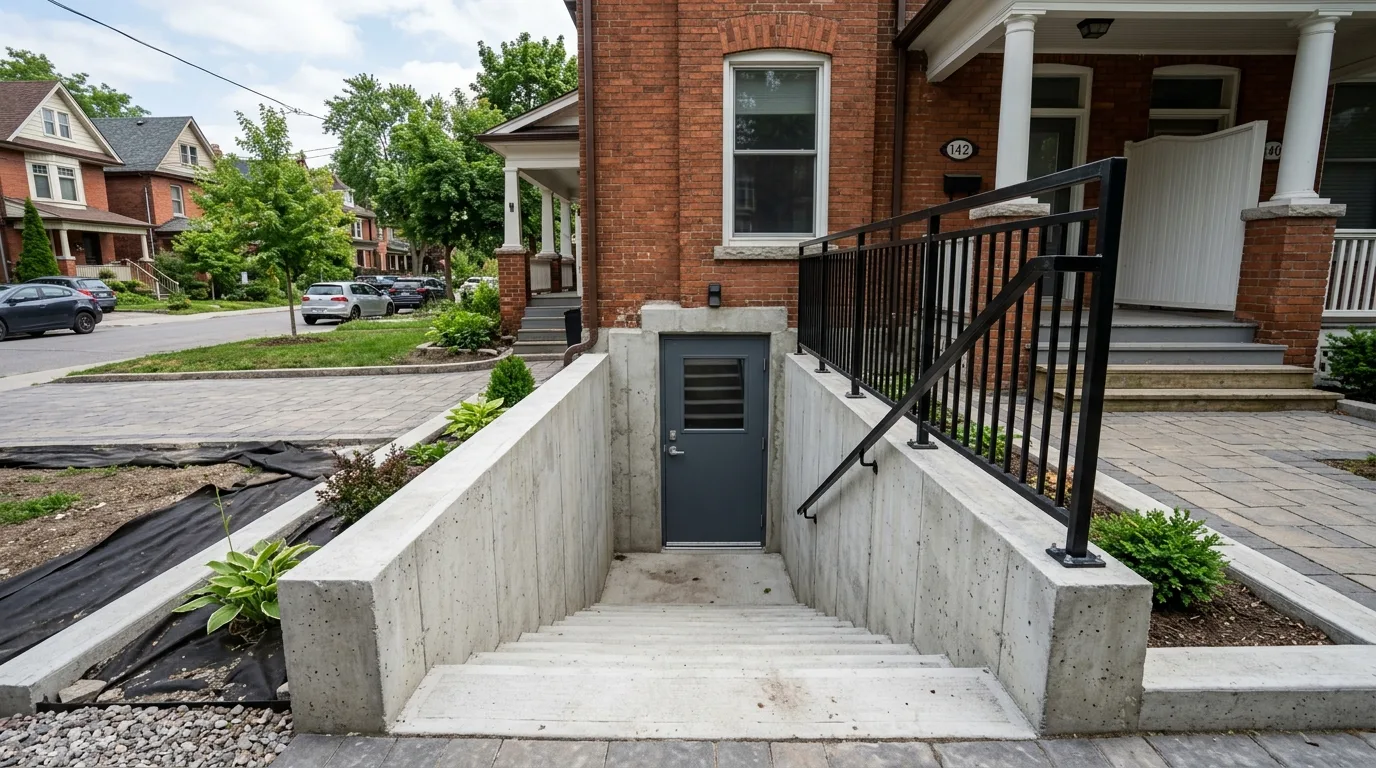
What Is a Basement Walkout?
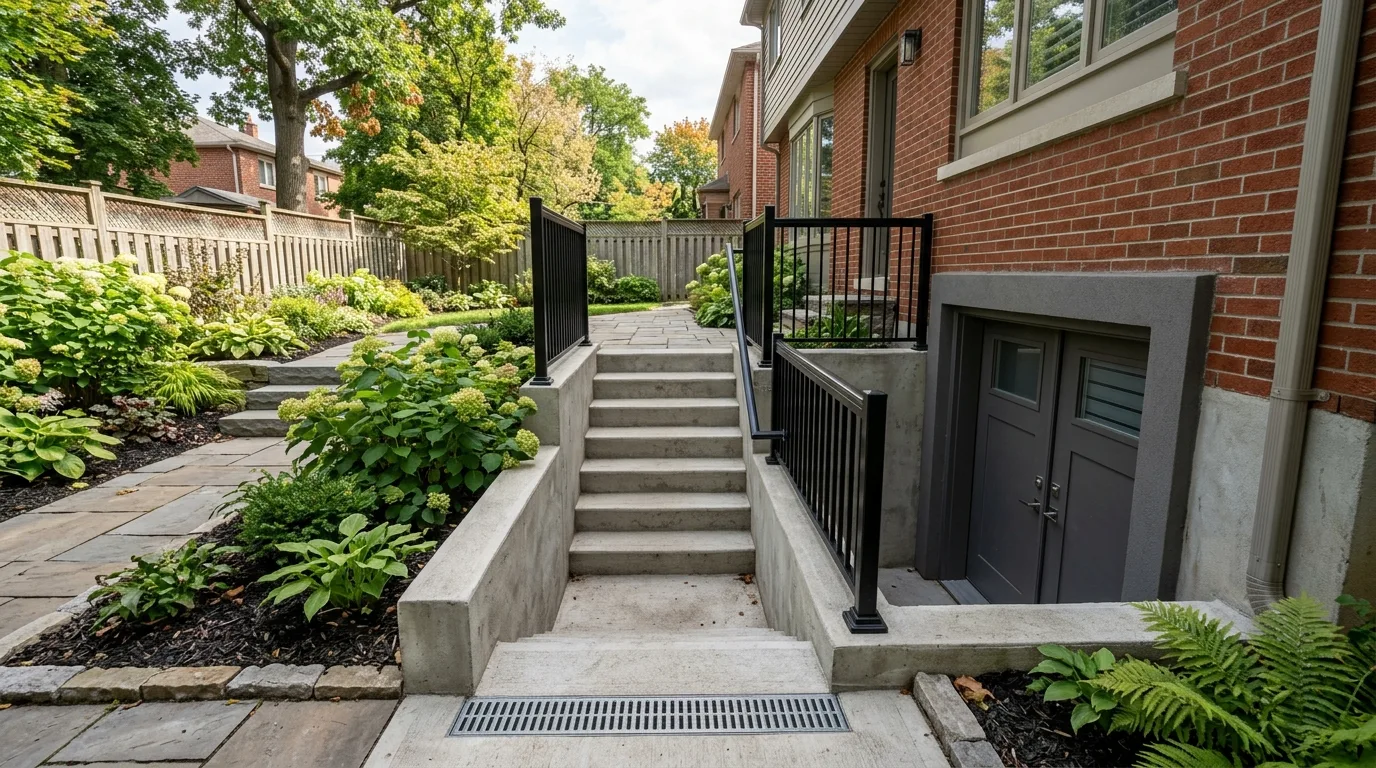
A basement walkout is a permanent exterior entrance created by cutting a door-width opening through the foundation wall and constructing a below-grade stairwell that connects the basement directly to the yard. The result is a self-contained access point that is fully separated from the main house entry, which is the defining feature of a legal basement apartment or in-law suite in Toronto.
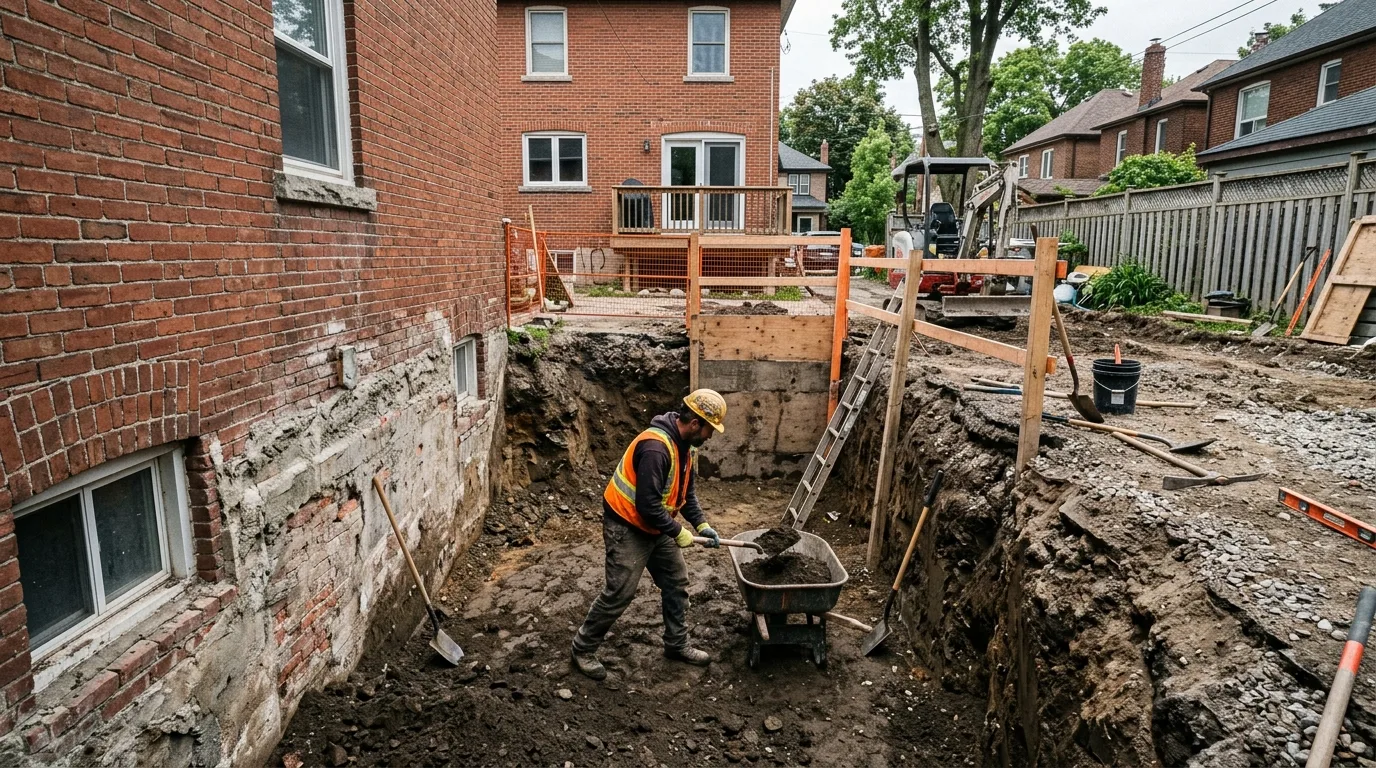
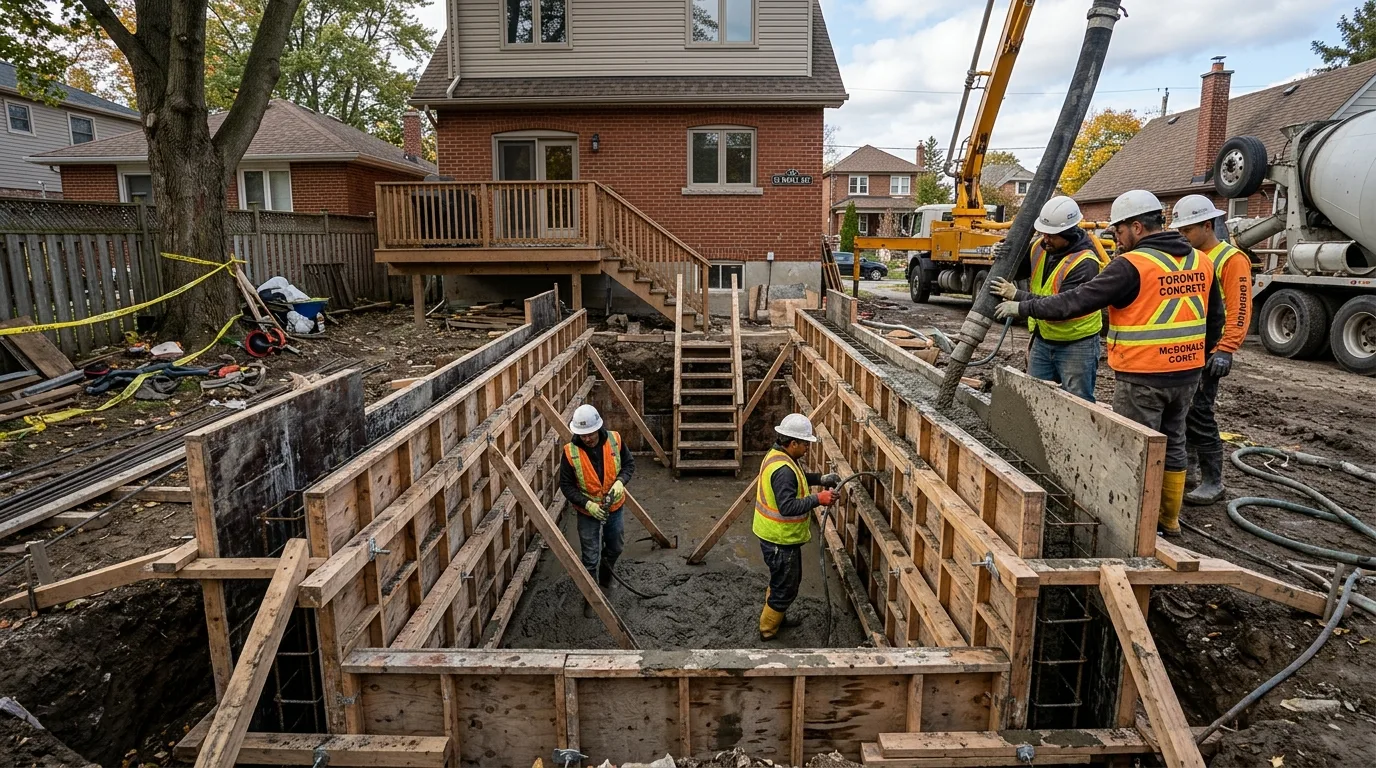
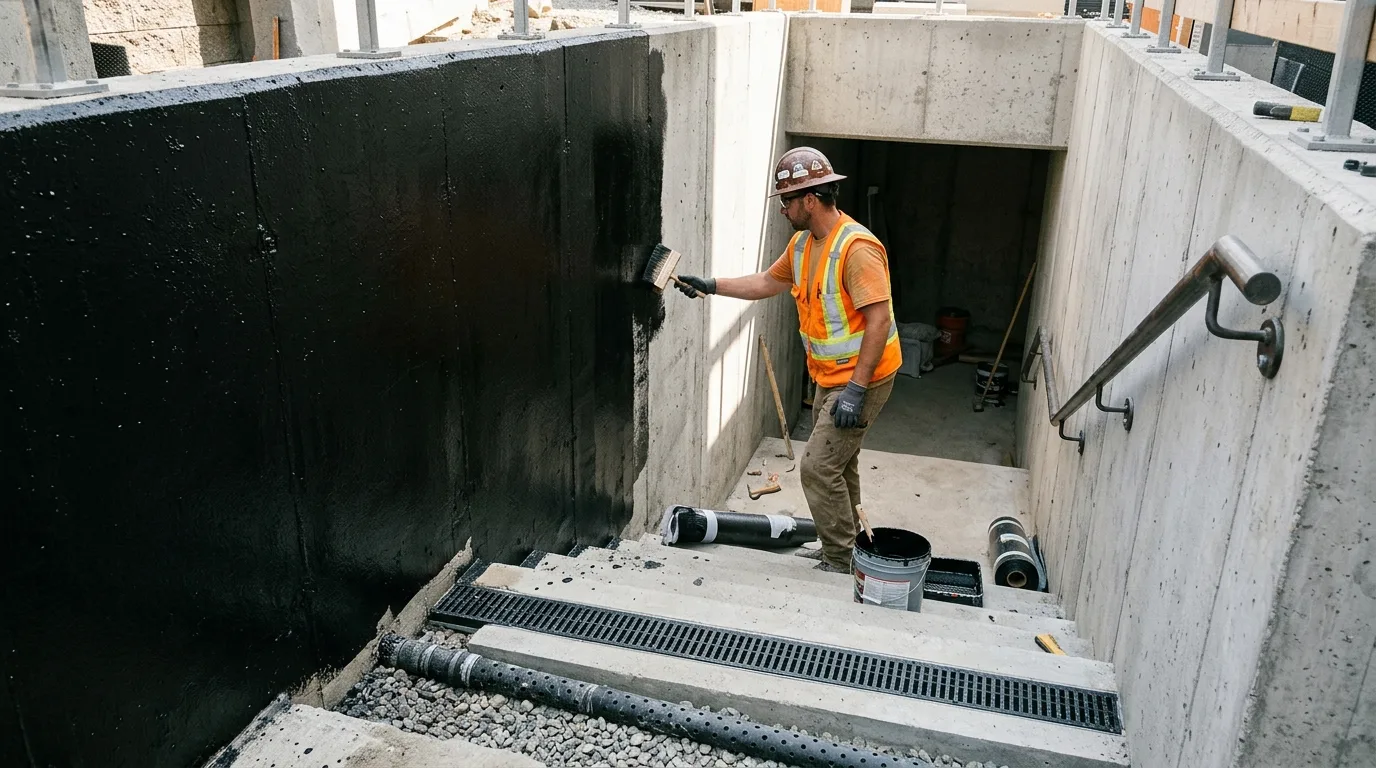
The scope covers everything involved in making that opening structurally sound and weathertight. Before any concrete is cut, a structural steel lintel is installed across the top of the planned opening to carry the wall load that the removed section was supporting. The exterior is then excavated to stairwell depth, retaining walls are formed and poured on both sides, the stairwell itself is constructed in concrete or steel, and a waterproofing membrane with a perimeter drainage channel protects the new below-grade surfaces from Toronto’s heavy spring melt and summer rain.
Every basement walkout in Toronto requires a City of Toronto building permit and engineer-stamped drawings. The structural work, drainage design, and door opening dimensions all need to be on approved drawings before a shovel goes in the ground. We include the drawings and permit coordination in every fixed-price quote so the number you see is the number you pay.
When a Basement Walkout Makes Sense
The most common reason Toronto homeowners add a walkout is to create a legal basement apartment. Ontario’s second-suite legislation allows a detached, semi-detached, or townhouse to contain a secondary unit, but a legal secondary suite requires a separate means of egress: in practice, a private entrance that tenants can use without passing through the main dwelling.
A walkout also makes sense when the finished basement is being used as a home office with client traffic, a gym or studio accessed from the backyard, a recreation room that kids access directly from outside, or a multi-generational suite where privacy and independence matter. In all these cases, the walkout replaces what would otherwise be an awkward shared hallway arrangement.
The project also makes sense as a standalone scope independent of any structural work. Not every Toronto home needs underpinning. If the ceiling height is already adequate and the foundation is solid, a walkout can be added without any other basement work: just the opening, the stairwell, and the drainage.
What’s Included in the Fixed Price
Our walkout scope is written as a complete deliverable, not as a base price with a long list of allowances and exclusions.
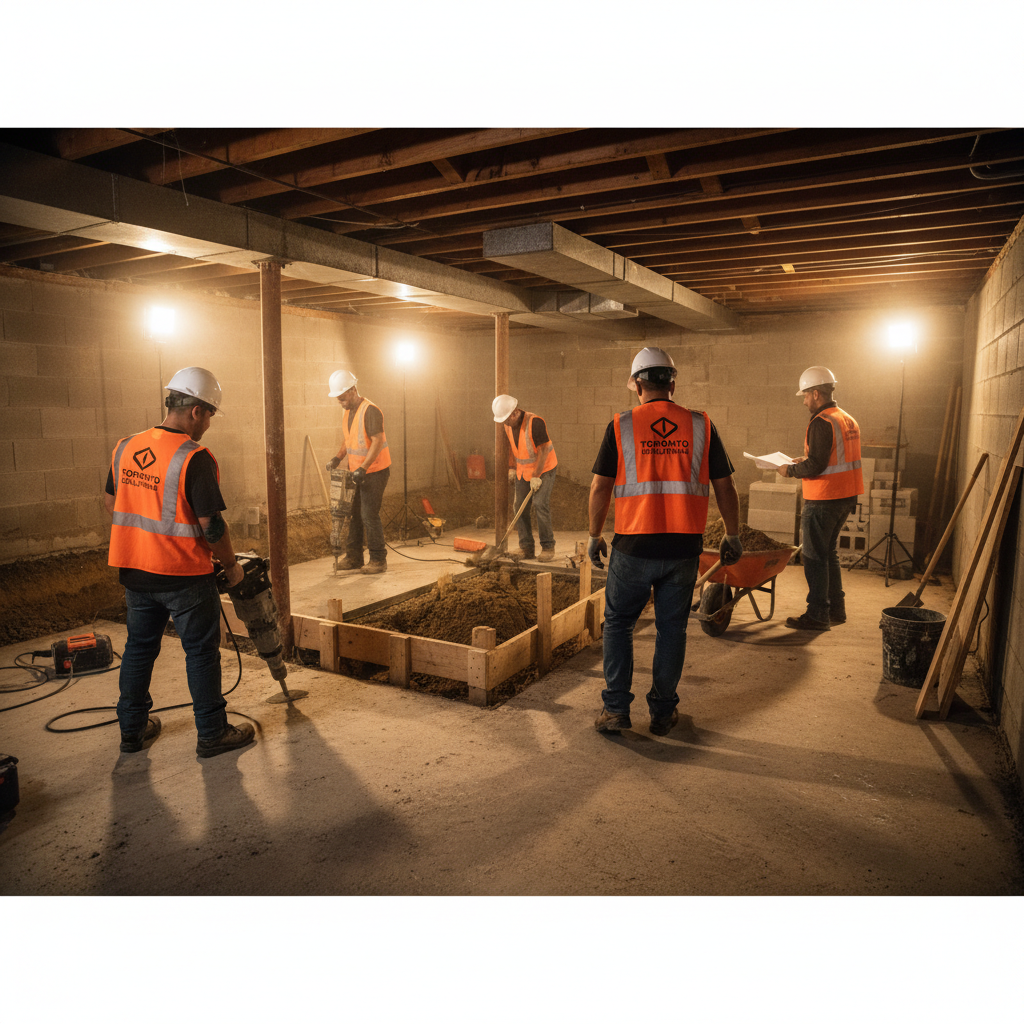
The foundation work includes sawcutting the opening to the door dimensions specified in the drawings, installing the structural steel lintel above the opening, and patching and waterproofing the perimeter of the new opening on the interior side. No exposed concrete edge or raw masonry is left untreated.
The exterior work includes excavating the stairwell footprint to the required depth, pouring a footing at the base of the stairwell, forming and pouring the retaining walls on both sides, and constructing the stair treads in concrete or steel plate depending on the design. Where an existing egress window is being replaced by the new door, the window well is removed cleanly as part of the scope.
The drainage work includes a perimeter channel at the base of the stairwell that collects water from the treads and retaining walls and directs it into the main drainage system. This is the most commonly skipped item on cheap walkout quotes, and the most consequential, because a stairwell without drainage floods in the first heavy rain.
The permit and engineering are included as line items, not presented as surprises after you have committed to the project.
What Is Not Included
The steel or fiberglass door itself is typically homeowner-supplied, which allows you to match your existing exterior hardware and finish. Interior landing finishing (flooring, drywall, paint) is outside the structural scope and priced separately if you are combining with a finishing contract. Any significant regrading of the exterior yard beyond the immediate stairwell area is assessed and quoted separately based on the site.
Cost Breakdown
Most Toronto basement walkout projects land between $8,000 and $18,000. The range is driven by four variables: excavation depth, stair configuration, soil conditions, and whether the project runs alongside underpinning or as a standalone.
| Scope Variable | Lower End | Upper End |
|---|---|---|
| Stairwell depth | 4 ft below grade | 7 ft below grade |
| Stair configuration | Straight run, 4 treads | L-shaped run, 7+ treads |
| Soil conditions | Stable fill | Sandy or high water table |
| Project context | Combined with underpinning | Standalone walkout |
Combining the walkout with an underpinning project typically saves $1,500 to $3,000 because excavation, concrete, and permit work are partially shared. When the basement floor is already open for pin-section pours, cutting the wall opening adds incremental cost rather than full mobilization cost.
The permit and drawings add $2,500 to $4,500 to the total when done as a standalone scope. When combined with underpinning, the marginal cost for the walkout-specific drawings is lower because the structural engineer is already engaged and the permit is already open.
When Combined With Other Work
A basement walkout is most cost-effective when bundled with the other foundation work your home needs. Every scope below shares excavation, concrete, or permit overhead with the walkout, which reduces the total cost and eliminates a second mobilization.
- With basement underpinning: The walkout opening is cut during the same excavation phase. One structural engineer, one permit, one concrete pour covers both scopes. Doing the walkout after underpinning as a standalone project almost always costs $1,500 to $3,000 more.
- With interior waterproofing: The stairwell drainage channel ties directly into the perimeter weeping tile system installed during waterproofing. The result is a single integrated drainage network with one warranty rather than two separate systems connected after the fact.
- With drawings and permits: A combined permit package covering both the structural underpinning and the walkout opening is more efficient than two separate submissions. The structural engineer stamps both in one set of drawings, and the city reviews them together.
- With basement finishing: The walkout provides the separate entrance required for a legal secondary suite under OBC 9.36. Finishing the basement immediately after the walkout is complete keeps all inspections under one permit and eliminates the scheduling gap between structural and finishing crews.
Our project managers look for every opportunity to consolidate scopes under one contract. Bundling two or three of these together typically saves 15 to 25 percent compared to running them as separate projects in different seasons.
Toronto Building Code Requirements
The City of Toronto treats a basement walkout as a structural alteration because it removes a section of load-bearing foundation wall. The building permit process requires an architect or designer to prepare a site plan and floor plan, a structural engineer to design the lintel and retaining walls and stamp the drawings, and the city’s plan reviewer to approve the package before any work begins.
The permit inspection schedule for a walkout typically includes a footing inspection before the stairwell concrete is poured, a framing inspection once the rough opening is complete and the lintel is in place, and a final inspection after the drainage and waterproofing are installed. We schedule all three and the homeowner does not need to be present for inspections.
If the walkout is part of a legal secondary suite, the building permit will also include the OBC requirements for the suite itself: smoke alarms, carbon monoxide detectors, egress requirements for every sleeping room, fire separation between the units, and ventilation. We coordinate all of these alongside the structural scope.
Planning Your Walkout Location
Most Toronto lots accommodate a rear walkout or a side walkout depending on the house’s footprint and the available exterior space. The rear of the house is the most common location because it avoids the main front facade and gives tenants private backyard access. Side locations work well on corner lots or homes with wide side yards.
The structural engineer will assess the foundation wall at the proposed location to confirm no existing penetrations, utilities, or footing conditions complicate the opening. We run a utility locate before any excavation and coordinate with Toronto Hydro and Enbridge for the gas line and hydro lines before breaking ground.
Lot line setbacks matter for the stairwell. A below-grade stairwell that extends within 0.6 metres of the property line may require a zoning variance at the Committee of Adjustment. We flag this during the site visit. Most rear and side stairwells clear the setback requirement without a variance, but it depends on the specific lot.
Why Toronto Homeowners Choose TBU for Walkouts
The walkout scope attracts shortcuts more than almost any other basement project because the opening looks simple from the street. Cut a hole, build a stair, hang a door. In reality the structural lintel, the drainage design, and the permit process are the items that protect your home and your investment for the next 50 years.
Our project managers have coordinated dozens of Toronto walkout projects, standalone and combined. We know which City of To