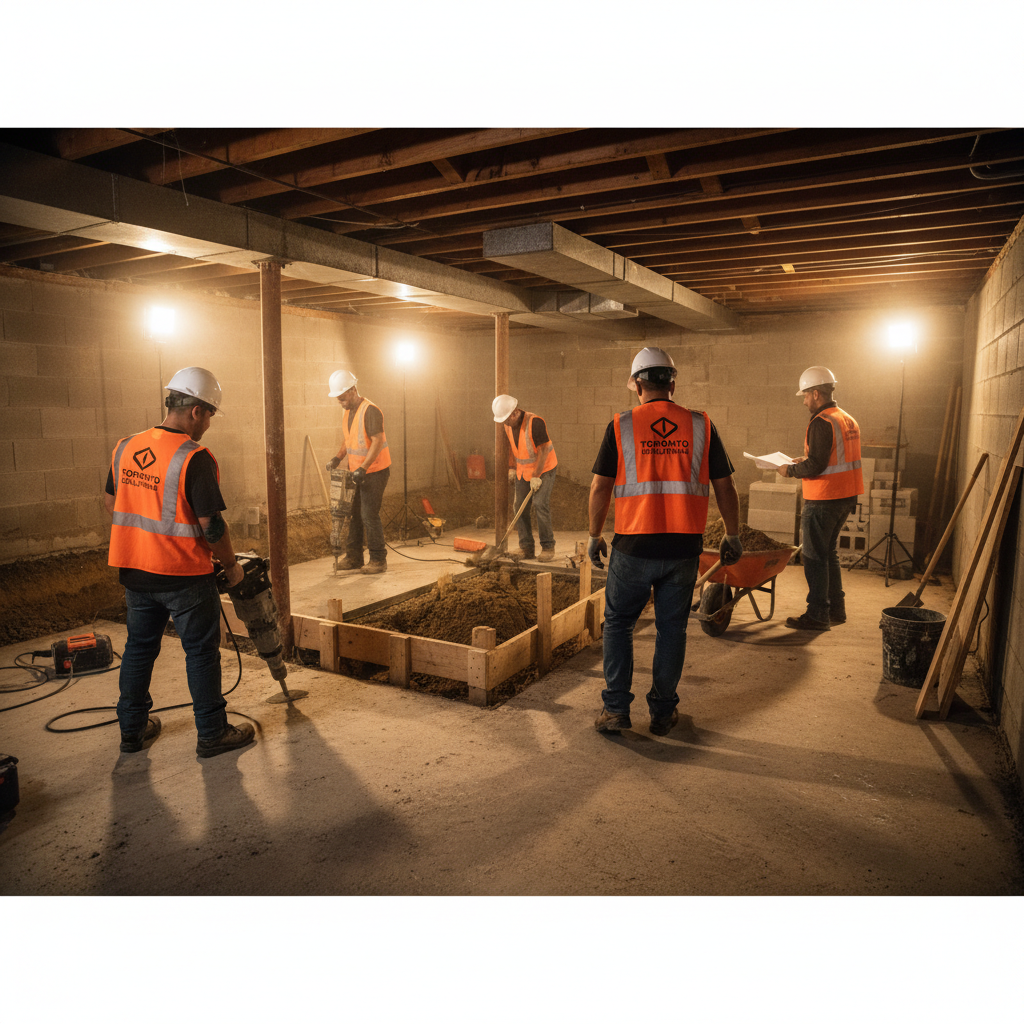
Toronto Basement Underpinning: Basement Lowering, Interior Waterproofing, Foundation Repair & Legal Apartment Conversion
At Toronto Basement Underpinning, our licensed crews deliver expert residential and commercial basement lowering and underpinning across Toronto, including full-floor mass excavation, concrete pin-by-pin underpinning, interior weeping tile waterproofing, sump pump and backwater valve installation, walkout entrance construction, legal basement apartment conversions, architect drawings and city permit coordination, concrete foundation crack repair, and full basement finishing. Our teams operate across the Greater Toronto Area handling everything from a single ceiling-height gain in Leslieville to a complete legal suite conversion in North York, one licensed crew, one fixed-price contract, engineer drawings and permits included.
Established neighbourhoods anchored by the Annex, Leslieville, and Forest Hill drive the highest demand - heritage semis with 5'8" to 6'2" original ceiling heights and a renovation market that demands 8-foot finished suites. Pricing is tiered: small partial underpins run $25,000-$45,000, typical full-perimeter projects on a Toronto semi or detached run $50,000-$95,000 installed, and large deep-lowering or wide-perimeter projects reach $95,000-$150,000+. Final price depends on perimeter footage, depth gained, soil condition, and whether waterproofing and finishing are bundled into the same contract. Every project is backed by our workmanship warranty.
Toronto Basement Underpinning serves basement lowering, underpinning, and foundation work across Toronto and the Greater Toronto Area, including North York, Scarborough, Etobicoke, Mississauga, Brampton, Markham, Vaughan, and Richmond Hill.
Basement Problems Toronto Homeowners Know Too Well
The Toronto homeowners we work with are usually wrestling with one of these. We solve them properly, not with a quick fix that fails in two years.
Cramped Ceiling Height
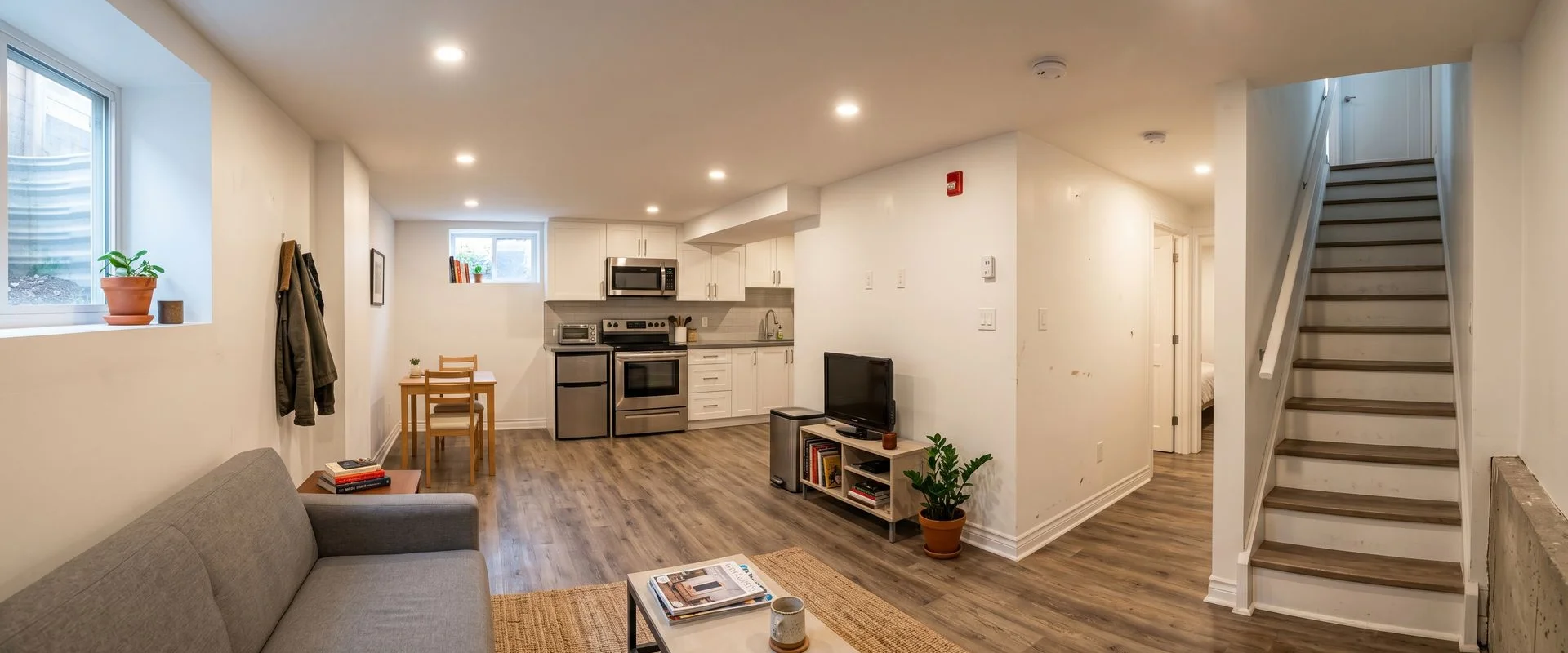
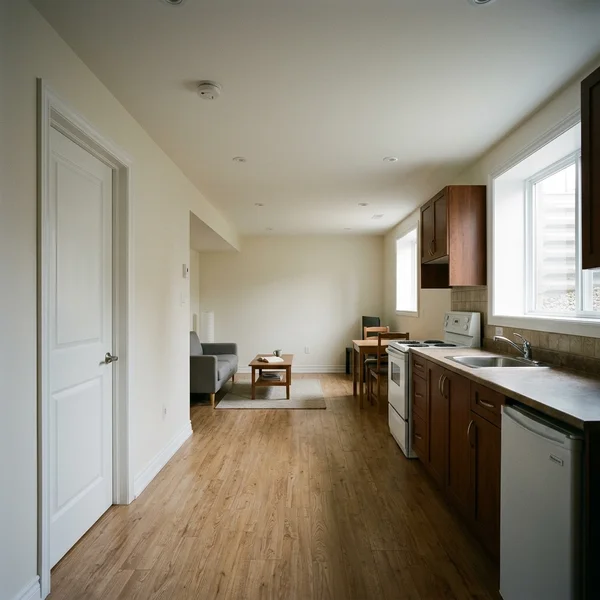
Most Toronto homes built before 1970 have basement ceiling heights between 5 feet 8 inches and 6 feet 6 inches. At that height, finishing the space is uncomfortable, renting it as a legal basement apartment is prohibited under the Ontario Building Code, and the resale value of the home takes a measurable hit. Underpinning adds the depth needed to meet the 6 foot 5 inch minimum required for habitable space, and most clients target 7 feet or more for genuine liveability.
Cracked Foundation Walls
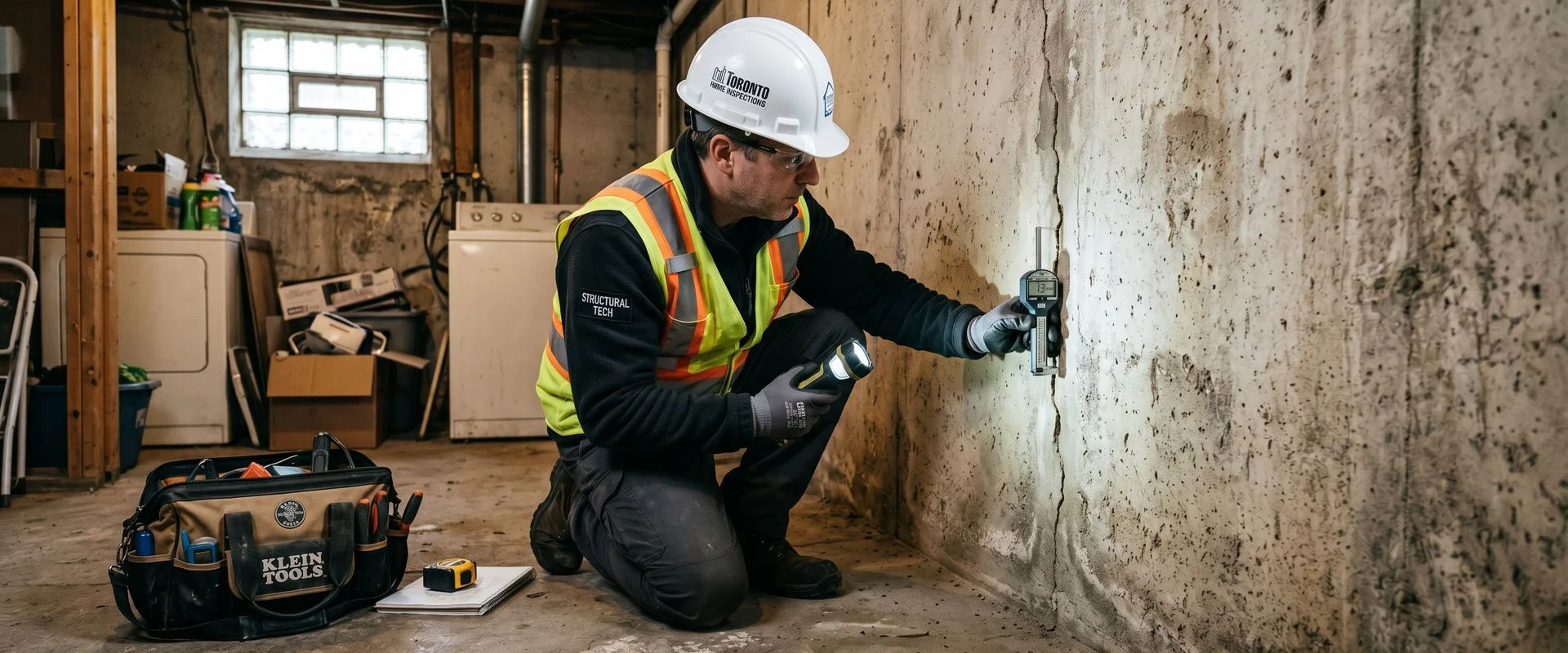
Stair-step cracks in block or brick foundations and diagonal cracks in poured concrete indicate active differential settlement, meaning different parts of the foundation are moving at different rates. Patching the crack addresses the symptom; it does nothing for the underlying bearing failure. Left unresolved, the cracks widen, water infiltrates, and the structural integrity of the wall progressively worsens. Underpinning restores bearing depth and stops the settlement cycle rather than chasing it with filler.
Leaking Basement
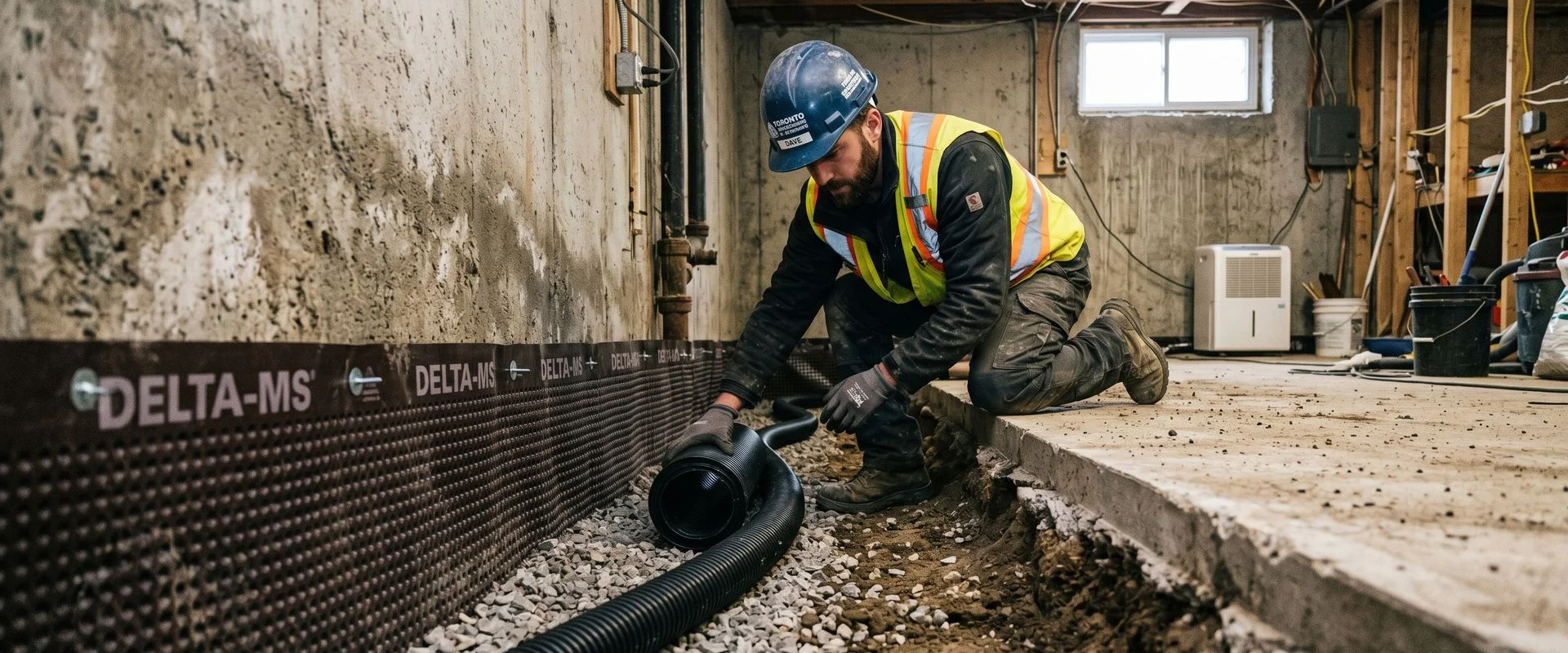
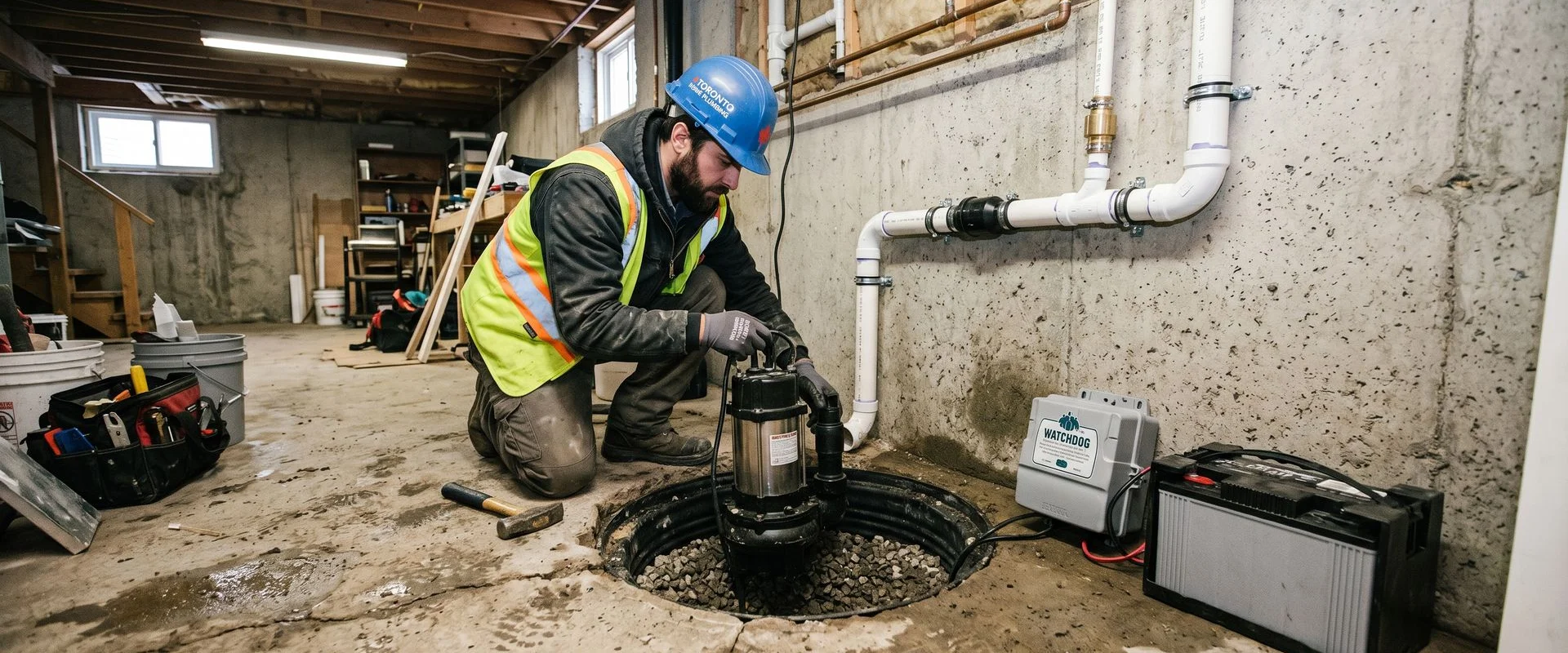
Water seeping at the wall-floor cove joint each spring is the signature of a failed or clogged perimeter weeping tile system. The original clay or perforated pipe installed when most Toronto homes were built is simply at end of life after 50 to 70 years. Interior waterproofing, including a new perimeter drainage channel, weeping tile, and a sump pump with battery backup, is most economically installed during underpinning when the floor is already open, saving 30 to 40 percent versus a standalone waterproofing project.
Stalled By Permits
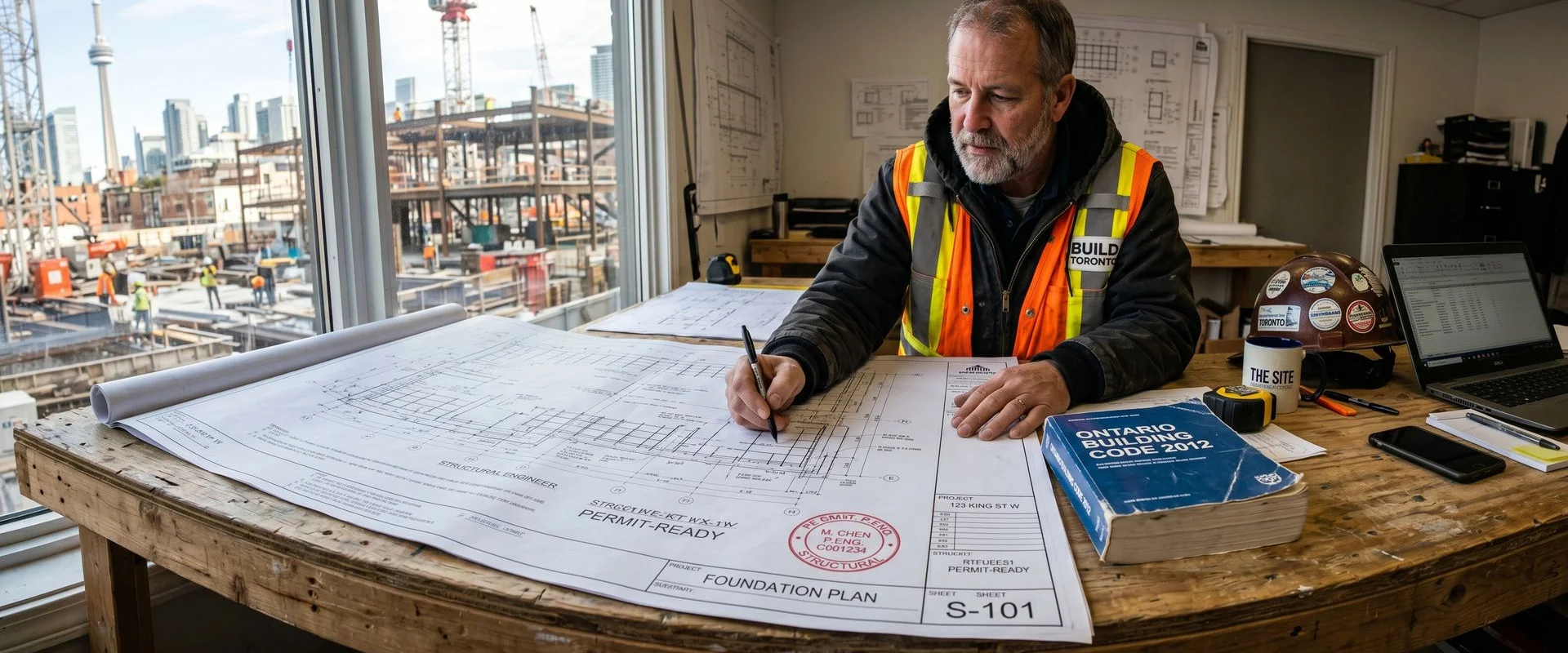
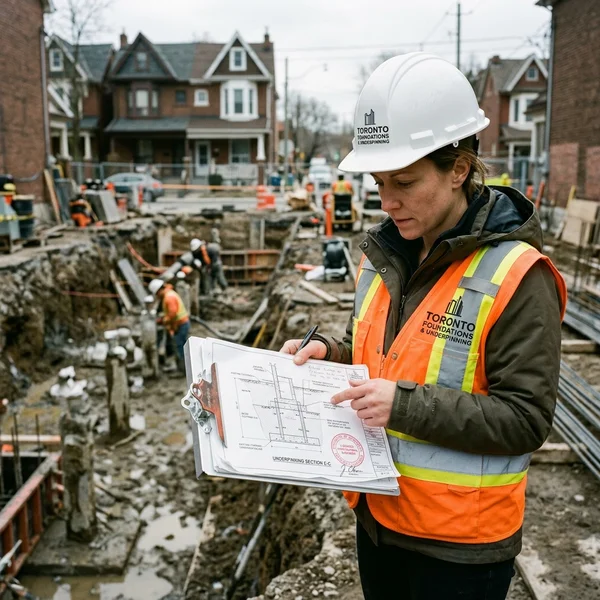
Basement underpinning in Toronto requires a building permit from the City of Toronto Building Division, stamped drawings from a licensed Ontario structural engineer, and mandatory inspections at each pour milestone. Homeowners who attempt to manage this process independently regularly encounter incomplete applications, plan review comments they cannot respond to, and inspections that fail due to missing documentation. We handle every form, submission, response, and inspection as a standard part of every project. You deal with none of it.
Address all four with one project, one warranty, one project manager.
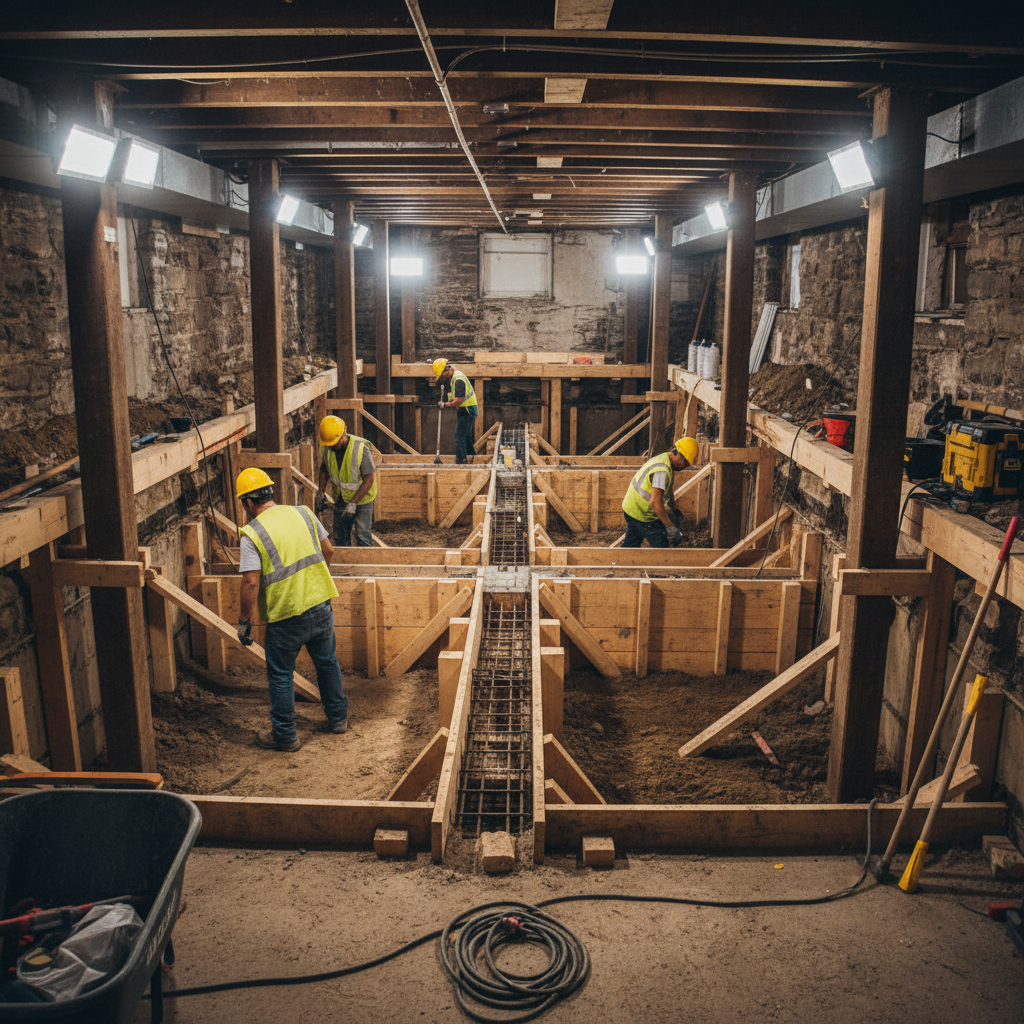
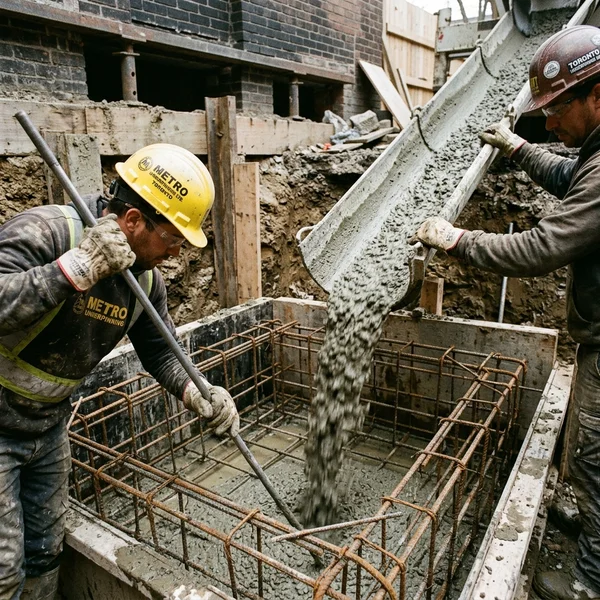
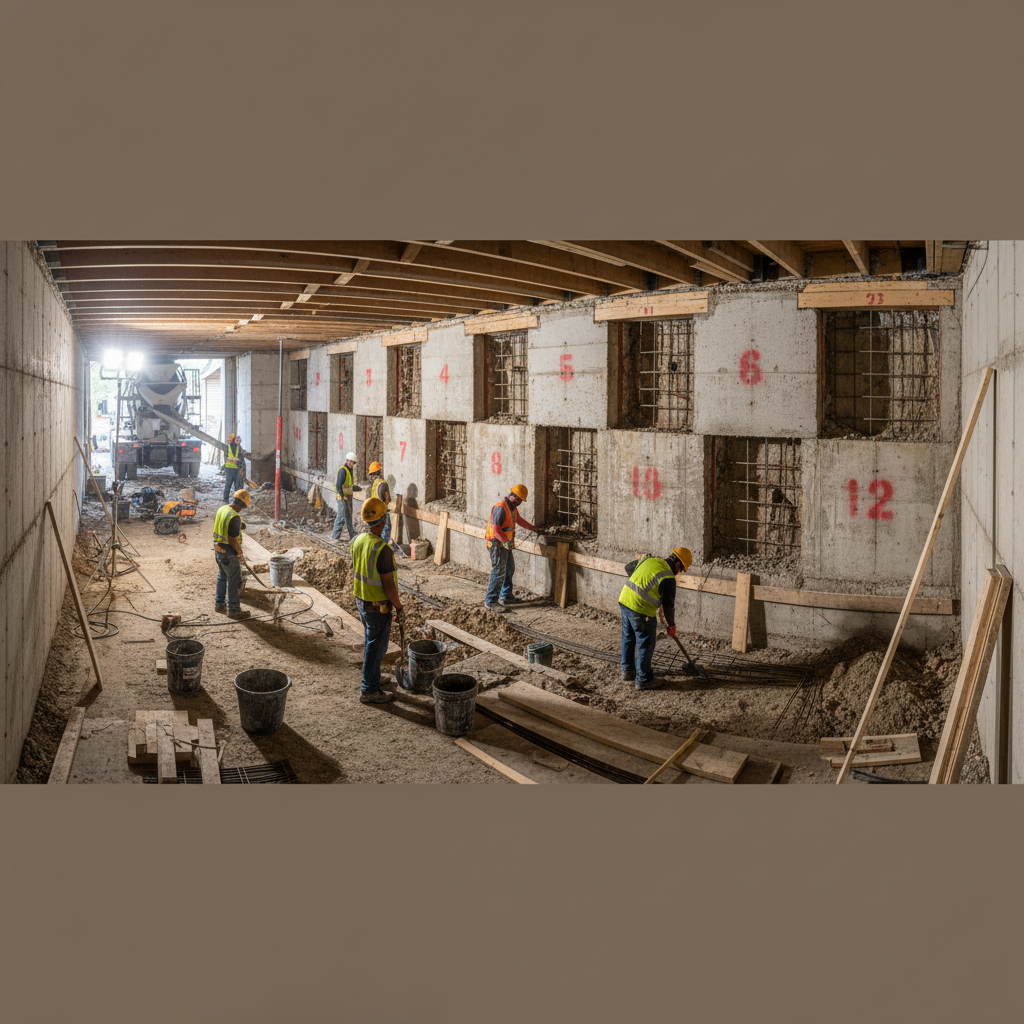
Toronto underpinning is the structural process of lowering an existing foundation to increase the ceiling height of your basement. It is one of the most in-demand home improvement services in the GTA because the city's housing stock, heavily weighted toward pre-1970 semis and detached homes, was built to standards that produced basement ceiling heights of six feet or less. Underpinning extends those footings downward by excavating the soil beneath them in a carefully controlled alternating sequence, pouring new reinforced concrete pin sections, and allowing each section to cure fully before the adjacent one begins.
There are two primary methods used in Toronto. Bench footing underpinning preserves the original footings by pouring a reinforced concrete bench inward along the perimeter, which is structurally straightforward and well-suited to most Toronto semi-detached and detached homes. Mass excavation removes the soil across the full footprint and replaces the entire foundation floor with a new engineered slab, maximizing usable area and allowing for deeper lowering. Your structural engineer specifies the right method based on soil type, foundation age, target depth, and proximity to adjacent structures.
Every basement underpinning project in Toronto requires a City of Toronto building permit, engineer-stamped drawings, and a series of mandatory inspections as each pin section is poured and cured. A contractor who proposes skipping the permit is not saving you time or money. They are exposing you to a stop-work order, mandatory removal of unpermitted work, significant personal liability, and a near-certain failed home inspection at resale. We include drawings, permit submission, and all inspections in every fixed-price quote.
Underpinning is also the ideal time to address basement waterproofing. Because the floor is already open and the footings are fully exposed, installing a perimeter drainage channel, new weeping tile, and a sump pump with battery backup is far less disruptive and far less expensive than returning to a finished basement later. Clients who bundle waterproofing into the original underpinning contract typically save 30 to 40 percent compared to a standalone project after the fact.
Quick Facts
Method
Bench footing or mass excavation - specified by your structural engineer based on soil and depth
Permit Required
City of Toronto building permit + OBC inspections on every project - no exceptions
Timeline
4-8 weeks permit + 4-12 weeks active construction depending on perimeter
Typical Depth Gain
1 to 3 feet. Most Toronto clients target 7 ft finished ceiling height for legal apartment use.
Best Time to Waterproof
During underpinning - floor is already open, saves 30-40% vs standalone waterproofing later
Our Services
Turnkey Basement Lowering & Finishing Services in Toronto
Underpinning is the structural backbone. Most projects bundle waterproofing, sump pumps, drawings, and finishing into one continuous job.
Specialising exclusively in Toronto basement underpinning. Multiple crews scheduled concurrently across the GTA. Drawings, permits, structural engineering, waterproofing, and finishing all coordinated in-house.
Multiple Concurrent Crews
Most Toronto basement contractors operate with a small crew and a backlog of six months or more. Our teams work concurrently across the GTA, which means your project can typically be scheduled within weeks rather than seasons. Each team is a dedicated underpinning crew, not general renovation workers rotated between unrelated jobs. Consistent crew assignment also means the same people who excavate your first pin section are the ones who hand you the keys at completion.
Turnkey Scope
Coordinating five separate trades for a single basement project is one of the most reliable sources of cost overruns and scheduling failures in Toronto residential construction. We handle the architect, structural engineer, City of Toronto plan review submission, excavation, waterproofing, sump installation, and finishing under a single contract managed by a single project manager. One fixed-price quote, one point of contact for every question, and one warranty that covers the entire scope of work.
Engineer Stamp Standard
Every project we deliver carries stamped drawings from an Ontario-licensed professional structural engineer. The engineer specifies the pin section sequence, the concrete mix and reinforcement schedule, any tie-back requirements, and the mandatory inspection milestones. The City of Toronto will not issue a building permit for underpinning without these stamped drawings, so they are not optional. What they also provide is permanent documentation that your project was designed, built, and inspected to code, a material asset when you eventually sell the property.
Workmanship Warranty
Our warranty covers structural and waterproofing defects after project handover. If a covered item fails, we return at no cost and resolve it, whether that means repouring a section, reinstating drainage, or addressing a waterproofing breach. We do not require you to navigate the warranty clauses in your contract; you call us and we come. The warranty is also transferable to the next owner of the property, which carries real value at resale and gives buyers confidence in the work that was done.
How It Works
How Toronto Basement Underpinning Works
Step 1
Free Site Visit
Before any quote is written, a project manager visits your property to assess the foundation type, current ceiling height, soil conditions, existing waterproofing systems, and any site-specific factors such as proximity to a shared lot line or existing cistern. The visit takes 45 to 60 minutes and is at no cost to you. Within two business hours, you receive a written fixed-price quote that covers every element of the agreed scope with no allowances and no provisional sums.
Step 2
Drawings & Permits
After you accept the quote, our team engages the architect and structural engineer to produce stamped drawings for City of Toronto Building Division submission. We prepare the full building permit application, submit it, respond to plan review comments, and attend any required hearings. Permit timelines in Toronto typically run four to eight weeks depending on current Building Division volume. We monitor your application status and notify you the moment the permit is issued so construction can begin on schedule.
Step 3
Staged Construction
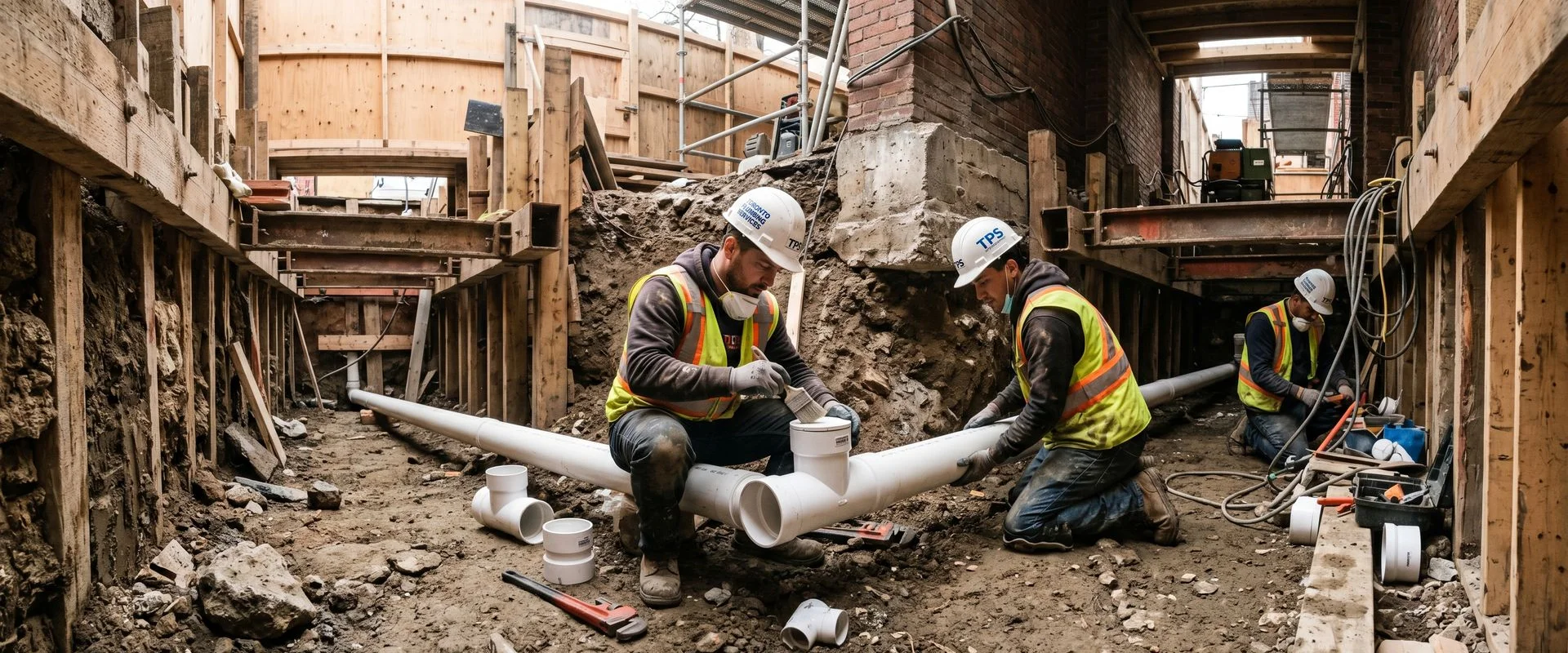
Underpinning proceeds in alternating pin sections: no two adjacent sections are ever excavated simultaneously, keeping the existing foundation fully supported throughout the process. Each section is excavated by hand, formed, poured with engineered concrete, and allowed to cure before the next section begins. Our crews perform daily site cleanup and maintain temporary protection so the living space above remains usable. Your project manager is on-site at every pour and coordinates the mandatory structural engineer inspection at each milestone before any subsequent section proceeds.
Step 4
Final Inspection & Handover
At project completion, the City of Toronto building inspector performs the final occupancy inspection and issues compliance confirmation. Your structural engineer provides written final sign-off. We deliver your full warranty package, the complete permit history, and the engineer's stamped drawings, which become part of your home's permanent permit file and transfer with the property at resale. If basement finishing was bundled into your project, the finishing crew begins immediately after inspection sign-off with no scheduling gap between phases.
Investment
What Does Basement Underpinning Cost in Toronto?
Basement underpinning in Toronto is priced on a per-linear-foot basis, measured along the interior perimeter of the foundation walls being lowered. Three variables drive the number: depth gain, soil and site conditions, and any add-ons bundled into the project. A one-foot depth gain runs approximately $350 per linear foot, a two-foot gain runs approximately $500, and a three-foot gain runs approximately $700. For a standard Toronto semi-detached or detached home with a perimeter of 80 to 120 linear feet, the typical full-perimeter project lands between $50,000 and $95,000 in total. Small partial underpins start at $25,000 and large deep-lowering projects can reach $150,000 or more.
Those ranges include items routinely omitted from lower-priced competitor quotes: engineer-stamped drawings, building permit application and fees, all required City of Toronto inspections, daily site cleanup, and structural warranty documentation. A $15,000 quote that excludes drawings, permits, and inspections regularly becomes $27,000 or more once those costs are added back. Every quote we produce includes all of these as standard line items with no surprises at final invoice.
Several site-specific factors push costs toward the higher end. Clay soil, common throughout Toronto, North York, and the inner GTA, is more difficult to excavate and requires more conservative pin sequencing to prevent settlement of adjacent sections. High water tables near the Don River valley require sump pump installation from the outset. Shared foundation walls on semi-detached properties require additional engineering to protect the adjacent structure and sometimes a structural monitoring protocol.
Interior waterproofing bundled with underpinning typically adds $80 to $120 per linear foot. Because the floor is already open and footings are fully exposed, this is substantially lower than a standalone waterproofing project on a finished basement. If your goal is a finished legal apartment, finishing typically adds $40 to $80 per square foot, covers framing through ceilings, and runs under the same permit with no scheduling gap between structural and finishing crews.
Pricing Reference
1 ft depth gain
~$350 / linear ft
2 ft depth gain
~$500 / linear ft
3 ft depth gain
~$700 / linear ft
Small partial (20-50 lin ft)
$25K - $45K
Typical full (80-120 lin ft)
$50K - $95K
Large / deep (150+ lin ft)
$95K - $150K+
+ Interior waterproofing
+$80-120 / lin ft
+ Basement finishing
+$40-80 / sq ft
Drawings, permit, inspections & warranty included in every quote.
“We finally finished our 1920s Annex basement after underpinning lowered the slab to a real 8-foot ceiling. The crew warned us about every dust event in advance, swept the site daily, and finished a week ahead of the engineered schedule.”
Megan R.
The Annex, Toronto
“Bought a North York bungalow specifically to legalize a basement apartment. TBU handled drawings, the City of Toronto permit, structural engineering, and the finishing. Tenant moved in two months after the pour cured. Zero callbacks since.”
Daniel T.
North York, Toronto
“We had three contractors quote our Leslieville semi. TBU was the only one who explained the shared-wall sequencing and walked our neighbour through the process before booking. Underpinning, waterproofing, and a sump pump done in five weeks.”
Priya S.
Leslieville, Toronto
“Forest Hill home, full underpinning plus high-end finishing. The drawings were thorough, the engineer's site visits were on schedule, and the crew respected the original mouldings on the upper floors. Pricing was exactly what was quoted - no surprise change orders.”
Charles W.
Forest Hill, Toronto
“We had a chronic leak that the previous waterproofer never solved. TBU diagnosed hydrostatic pressure under the slab, installed new weeping tile and a battery-backup sump. Bone dry through this year's spring melt. Worth every dollar.”
Olu A.
Etobicoke, Toronto
100%
Licensed & Insured
GTA
Service Area
2h
Estimate Response
1yr
Workmanship Warranty
Free Tool
Estimate Your Project Cost in 30 Seconds
Plug in your foundation perimeter, target ceiling height, and any add-ons (waterproofing, sump pump, finishing). Our estimator gives you a calibrated range based on current Toronto underpinning pricing data.
Estimates only. Use the calculator for your specific inputs.
Service Coverage
Basement Underpinning Across the Greater Toronto Area
Toronto, North York, Etobicoke, Scarborough, York, East York, Mississauga, Brampton, Markham, Vaughan, Richmond Hill, Oakville, Burlington, Pickering and surrounding regions.
Toronto's older neighbourhoods, including Leslieville, The Junction, East York, Etobicoke, and North York, are dominated by semi-detached homes and detached bungalows built between the 1920s and 1970s. Most of these properties share foundation walls with adjacent units, have original clay weeping tile at end of life, and carry ceiling heights that fall below the Ontario Building Code minimums for habitable space. Working in these neighbourhoods requires familiarity with the specific permit workflow at the City of Toronto Building Division, the common soil conditions across each pocket of the city, and the structural requirements for shared-wall excavation. We have completed projects in every municipality in the GTA and maintain ongoing working relationships with plan review staff at Toronto, Mississauga, Brampton, and Markham Building Standards, which routinely translates to faster permit issuance and fewer revision cycles for our clients compared to contractors working in those offices for the first time.
Want to understand the engineering, the City of Toronto permit process, or the real provincial pricing before booking an estimate? Browse our Toronto basement underpinning guides. Written for homeowners, no marketing fluff.
Common Questions About Toronto Basement Underpinning
How much does basement underpinning cost in Toronto?
Basement underpinning in Toronto is tiered: small partial underpins (20-50 linear feet) run $25,000-$45,000, typical full-perimeter projects on a semi or detached (80-120 linear feet) run $50,000-$95,000, and large or deep-lowering projects (150+ linear feet, 2.5+ ft lowering) reach $95,000-$150,000+. Per linear foot pricing runs $350-$700 depending on depth gained. Final cost depends on depth gained, soil condition, accessibility, and whether waterproofing or finishing is bundled into the same scope.
Is basement underpinning safe, will my house collapse?
When sequenced correctly, no. Underpinning is staged: we excavate and pour one short pin section at a time so the home is always supported on existing footings while the new ones cure. Every project carries an engineered design stamped by an Ontario-licensed structural engineer.
How long does a Toronto underpinning project take?
Most full-perimeter underpinning projects take 4-8 weeks of construction, plus 4-8 weeks beforehand for drawings and the City of Toronto permit. Adding waterproofing or finishing extends the schedule by 2-6 weeks each.
Do I need a permit, and who handles it?
Yes, basement underpinning always requires a City of Toronto building permit and engineered drawings. We handle the architect, structural engineer, plan review, and any Committee of Adjustment hearing, so the homeowner doesn't navigate the city directly.
What warranty do you offer?
Every project carries our workmanship warranty. If something covered by the work fails, we return and resolve it. No contract scavenger hunt.
Do you underpin homes outside the City of Toronto, Mississauga, Markham, Oakville?
Yes. Our crews cover the full Greater Toronto Area, including Mississauga, Brampton, Markham, Vaughan, Richmond Hill, Oakville, Burlington, Pickering, Ajax, and Whitby. Permit processes vary by municipality; we coordinate with each city's building department.
Typical Response Time: 2 Hours
Ready to Lower Your Toronto Basement?
Free estimate within two business hours. Engineered. Fixed-price. Workmanship warranty.