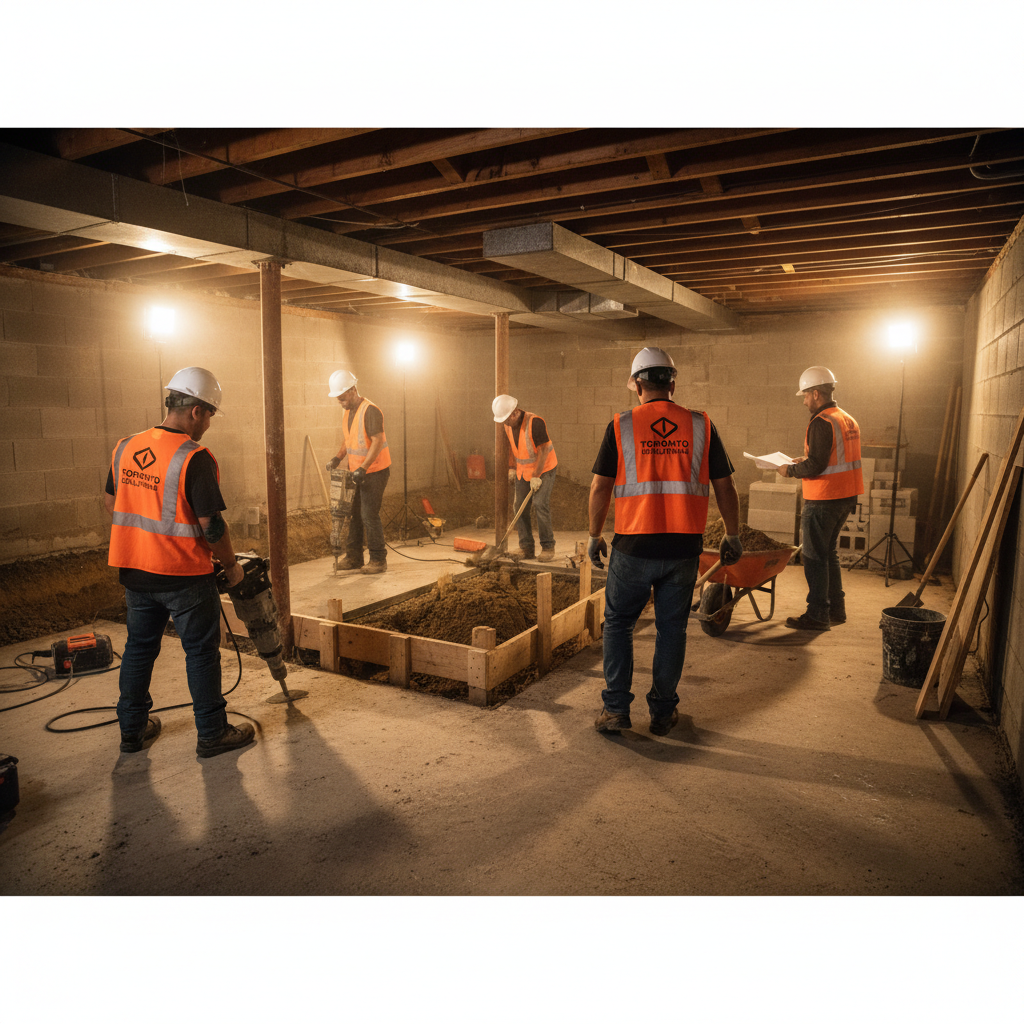
A sump pump failure in Toronto at the wrong moment does not just mean a flooded basement. It means a flooded finished basement, or a flooded basement suite with a tenant in it, or a flooded basement during the 2 AM of a 100-year storm when you cannot call anyone. The pump is a mechanical device with a finite lifespan, and it will fail eventually. The goal is to replace it on your schedule, not on the schedule of the next major rainstorm.
These are the 8 signs that tell you replacement is needed, what each sign means about what is actually happening inside the pump, and when to act urgently versus when planned replacement within the next few months is acceptable.
Sign 1: The Pump Is More Than 10 Years Old
What it means: The mechanical components of a submersible sump pump (motor windings, impeller, bearings, float switch) have a design service life of 7 to 12 years under normal use conditions. After 10 years, you are operating on borrowed time.
This is not a sign of current failure; it is a statistical risk. After 10 years, the probability of sudden failure in the next 2 years is meaningfully higher than in the first 5 years of operation.
Urgency: Not emergency, but plan replacement within the next 3 to 6 months. Do not wait for a spring storm season with an aging pump.
Sign 2: Pump Runs Continuously Without Rain
What it looks like: The pump is running frequently or continuously during dry periods when there is no rain and no snowmelt.
What it means: This can indicate two different problems. First, the float switch may be stuck in the “on” position, causing the pump to run even when the pit water level is low. Second, the pump may be running continuously because it cannot actually keep up with inflow (indicating a larger water issue), or because the check valve is failing and allowing pumped water to drain back into the pit, causing the pump to re-pump the same water repeatedly.
Urgency: Investigate within 1 to 2 weeks. Continuous operation burns out the motor and burns up electricity. Check the float switch operation by manually lifting and dropping the float. If the pump does not turn off with the float at its lowest position, the switch is failed.
Sign 3: Unusual Grinding, Rattling, or Screeching Noise
What it looks like: The pump makes a grinding, rattling, metallic screeching, or knocking noise during operation that it did not previously make.
What it means: Grinding typically indicates debris in the impeller (concrete chips, gravel) or worn impeller vanes. Rattling may indicate a loose component within the motor housing. Screeching usually indicates bearing failure, where the metal-on-metal contact is audible. These are all signs that internal components are wearing out or damaged.
Urgency: Medium to high. A grinding pump is still moving water, but the damage is progressive. Bearing failure leads to motor failure relatively quickly. Plan replacement within 1 to 2 months.
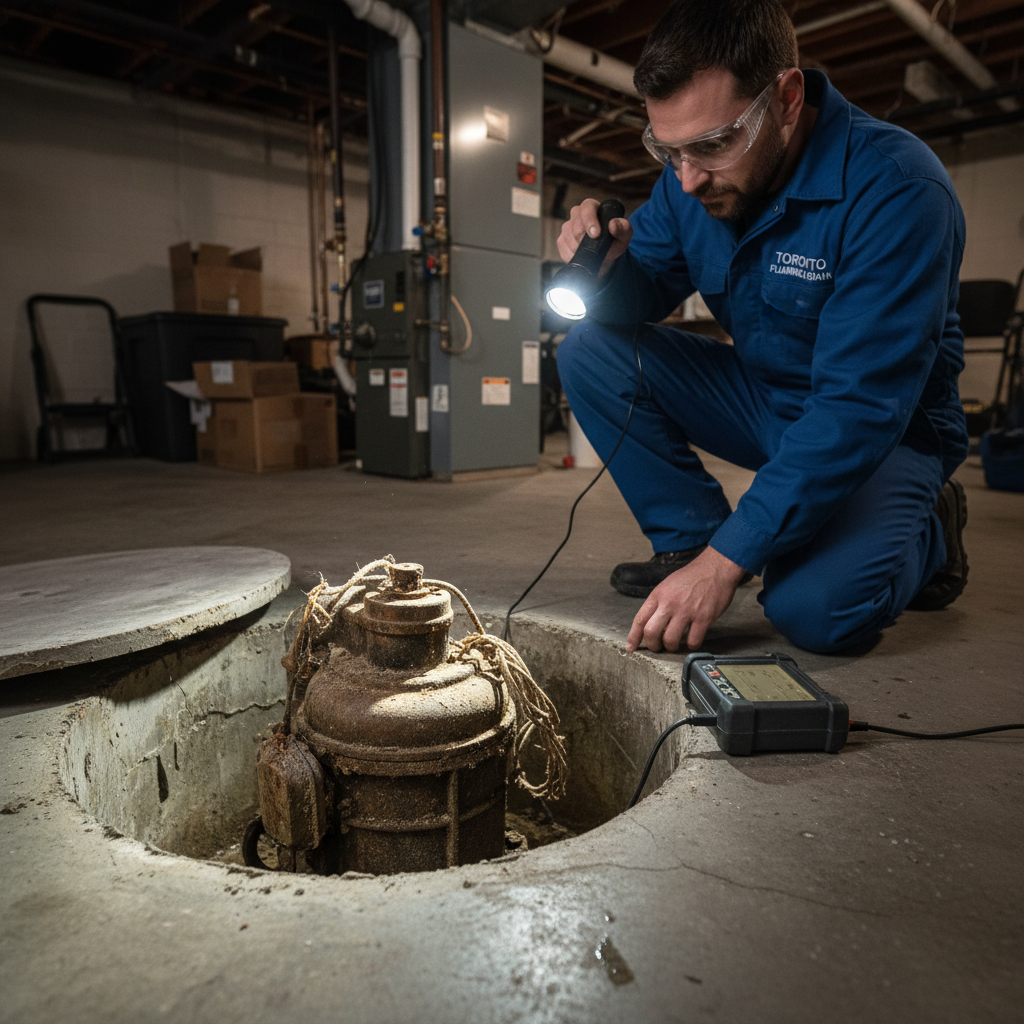
Sign 4: Pump Fails the Float Switch Test
What it looks like: During the annual test (pouring water into the pit), the pump does not activate when the water reaches the trigger level.
What it means: Float switch failure is one of the most common sump pump failure modes. The float switch is a mechanical device that closes a circuit when the float rises to the trigger level. The float can become tangled, stuck to the pit liner, corroded, or simply fail.
Urgency: High. A pump that fails the float switch test will not activate during a real flood event. If you confirm float switch failure, replacement should happen within the week during non-storm conditions. Do not leave a flood season (spring snowmelt, summer storm season) with a failed float switch.
The float switch is sometimes replaceable separately from the pump. Consult with a sump pump service provider to determine whether switch replacement or full pump replacement is appropriate.
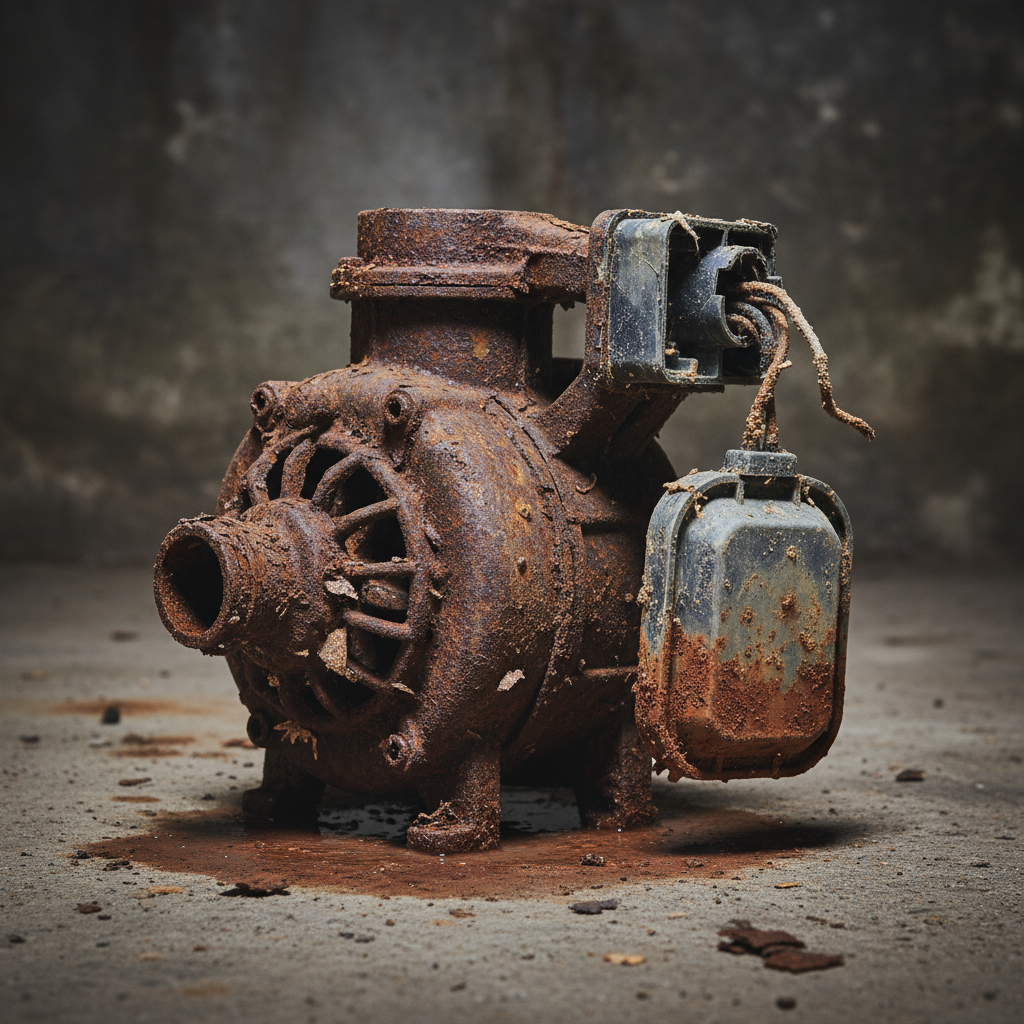
Sign 5: Visible Rust or Corrosion on the Pump Housing
What it looks like: Orange-brown rust staining on the pump exterior, corroded wiring connections, or rust deposits in the sump pit water.
What it means: Surface rust on a cast iron pump housing is cosmetic and expected over time. Heavy corrosion that has reached the motor housing, visible pitting on the impeller, or rust deposits in the pump discharge indicate that the pump material is degrading.
Urgency: Low to medium. Cosmetic rust on the housing is not a failure mode. Corrosion that has reached the motor or electrical connections is a safety and reliability concern requiring replacement within 3 to 6 months.
Sign 6: Pump Runs but Water Level Does Not Drop
What it looks like: The pump activates and you can hear it running, but the water level in the pit does not decrease or decreases very slowly.
What it means: The pump is operating electrically but not moving water effectively. Possible causes: worn or clogged impeller that can no longer generate adequate flow, failed check valve allowing backflow as fast as the pump removes water, or pump air-locked (air trapped in the impeller housing preventing priming).
Urgency: High. A pump that is running but not removing water provides zero flood protection. This is the definition of an impending flood event. Investigate and replace within days.
Sign 7: Burning Smell During Pump Operation
What it looks like: A burning or electrical smell (similar to burning plastic or burning electrical insulation) coming from the pump or pit during operation.
What it means: The motor windings are overheating. This occurs when the motor is working harder than its design capacity (from debris obstruction, worn bearings, or seized impeller) or when the motor windings themselves are degrading from age or moisture intrusion into the motor housing.
Urgency: Emergency. A burning smell means the motor is at or near failure and may be a fire risk if wiring insulation is burning. Disconnect the pump power and replace immediately.
Sign 8: Frequent On/Off Cycling (Short Cycling)
What it looks like: The pump turns on and off repeatedly in quick succession, activating many times per hour even with minimal water in the pit.
What it means: Short cycling is usually caused by a float switch that is set or positioned incorrectly, activating the pump before there is enough water in the pit to justify a full pumping cycle. The pump turns on, removes the small amount of water, shuts off, and the check valve allows a small amount of water to drain back, triggering another cycle.
Short cycling is hard on the motor because repeated start cycles draw much higher amperage than steady operation, heating the windings rapidly.
Urgency: Medium. Not an immediate failure, but short cycling will shorten pump life significantly. The float switch position or trigger level should be adjusted, or the check valve replaced to prevent backflow triggering immediate re-activation.
Planned vs Emergency Replacement
| Scenario | Replacement Timing |
|---|---|
| Pump over 10 years old, functioning normally | Plan replacement within 6 months |
| Noise, slow cycling, cosmetic rust | Plan replacement within 1 to 3 months |
| Failed float switch test | Replace this week |
| Pump runs but water not dropping | Replace within days |
| Burning smell | Emergency replacement now |
Replacement Cost
| Scope | Typical Cost in Toronto |
|---|---|
| Standard 1/2 HP primary pump replacement | $500 to $900 |
| Premium cast iron 3/4 HP pump | $800 to $1,200 |
| Battery backup pump added at same time | $800 to $1,500 additional |
| Full pit cleanout and new liner | $400 to $800 additional |
Replacing the primary pump and adding a battery backup simultaneously is the most cost-efficient approach if you do not have battery backup yet.
For further context, read our guides on How Long Does Interior Waterproofing Last? and Signs Your Basement Needs Waterproofing.
Sump pump showing signs of age or failure? Contact our team for prompt sump pump replacement and an assessment of whether a battery backup system should be added at the same time.