During the July 2013 storm that dropped 126mm of rain on Toronto in less than two hours, tens of thousands of basements flooded. A large proportion of those floods were not caused by waterproofing failures but by sump pumps that lost power when the grid went down during the storm. The same scenario has repeated itself in subsequent major storm events across the GTA. Battery backup sump pumps exist specifically to prevent this single failure mode.
This guide explains exactly how battery backup systems work, what types of batteries are used, how to evaluate capacity, what they cost to install in Toronto, and how to decide whether one makes sense for your home.
How a Battery Backup Sump Pump Works
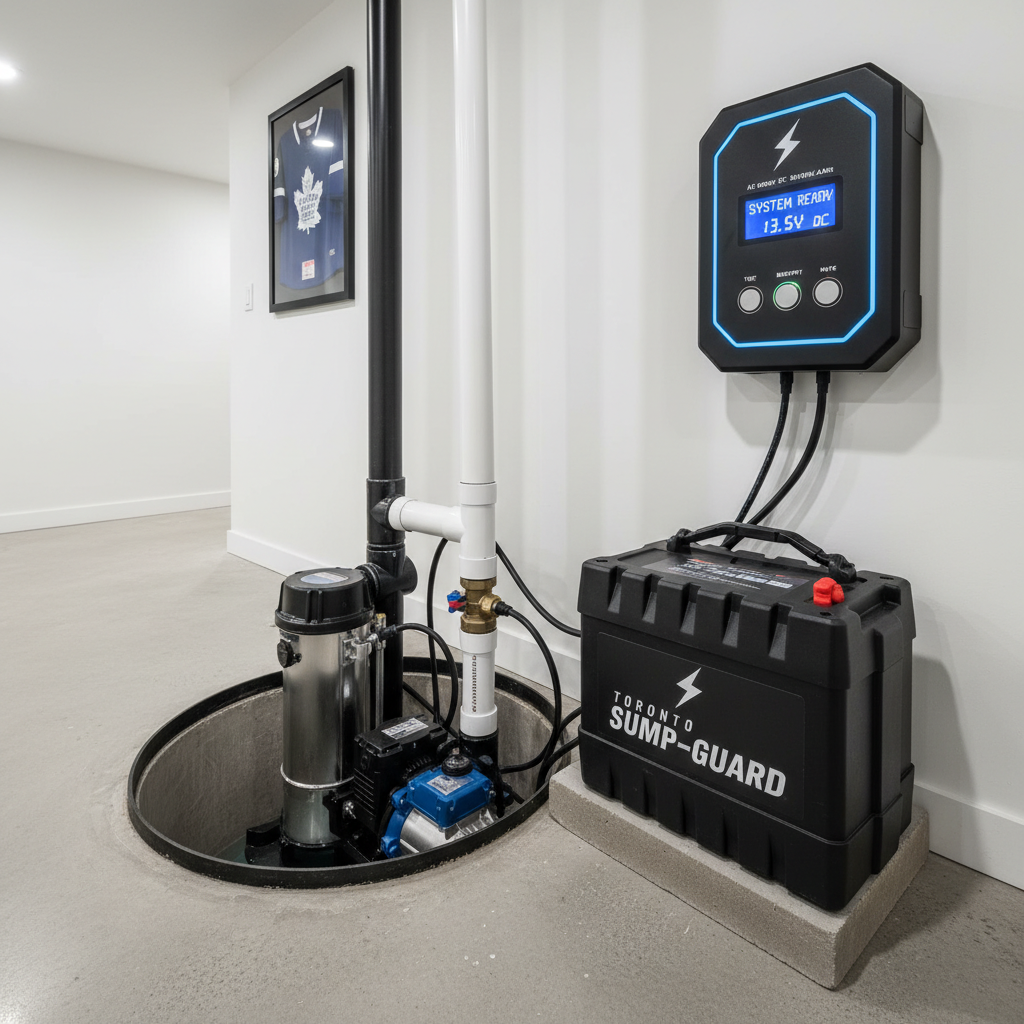
A battery backup sump pump is a secondary pump that sits in your sump pit alongside (or on top of, depending on the configuration) your primary pump. It operates on DC power from a dedicated battery, whereas your primary pump runs on AC power from the electrical grid.
The system has three components:
1. The backup pump itself. A DC submersible pump, separate from the primary pump, with its own discharge line or sharing the primary discharge pipe via a check valve arrangement.
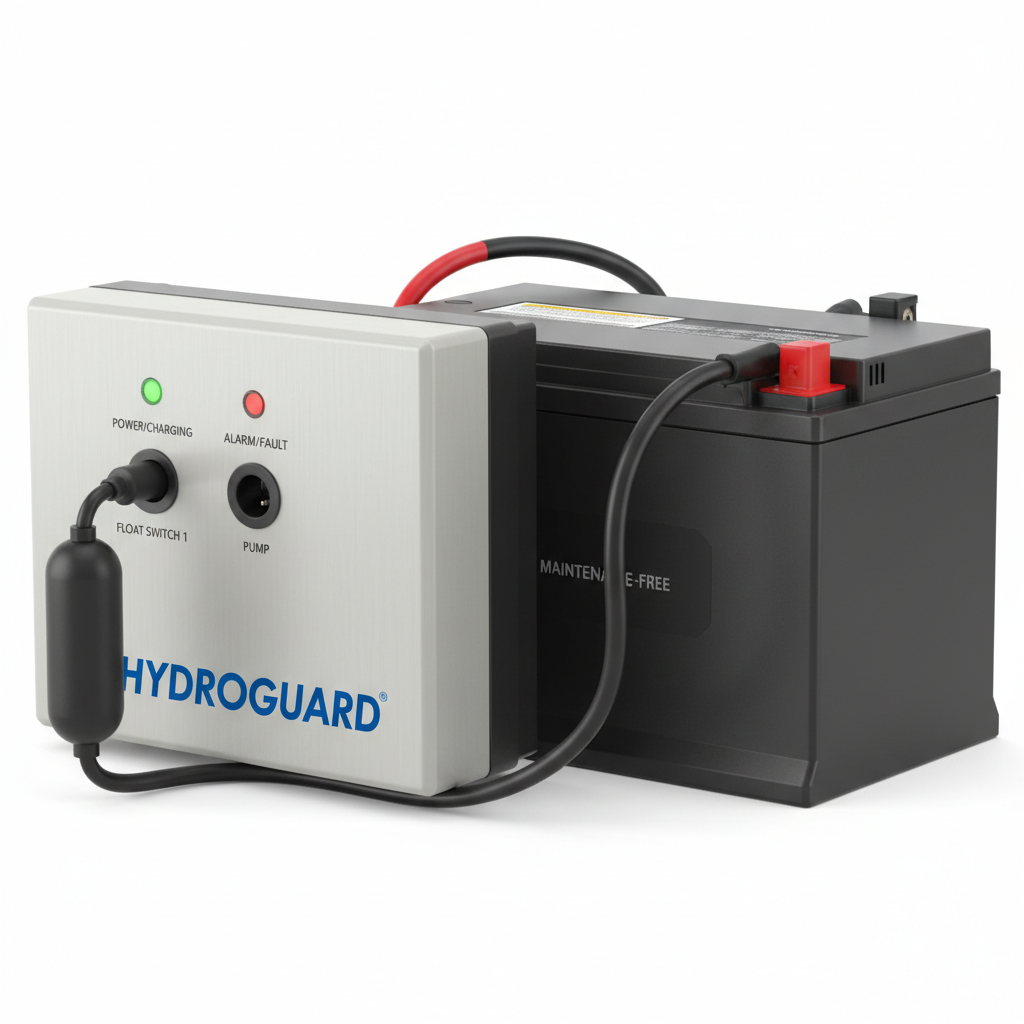
2. The battery charger and controller. This device plugs into a standard AC outlet and continuously trickle-charges the battery while power is available. It monitors both mains power status and battery charge level.
3. The battery. Either a sealed AGM (absorbent glass mat) lead-acid battery or a newer lithium iron phosphate battery. Typically 12-volt at 75Ah to 100Ah capacity.
When the AC power fails, the controller detects the loss and switches the backup pump to DC battery power automatically, typically within milliseconds. When AC power is restored, the controller switches back to primary pump operation and begins recharging the battery.
The backup pump also activates if the primary pump fails mechanically while power is available. Most controllers monitor the water level via a float switch and will run the backup pump if the water level rises above where the primary pump should have activated.
AGM vs Lithium Batteries: Which Is Better?
The battery is the heart of the backup system, and your choice between AGM and lithium has real implications for performance, lifespan, and cost.
| Feature | AGM Battery | Lithium Iron Phosphate |
|---|---|---|
| Upfront cost | $150 to $350 for battery | $600 to $1,200 for battery |
| Runtime (75Ah) | 4 to 8 hours moderate use | 8 to 16 hours moderate use |
| Replacement interval | Every 3 to 5 years | Every 8 to 12 years |
| Maintenance | Low (sealed, no watering) | Very low |
| Temperature sensitivity | Performance degrades below 10C | Better cold performance |
| Smart monitoring | Basic | Often includes app connectivity |
For most Toronto homeowners, an AGM system is the right starting point. The lower upfront cost and proven reliability make AGM the practical choice. Lithium is worth the premium for homes with finished basements at high flood risk or for homeowners who want smart monitoring and alert notifications during storms.
Pump Capacity: What GPH Actually Means
Sump pump capacity is rated in gallons per hour (GPH) at a specific head height (the vertical lift from the pit to the discharge point). A pump rated at 2,400 GPH at 0 feet of head will only deliver 1,600 GPH at 10 feet of head.
For Toronto homes with typical basement depths, a discharge height of 8 to 12 feet is common. At that head height, choose a backup pump rated at a minimum of 1,500 GPH.
Standard battery backup pumps are typically rated at 1,200 to 2,500 GPH at 10 feet of head. Premium units reach 3,000 GPH or more. The primary pump is usually more powerful than the backup, which is intentional: the backup only needs to handle the water volume during the power outage period, not the full peak storm load.
How Long Will the Battery Last During a Storm?
Runtime depends on three variables: battery capacity, how often the pump cycles, and rainfall intensity.
A 75Ah AGM battery powering a 1,500 GPH pump cycling 3 times per hour will typically last 6 to 8 hours. During an intense storm where the pump cycles 8 to 10 times per hour, the same battery may last only 3 to 4 hours.
The 2013 Toronto storm dropped 126mm in under 2 hours. During that event, a properly sized backup system would have provided meaningful protection during the peak intensity period. Most power outages during Toronto storms last 2 to 6 hours. A properly maintained AGM system covers the typical outage scenario.
Installation Requirements
Installation of a battery backup sump pump is a plumbing job that typically takes 2 to 4 hours. The requirements are:
- An existing sump pit large enough to accommodate both the primary and backup pump (a minimum 18-inch diameter pit is preferred; 24-inch is better)
- A nearby 15-amp dedicated electrical outlet for the battery charger
- A discharge path (either shared with the primary pump via a check valve or a dedicated discharge line)
- Proper venting and check valve installation to prevent backflow
In Toronto, a plumbing permit may be required for sump pump installation depending on how the discharge is routed. If the discharge connects to a new drain line, a permit is required. If it shares an existing discharge line with no plumbing changes, many contractors install without a permit, though the homeowner assumes risk.
When You Need a Battery Backup vs When You Do Not
Strong case for battery backup:
- Your basement is finished (water damage cost is high)
- Your home is in a lower-lying area (Humber River valley, Don Valley, parts of Scarborough near Lake Ontario)
- Your primary sump pump runs frequently (indicating significant groundwater pressure)
- You have experienced a flood during a previous storm power outage
- You travel frequently and cannot monitor the home during storms
- You have a legal secondary suite with a tenant (a flood is your liability)
Battery backup is less critical if:
- Your basement is unfinished with no valuables stored
- Your primary pump rarely runs
- Your home is on high ground with good natural drainage
- You have a generator that automatically provides backup power
- You have a municipal connection that handles site drainage
What a Complete System Costs
| Component | Cost Range |
|---|---|
| AGM battery backup system (supply and install) | $800 to $1,400 |
| Lithium battery backup system (supply and install) | $1,800 to $2,500 |
| Battery replacement (AGM, every 3 to 5 years) | $150 to $350 |
| Battery replacement (lithium, every 8 to 12 years) | $600 to $1,200 |
| Primary pump replacement at same time | $500 to $900 additional |
Maintenance Schedule
Once installed, a battery backup system requires minimal but specific maintenance:
- Monthly: Confirm charger status light shows float/charged state
- Quarterly: Simulate power failure by unplugging charger and confirming backup activates
- Annually: Have a plumber or sump pump service provider test both pumps, check float switch operation, and inspect battery health
- Every 3 to 5 years (AGM): Replace battery regardless of apparent condition
- After any flood event: Test both pumps and inspect discharge line for debris
For further context, read our guides on How Long Does Interior Waterproofing Last? and Interior Waterproofing Cost.
Thinking about adding a battery backup to your existing sump pump system? Get a quote from our team and we will confirm whether your current pit and primary pump are set up to support a backup system properly.