Toronto basement water problems rarely announce themselves dramatically at first. More often, they start as subtle signs that easy to dismiss: a bit of white powder on the wall, a slight musty smell after rain, paint that is peeling in one corner. By the time water is actively pooling on the floor, the problem has been developing for months or years and the damage (to structure, to stored items, to air quality) may already be significant.
This guide walks through the 8 specific warning signs that tell you a Toronto basement needs waterproofing attention, rates each sign by severity, and explains what each one is telling you about the underlying condition.
The 8 Signs
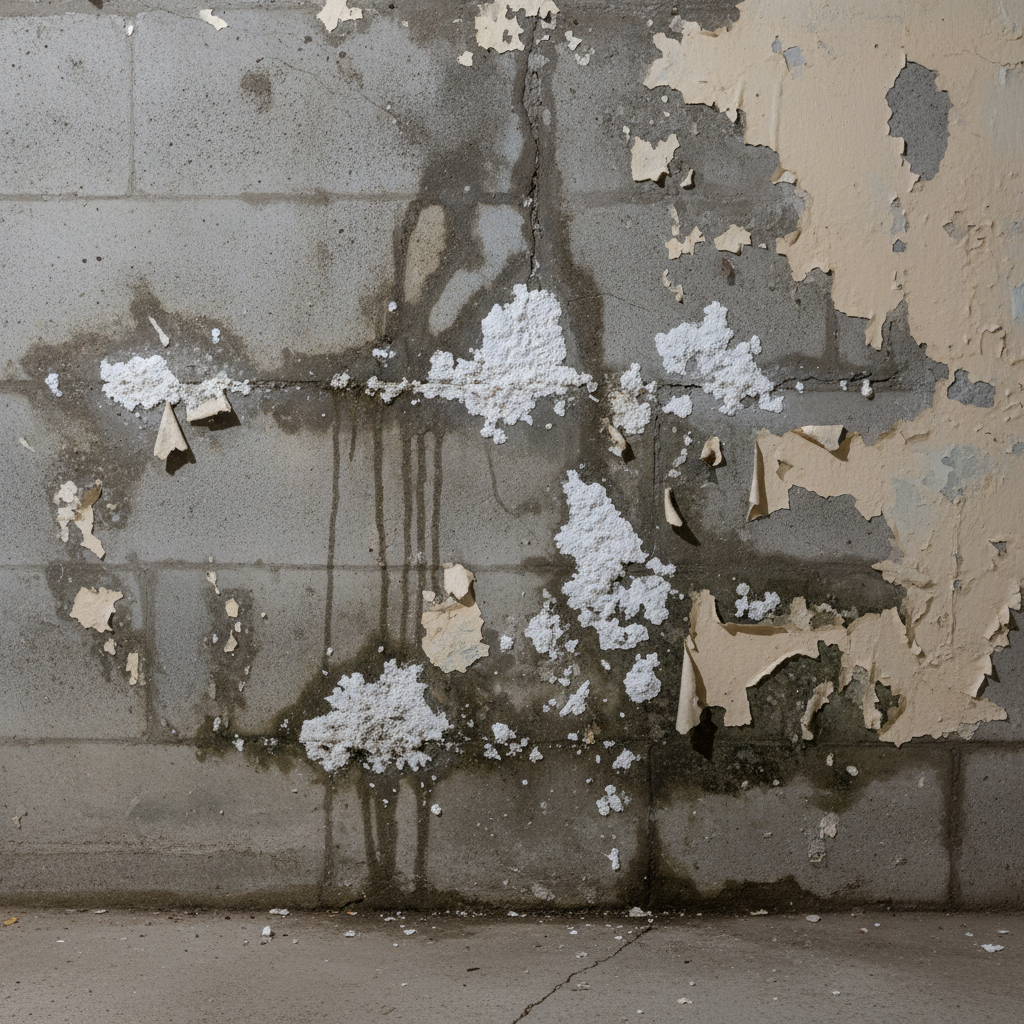
Sign 1: Efflorescence (White Mineral Deposits on Walls)
What it looks like: White, chalky, or crystalline deposits on the face of concrete or masonry walls. May appear as streaks running down from the top of the wall or horizontal bands at the floor level.
What it means: Water is migrating through the wall material, carrying dissolved minerals. When the water evaporates at the interior surface, the minerals are left behind as the white deposit. The efflorescence itself is not harmful, but it is unambiguous evidence that water is actively moving through the wall on a regular basis.
Severity: Low to medium. Efflorescence alone does not indicate flooding risk, but it confirms chronic moisture infiltration that will eventually contribute to mould, deterioration of wall materials, and worsening as cracks enlarge.
Action: Assessment by a waterproofing contractor to identify the source (wall cracks, wall-floor joint, or diffuse migration through the wall itself). Waterproofing or crack injection to address the source.
Sign 2: Active Water Seeping Through Wall Cracks
What it looks like: Water visibly entering through a crack in the foundation wall, either as dripping or as a wet streak below an active crack.
What it means: Hydrostatic pressure from groundwater or surface water saturation is pushing water through an existing crack. This is more acute than efflorescence and indicates that the water pressure and crack opening are sufficient for visible flow.
Severity: Medium to high. Active seepage damages framing, insulation, and drywall if the basement is finished. It can produce mould within days in warm conditions.
Action: Crack injection to seal the crack (polyurethane for active water), plus investigation of the broader drainage context. A single leaking crack in an otherwise dry basement may be resolved with injection; multiple seeping cracks suggest the need for a full drainage system.
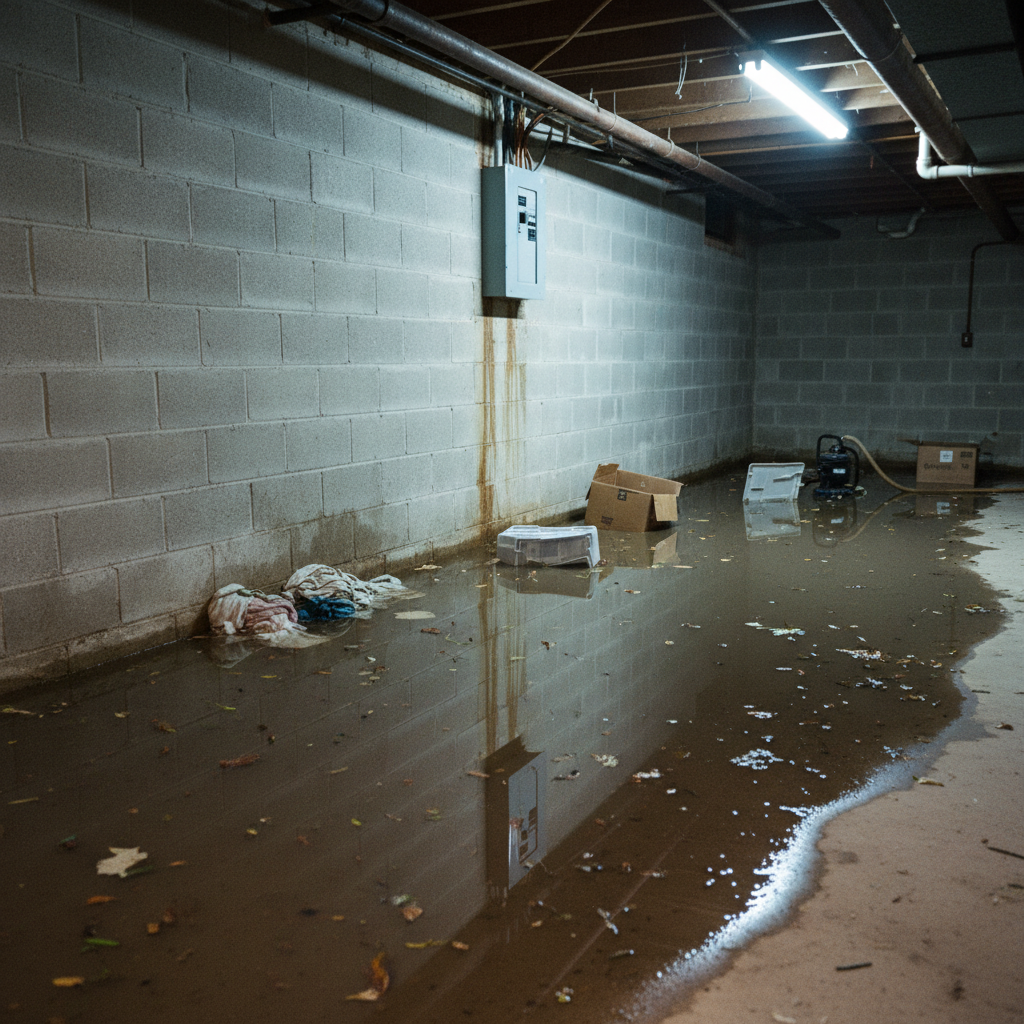
Sign 3: Water Pooling at the Floor Perimeter After Rain
What it looks like: Water appearing at the junction of the floor and wall, typically within 24 hours of heavy rainfall or rapid snowmelt.
What it means: The wall-floor joint is the most common water entry point in Toronto basements. Surface water or elevated groundwater during rainfall events is finding its way through this joint.
Severity: Medium to high. The correlation with rain events confirms the source. If this happens repeatedly, the water is saturating floor insulation (if present) and creating a persistent mould environment.
Action: Interior waterproofing with a drainage channel specifically designed to intercept the wall-floor joint seepage is the appropriate solution.
Sign 4: Musty Smell or Visible Mould Growth
What it looks like: A persistent musty, earthy smell in the basement, particularly after rain or in spring. Visible mould growth appears as dark patches (black, green, or grey) on walls, framing, or stored items.
What it means: Mould requires three conditions: moisture above 60 percent relative humidity, an organic food source (wood framing, drywall paper, cardboard), and temperatures above 5 degrees Celsius. If mould is present in a basement, all three conditions are being met regularly.
Severity: High. Mould degrades air quality, damages structural framing, and spreads. In a finished basement, mould remediation before waterproofing adds $2,000 to $8,000 to the project cost. Addressing the moisture source before it becomes a mould problem is significantly less expensive.
Action: Professional mould assessment if visible mould is present. Waterproofing to address the moisture source. Mould remediation of affected materials.
Sign 5: Peeling Paint or Bubbling Drywall
What it looks like: Paint on basement walls is peeling, bubbling, or blistering. Drywall is softening or showing brown staining through the paper face.
What it means: Moisture is migrating through or behind the wall surface, collecting under the paint film or saturating the drywall. This is often a sign of chronic diffuse moisture through the wall rather than acute flooding.
Severity: Medium. Drywall that is moisture-damaged must be replaced and the moisture source addressed. Painting over this condition without addressing the moisture source will produce the same result in 6 to 12 months.
Action: Waterproofing assessment to identify moisture source. Drywall replacement is included in the finishing scope after waterproofing is complete.
Sign 6: Rust Stains on the Floor or Around Floor Drains
What it looks like: Orange-brown rust staining on the concrete floor, particularly around floor drains or metal cleanout covers.
What it means: Persistent moisture at the floor level is causing oxidation of embedded metal components (floor drain flanges, pipe cleanouts). This indicates the floor area regularly has water present, even if it drains before you observe it.
Severity: Low to medium as an isolated sign, but often accompanies more significant moisture conditions.
Action: Confirm whether the floor drain is properly connected and functioning. Assess for wall-floor joint seepage. Waterproofing assessment.
Sign 7: Foundation Crack with Water Entry
What it looks like: A crack in the foundation wall that shows water staining, mineral deposits, or active seepage.
What it means: See Sign 2 above, plus the structural character of the crack must be evaluated. A water-seeping crack that is also showing displacement or horizontal orientation is primarily a structural problem with a secondary water problem.
Severity: Depends on crack type. Vertical crack with seepage: medium. Horizontal crack with any seepage: high to critical.
Action: Engineering assessment of the crack’s structural character, then appropriate response (injection for stable crack, structural repair for active crack, waterproofing to manage residual moisture).
Sign 8: Wet Insulation or Discoloured Insulation
What it looks like: Batt insulation in basement walls that is visibly wet, compressed, or has dark staining. Spray foam insulation that shows surface discolouration from moisture.
What it means: Moisture is getting behind the insulation from the wall surface. Once insulation is wet, it loses its R-value and becomes a mould culture medium. Wet batt insulation is particularly problematic because it holds moisture against the wood framing behind it.
Severity: High. Wet insulation requires removal and replacement. Any wood framing behind wet insulation must be inspected for mould and structural degradation.
Action: Remove wet insulation. Assess framing behind it. Address moisture source with waterproofing before reinstalling insulation. Use closed-cell spray foam or rigid foam rather than batt insulation for below-grade walls.
Warning Sign Severity Summary
| Sign | Severity | Urgency |
|---|---|---|
| Efflorescence | Low to medium | Within 3 to 6 months |
| Active wall crack seepage | Medium to high | Within 1 month |
| Floor perimeter pooling after rain | Medium to high | Within 1 month |
| Musty smell or visible mould | High | This month |
| Peeling paint or bubbling drywall | Medium | Within 3 months |
| Rust staining at floor drains | Low to medium | Within 6 months |
| Foundation crack with water | Varies (see above) | Engineering assessment first |
| Wet insulation | High | This month |
What Is NOT a Sign of a Waterproofing Problem
Not everything that looks like moisture is a waterproofing issue. Two common sources of confusion:
HVAC condensation on cold surfaces. In humid summer weather, cold pipes and cold concrete floors can accumulate surface condensation, the same way a cold drink sweats on a warm day. This is not water coming from outside; it is atmospheric humidity condensing on a cold surface. The solution is humidity control (dehumidification), not waterproofing.
Minor concrete dusting. Fine concrete powder on the floor is sometimes caused by carbonation of the concrete surface as it ages, not by water migration. A simple test: if the powder wipes clean and the floor is consistently dry, this is likely surface dusting, not moisture infiltration.
One-time flooding from an identifiable exterior event. A blocked downspout extension directing water against the foundation, or a broken exterior sump discharge, can cause flooding without any systemic waterproofing failure. After fixing the exterior source, monitor whether the problem recurs before committing to interior waterproofing.
For further context, read our guides on Interior vs Exterior Basement Waterproofing and Foundation Cracks That Need Repair.
Seeing any of these signs in your Toronto basement? Get an assessment from our team and we will give you a clear picture of what is causing the moisture and what it will take to resolve it permanently.