When a waterproofing contractor installs an interior drainage system in your Toronto basement, they are installing a collection of components with different lifespans. The drainage channel might outlast the house. The sump pump will need replacing within 10 years. The membrane will likely last 20 to 30 years before needing attention. Understanding these different timelines helps you plan maintenance, interpret warranties, and recognize when the system is beginning to fail.
This guide covers the realistic lifespan of every component of an interior waterproofing system, what maintenance each component requires, how to evaluate the warranty you are offered, and the signs that tell you the system is no longer working as it should.
Component-by-Component Lifespan
Drainage Channel (Perimeter Drain Tile)
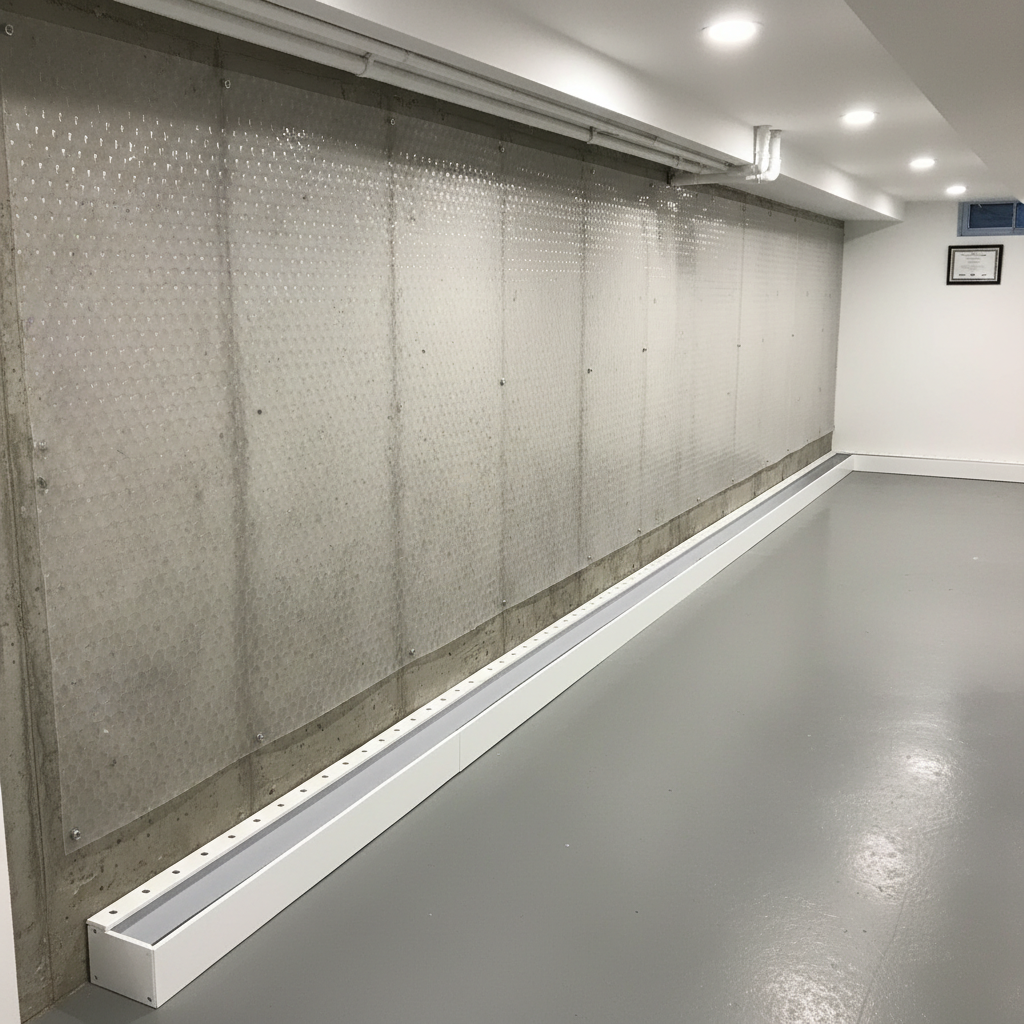
The drainage channel is the PVC pipe or Delta MS plastic drainage strip installed in the concrete perimeter of your basement floor, collecting water that enters through the foundation wall and directing it to the sump pit.
Lifespan: 25 to 50 years.
PVC piping and Delta-style dimple channels are highly durable under normal conditions. The primary failure modes are:
Sediment accumulation: Fine silt and mineral deposits can gradually clog the drain holes or accumulate in the channel bottom, reducing flow. Annual flushing prevents this.
Root intrusion: Tree roots aggressively seek water. Roots can grow into drainage channels through the drain holes and eventually block flow. Homes with large trees close to the foundation are at higher risk.
Improper slope: If the drainage channel was installed without adequate slope toward the sump pit, water can pool in low sections rather than flowing freely. This is an installation quality issue, not a material lifespan issue.
Dimple Membrane (Wall Air Gap)
The Delta MS or equivalent dimple membrane installed on the foundation wall creates an air gap that allows water to drain down the wall face rather than pressing against the framing and insulation.
Lifespan: 20 to 30 years.
The membrane itself is durable high-density polyethylene. It does not rot, rust, or degrade quickly. The practical failure modes are mechanical damage (fasteners pulling out, physical puncture) and, in rare cases, UV degradation at the top edge where it is exposed above grade.
Sump Pump (Primary)
The primary sump pump is the hardest-working component and the one most likely to need attention during the lifespan of the rest of the system.
Lifespan: 7 to 12 years.
Factors that shorten pump life: running continuously or very frequently (high groundwater table), debris entering the pit (gravel, concrete particles), float switch failure that allows the pump to run dry, and lack of an annual test.
Factors that extend pump life: proper pit sizing (allows debris to settle before reaching the pump inlet), regular testing, quality pump specification (0.5HP or better cast iron impeller pump vs small plastic-body pumps).
Sump Pump (Battery Backup)
Lifespan of pump unit: 3 to 7 years. Battery: 3 to 5 years (AGM), 8 to 12 years (lithium).
Backup pumps typically run less frequently than primary pumps and may have extended periods of inactivity. This is actually hard on pump motors: impellers and seals can seize if not exercised periodically. Test the backup pump quarterly to keep it operational.
Summary of Component Lifespans
| Component | Typical Lifespan | Primary Failure Mode |
|---|---|---|
| PVC drainage channel | 25 to 50 years | Sediment, root intrusion |
| Dimple membrane | 20 to 30 years | Mechanical damage |
| Primary sump pump | 7 to 12 years | Motor wear, float failure |
| Battery backup pump | 3 to 7 years | Inactivity, seal failure |
| AGM backup battery | 3 to 5 years | Sulfation, capacity loss |
| Lithium backup battery | 8 to 12 years | Cell degradation |
| Discharge line | 20 to 40 years | Root intrusion, freeze damage |
Understanding Warranty Terms
The waterproofing industry offers a wide range of warranty terms, and the headline “lifetime warranty” that many contractors advertise requires careful reading.
Transferable vs non-transferable: A transferable warranty means if you sell the home, the warranty passes to the buyer. This has real value because it is a selling feature. A non-transferable warranty expires at sale and provides zero value to future owners.
What “lifetime” means: Most “lifetime” waterproofing warranties mean the lifetime of the original installation in the original home, not the lifetime of the homeowner. Some restrict coverage to the original owner. Check the fine print.
What is covered: The warranty typically covers the drainage system against water entry at the perimeter where the system was installed. It does not typically cover flooding from a sump pump failure (which is a mechanical failure, not a system failure), flooding from a clogged discharge line, flooding from a drain that was not part of the original system, or floods from exterior sources not managed by the interior system.
What voids coverage: Common voiding conditions include failure to replace the sump pump when it fails, covering the sump pit or drainage channel with permanent construction without access, modifying the drainage system, and acts of God or extreme weather events beyond design parameters.
Maintenance Schedule
A properly maintained interior waterproofing system requires very little attention but does require some consistent maintenance to reach its full lifespan.
Annual Maintenance
Sump pump test: Pour a bucket of water into the pit to confirm the float switch activates and the pump discharges properly. Observe that the pump stops when the water level drops.
Backup pump test: Disconnect the primary pump and repeat the test to confirm the backup activates.
Discharge line inspection: Trace the discharge line from the sump pit to its outdoor termination. Confirm the outdoor end is clear of debris, ice (in winter), and that water is actually exiting the property when the pump runs.
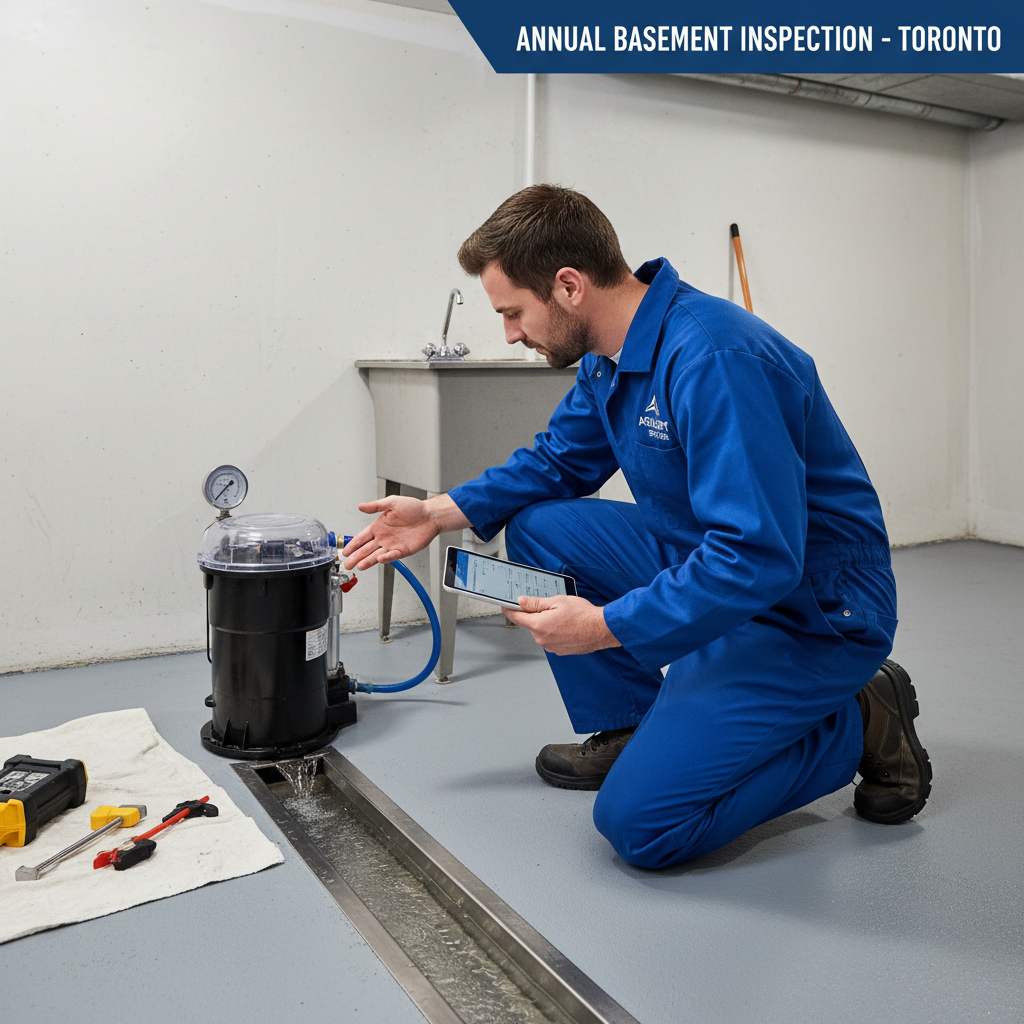
Drainage channel inspection: If accessible, pour water along the perimeter drainage channel and confirm it flows toward the sump pit without pooling.
Every 3 to 5 Years
Battery replacement (AGM): Replace the battery backup battery regardless of apparent condition.
Pump impeller cleaning: Many pump manufacturers recommend periodic impeller cleaning to remove mineral deposits.
Signs the System Is Failing
Water appearing above the drainage channel: If water is pooling on the floor above the drainage channel line, the channel may be blocked.
Sump pump running continuously or not shutting off: Float switch failure, pump unable to keep up with inflow, or discharge line blockage.
Efflorescence appearing on walls above the membrane: Water migrating through the wall above the membrane coverage area.
Musty smell returning after years of absence: May indicate a section of drainage channel is blocked and water is sitting rather than flowing to the sump.
Visible rust or mineral deposits in sump pit: Can indicate the pit is not being flushed adequately.
How Interior Waterproofing Lifespan Compares to Exterior
For comparison, exterior waterproofing (full excavation with external membrane and drain tile) has a similar drainage channel lifespan (25 to 50 years) but the external membrane has a shorter practical lifespan in Toronto’s clay soil, where soil movement and freeze-thaw can cause membrane delamination. Exterior systems also require excavation to inspect or repair, which makes maintenance much more expensive.
Interior waterproofing is the dominant approach in Toronto partly because of this maintenance accessibility advantage. When the interior waterproofing system needs attention, it is reachable without excavation.
For further context, read our guides on Signs Your Basement Needs Waterproofing and Battery Backup Sump Pumps Explained.
Need a check-up on your existing waterproofing system or considering a new installation? Contact our team for a no-pressure inspection and assessment.