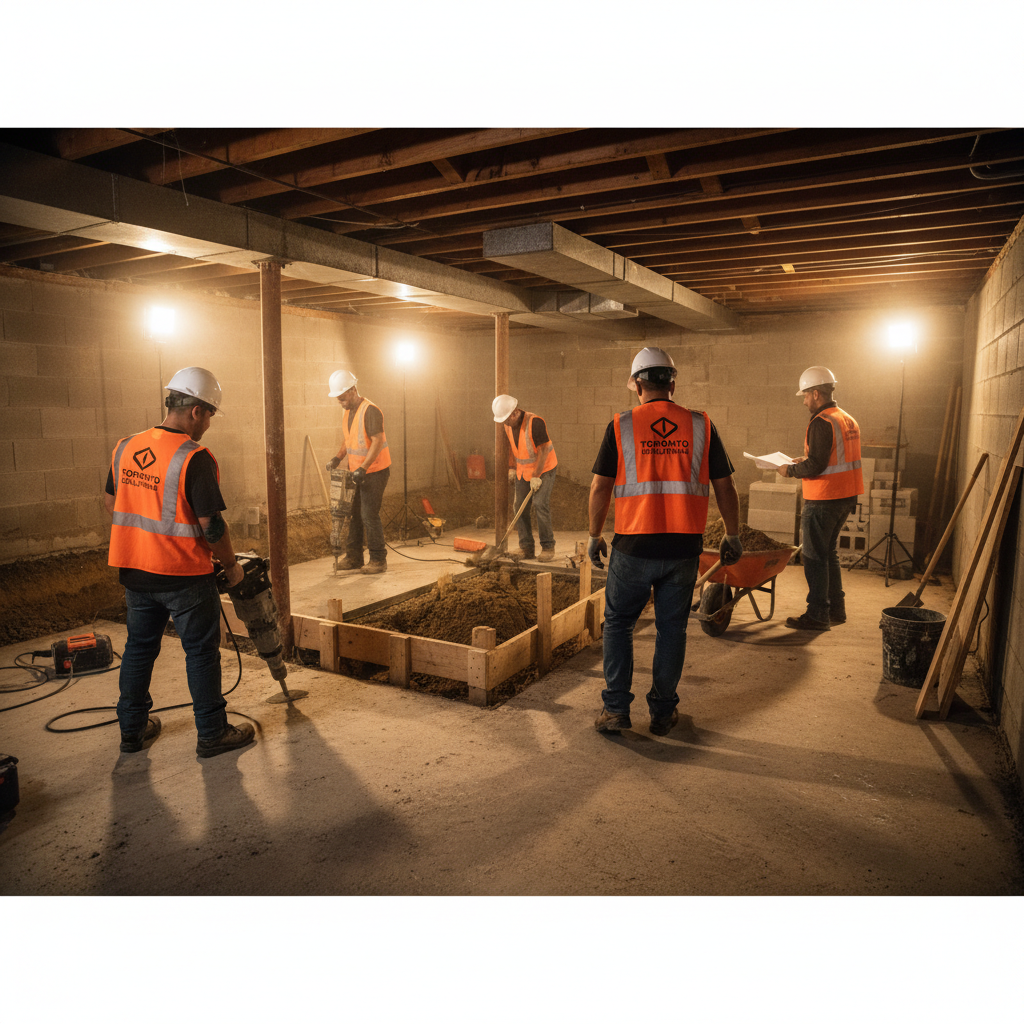
The debate between interior and exterior basement waterproofing is one of the most misunderstood topics in the home improvement space. Contractors on both sides present their preferred method as the only correct answer, leaving homeowners confused about which approach actually fits their situation.
The reality is more nuanced: both methods work, they address different parts of the water intrusion problem, and the right choice depends on your specific situation, your budget, and what is actually causing the water problem in your Toronto home.
What Each Method Actually Does
Understanding the fundamental difference between interior and exterior waterproofing is the starting point for every other decision.
Exterior Waterproofing: Prevention at the Source
Exterior waterproofing involves excavating down to the footing alongside the foundation wall, cleaning the exterior wall surface, applying a waterproofing membrane (rubberized asphalt or a modern polymer membrane) to the exterior wall face, installing a drainage board and drain tile at the footing level, and backfilling. The goal is to prevent water from ever contacting the wall or, if it does contact the wall, to direct it downward to the drain tile before it can find a path through the wall.
Exterior waterproofing is what is done on new construction. When a new house is built in Toronto, the exterior walls are membraned and drain tile is installed at the footing. This is the origin point for water management in a home.
Interior Waterproofing: Management After Entry
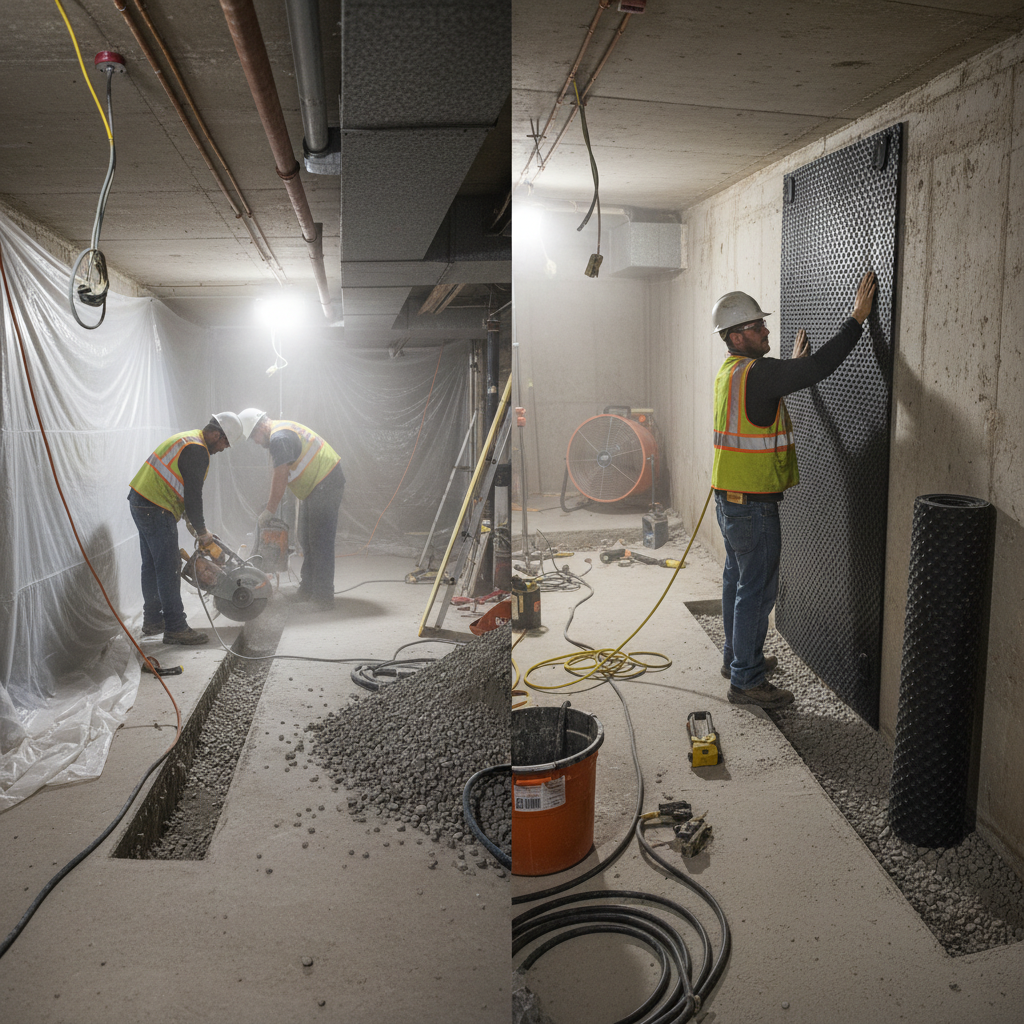
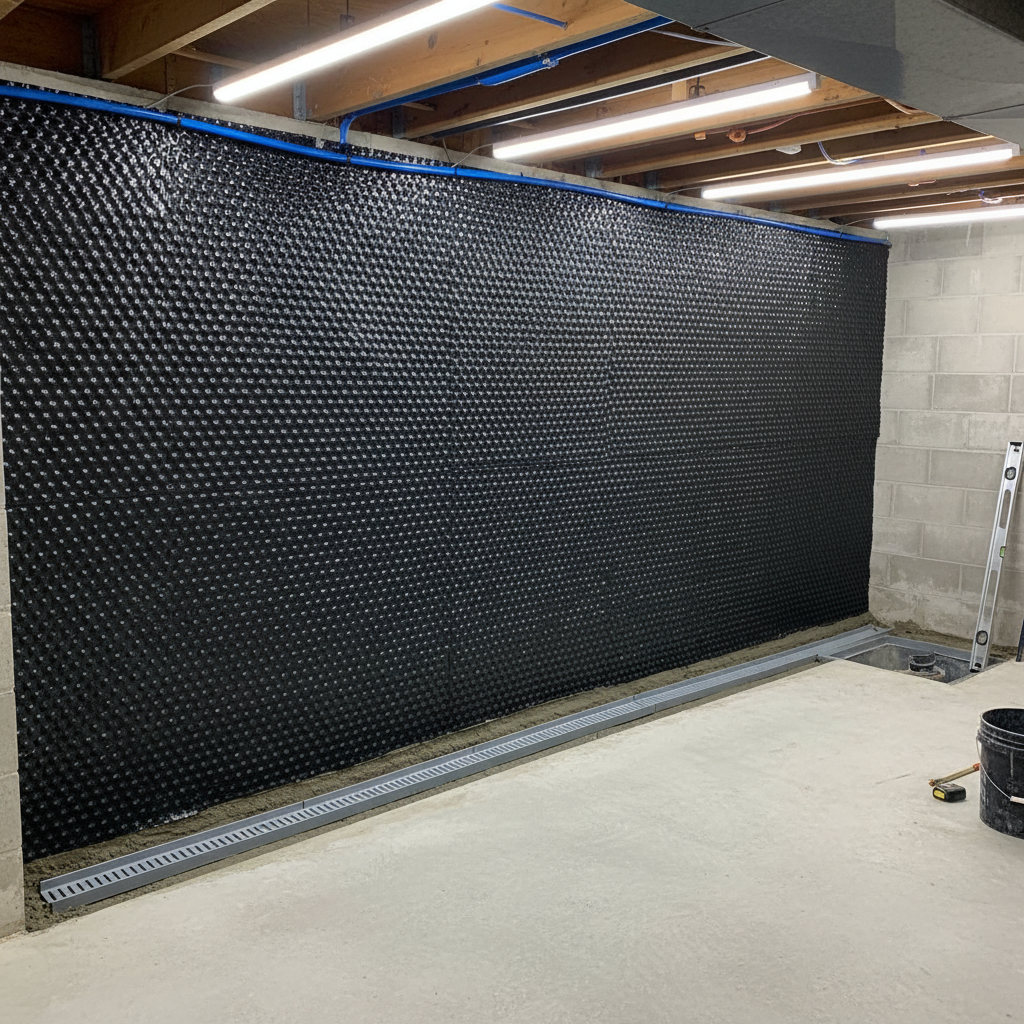
Interior waterproofing accepts that water will enter the basement (through cracks, through the foundation wall itself, or through the wall-floor joint) and manages it once it arrives. The drainage channel installed along the perimeter intercepts incoming water, directs it to the sump pit, and the sump pump removes it from the building.
Interior waterproofing does not prevent water from touching the wall. It prevents water that has penetrated the wall from causing damage by collecting it before it can reach the framing, insulation, or finished surfaces.
Side-by-Side Comparison
| Factor | Interior Waterproofing | Exterior Waterproofing |
|---|---|---|
| Typical cost (Toronto home) | $12,000 to $20,000 | $15,000 to $40,000 per wall ($60,000 to $150,000 full perimeter) |
| Disruption | Moderate (basement only, 2 to 5 days) | Extreme (excavation of yard, driveways, landscaping) |
| Prevents water entry | No (manages after entry) | Yes (prevents entry at exterior) |
| Wall structure protection | No direct protection | Yes (membrane protects wall) |
| Maintenance access | Easy (interior accessible) | Difficult (requires re-excavation) |
| Lifespan | 25 to 50 years (drainage channel) | 20 to 30 years (exterior membrane) |
| Permit required | Plumbing permit | Building permit plus grading |
| Best for | Existing homes with seeping walls | New construction, new additions |
| Requires excavation | No | Yes |
| Landscape disruption | None | Major |
When Interior Waterproofing Is the Right Choice
Interior waterproofing is appropriate for the vast majority of Toronto homeowners dealing with a wet basement. Specific situations where it is the right choice:
Water seeping through existing wall cracks or the wall-floor joint. Interior drainage intercepts this water effectively. The wall itself is not damaged by the seepage if the drainage system prevents it from reaching anything it can damage.
High groundwater table causing hydrostatic pressure. When groundwater pressure pushes water through the concrete wall or floor, exterior membrane alone cannot stop it. Only active drainage (a system that relieves the hydrostatic pressure) is effective. Interior drainage channels do this.
Budget constraints. The cost differential between interior and exterior is enormous. For the average Toronto homeowner on a realistic budget, interior waterproofing at $12,000 to $20,000 is achievable. Full exterior perimeter waterproofing at $80,000 to $150,000 is not.
Typical seeping Toronto basement. Most Toronto homes built before 1960 will eventually have some water seepage through the foundation. This is normal and expected as the original exterior waterproofing (if any was applied) degrades. Interior waterproofing is specifically designed for this scenario.
When Exterior Waterproofing Is Required
There are genuine situations where exterior waterproofing is the right or only option:
New addition construction. When adding an addition to your home, the new foundation wall must be waterproofed on the exterior during construction. This is standard practice and the only opportunity to do exterior waterproofing without major excavation cost.
Foundation wall structural damage. If the foundation wall itself has significant structural damage (not just cracks, but actual deterioration, spalling, or displacement), exterior access is needed for the repair. While excavated for repair, exterior waterproofing is added simultaneously.
Surface drainage issues. If the water problem is primarily caused by surface runoff directed against the house (poor grading, downspout drainage toward the foundation), fixing the exterior grade is the correct first step, and adding exterior membrane while at it can make sense.
New construction. Every new basement construction should include exterior waterproofing as part of the standard build.
Hybrid Approaches
Some projects use a combination of interior and exterior methods. Common hybrid scenarios:
Exterior waterproofing on one problematic wall plus interior system on the remaining perimeter. When one wall is the primary water entry point and has accessible exterior space (a side yard with no landscaping, utilities, or adjacent structure), that wall may be excavated and membraned while the rest of the perimeter is addressed with interior drainage.
Exterior grading correction plus interior drainage. Correcting the exterior grade (ensuring the yard slopes away from the house) reduces water pressure against the walls, while the interior system handles any remaining seepage.
The Toronto Urban Context
One reason interior waterproofing dominates in Toronto specifically is the urban lot configuration. Toronto’s older residential neighbourhoods have minimal side yard setbacks, mature trees close to the foundation, finished driveways, wooden decks attached to the home, and landscaping that would require complete removal for excavation. The disruption of exterior waterproofing on a typical Toronto lot is not just expensive; it is enormously invasive.
In contrast, interior waterproofing is done entirely within the basement. The yard, driveway, deck, and garden are untouched. For a semi-detached home in Riverdale or a row house in the Annex, exterior waterproofing may be physically impossible without major property damage to the neighbouring structure.
Choosing an Interior Waterproofing Contractor
When selecting a contractor, choose one that:
- Has experience specifically with Toronto basement conditions (clay soil, older foundations)
- Pulls the required plumbing permit (do not work with contractors who suggest skipping permits)
- Offers a transferable warranty with clear, reasonable exclusions
- Provides an itemized quote that includes all components
For further context, read our guides on Interior Basement Waterproofing Cost and Signs Your Basement Needs Waterproofing.
Not sure whether your Toronto basement needs interior or exterior waterproofing? Get an honest assessment from our team and we will tell you which approach actually makes sense for your specific situation.