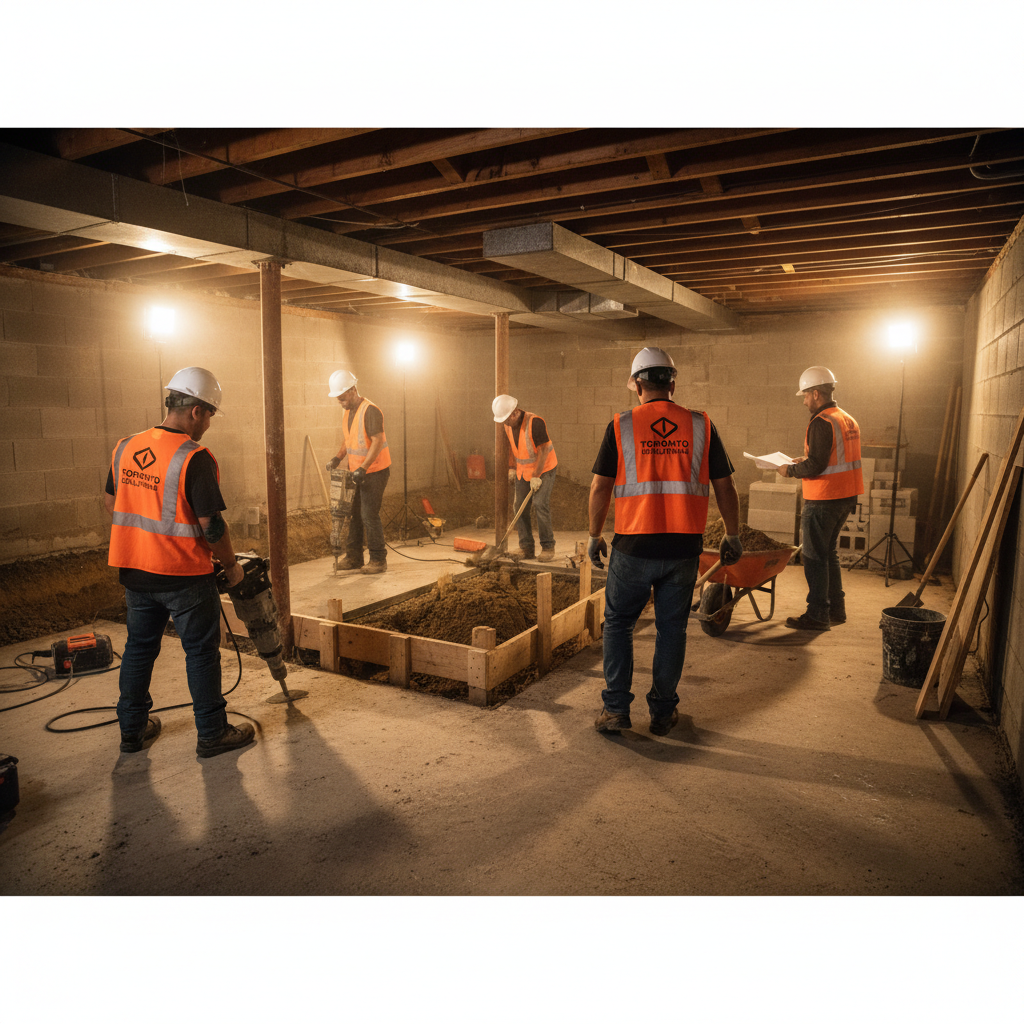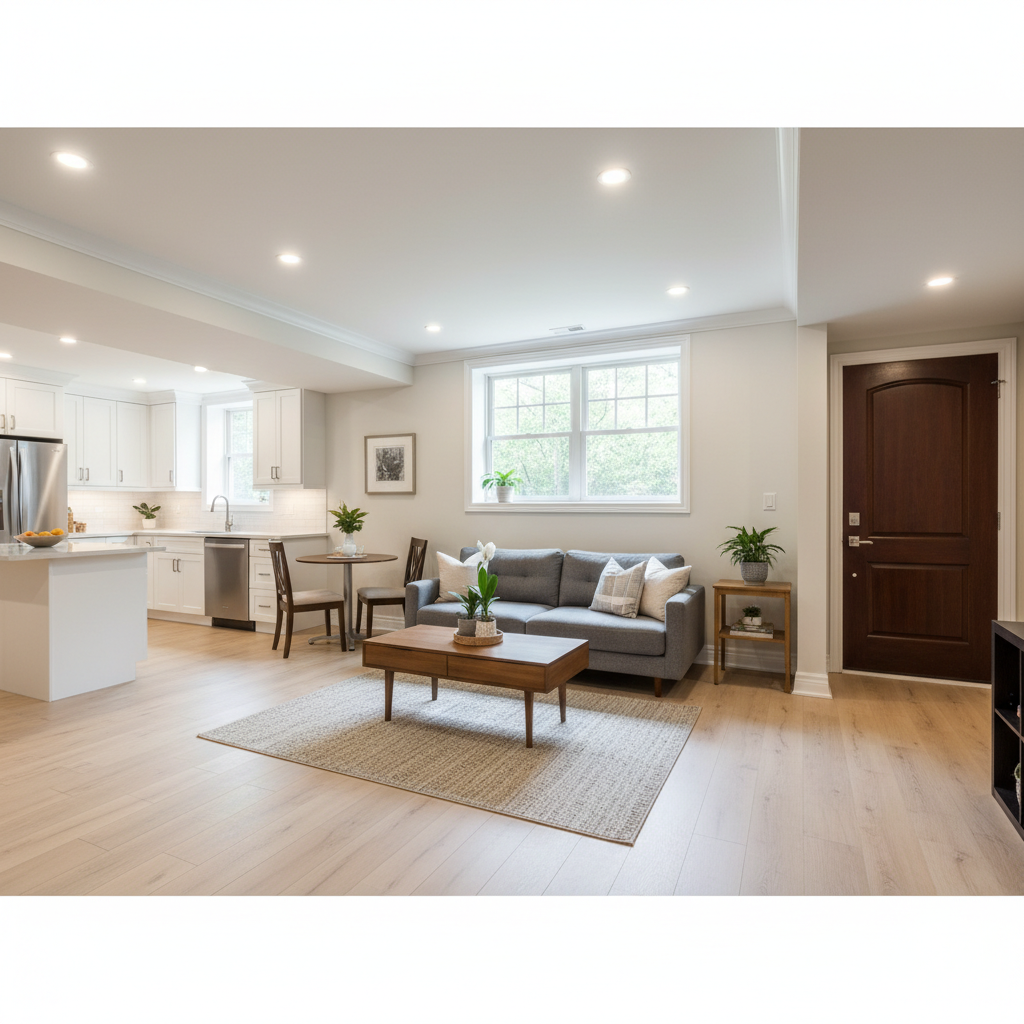
Creating a legal basement apartment in Toronto is one of the most financially compelling renovations available to homeowners. A legal one-bedroom basement suite in Toronto rents for $1,800 to $2,400 per month in 2026. Over 10 years, that is $216,000 to $288,000 in rental income. But the word “legal” is doing significant work in that sentence: an illegal basement apartment exposes you to fines, insurance coverage gaps, forced closure at sale, and genuine liability if a tenant is injured.
This guide covers every requirement you need to meet to create a legal secondary suite in Toronto, from OBC ceiling heights and egress windows to fire separation, permits, and City registration.
What Makes a Basement Apartment “Legal” in Toronto
A legal basement apartment in Toronto requires compliance with three overlapping sets of rules:
- Ontario Building Code (OBC): Specifies the physical requirements (ceiling height, egress, fire separation, ventilation)
- City of Toronto Zoning By-law: Permits secondary suites in most residential zones and sets minimum and maximum unit sizes
- City of Toronto permit and registration process: The formal approval process that makes the suite legally registered
All three must be addressed. A suite that meets OBC but was never permitted is still illegal. A suite that was permitted but does not meet OBC dimensions is non-compliant.
OBC Section 9.36: The Physical Requirements
OBC Section 9.36 is the specific provision that governs secondary suites (including basement apartments). Here are the key physical requirements:
Ceiling Height: 1.95 Metres (6 Feet 5 Inches)
The minimum ceiling height for all habitable rooms (living, sleeping, dining, cooking) in a secondary suite is 1.95 metres, measured from the finished floor to the lowest obstruction.
This is slightly lower than the 2.1m requirement for standard habitable rooms in a primary dwelling (Section 9.5.3.1), but still exceeds the actual ceiling height of most Toronto basements built before 1960. Pre-war Toronto homes in areas like The Annex, Leslieville, and Roncesvalles typically have raw basement heights of 6’0” to 6’8”, which become 5’8” to 6’4” after finishes. That falls short of 1.95m (6’5”).
If your basement does not meet this minimum, underpinning or bench footing is required. See the basement ceiling height guide for a detailed breakdown of your options.
Egress Windows: Section 9.9.10.1
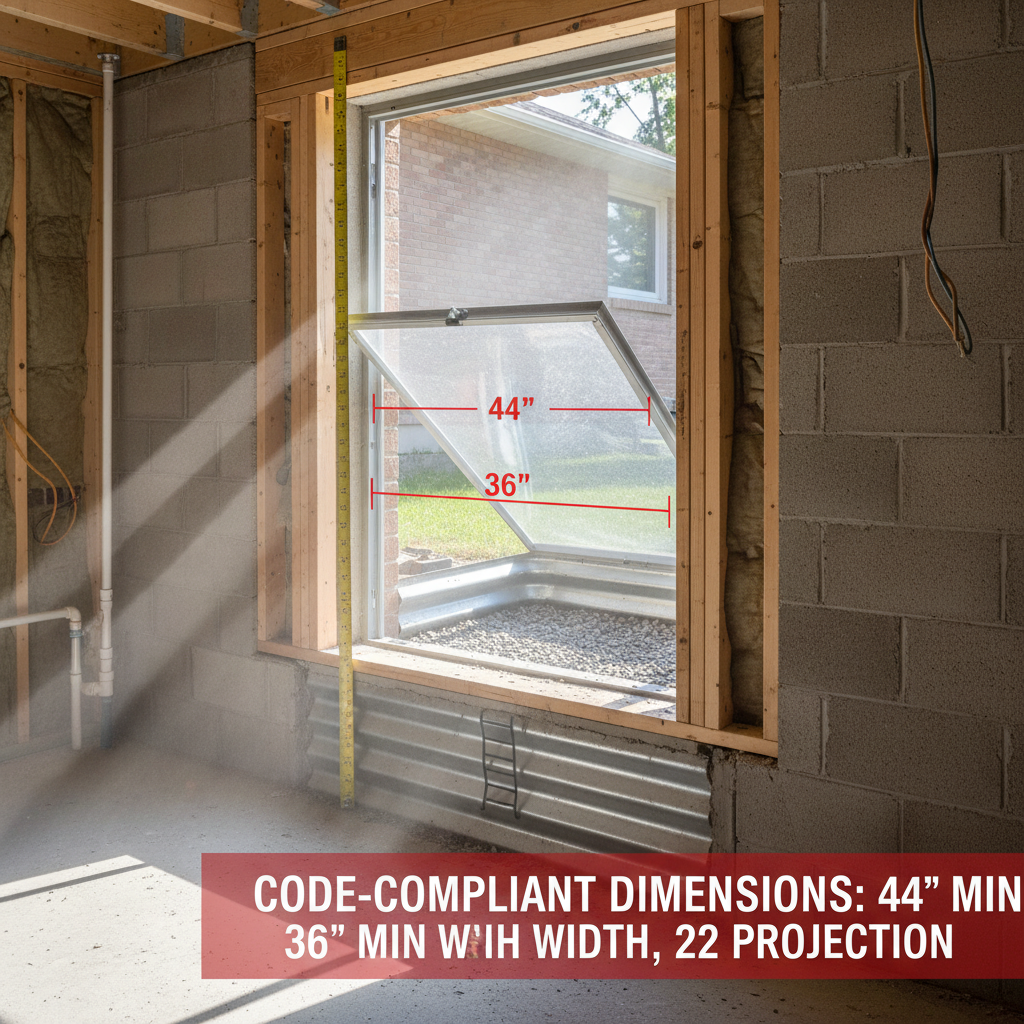
Every bedroom in a secondary suite must have an egress window that allows emergency escape. OBC Section 9.9.10.1 specifies:
- Minimum opening area: 0.35 square metres
- No dimension of the opening (height or width) less than 380mm
- Maximum sill height from the floor: 1.5 metres (so occupants can actually climb through)
- Must be openable from the inside without tools or special knowledge
In practice, a standard basement window (the small horizontal slider common in pre-1960 Toronto homes) does not meet these requirements. Replacing it with a larger egress window, which typically requires enlarging the window opening in the concrete or masonry wall, costs $2,500 to $5,000 per window including concrete work and new frame.
Fire Separation
The secondary suite must be separated from the main dwelling unit by a fire separation assembly. OBC specifies the required fire resistance rating, which for most residential applications means:
- 30-minute fire resistance rating on the ceiling/floor assembly between the suite and the floor above (typically achieved with Type X drywall)
- Fire separation at all walls shared between the suite and the main dwelling
This fire separation is distinct from the normal sound insulation that homeowners might add; it has specific assembly requirements that must be documented in the permit drawings and inspected.
Separate Means of Egress
The suite must have a means of egress that does not require passing through the main dwelling unit. Options include:
- A dedicated exterior door from the suite opening directly to the exterior (a walkout, or a door from a below-grade stairwell)
- An interior common corridor with its own fire separation from both units that leads to an exterior exit
Creating a separate entrance often requires significant work: either a new door opening cut through a foundation wall (structural engineering required) or construction of an exterior stairwell.
Smoke Detectors and CO Detectors
- Interconnected smoke detectors required in each sleeping room, outside each sleeping area, and on each level
- Carbon monoxide detectors required on each level and outside sleeping areas
- These must be hardwired or include battery backup
Kitchen Requirements
The suite must have a complete kitchen facility: sink with hot and cold water, a cooking facility, and refrigeration. The kitchen does not need to be large, but it must be a complete, self-contained cooking space.
Ventilation
OBC Section 9.36 requires that the secondary suite have its own mechanical ventilation (heat recovery ventilator or exhaust fan systems meeting OBC minimums). The suite cannot rely solely on natural ventilation through windows.
City of Toronto Zoning Requirements
In addition to OBC, Toronto’s Zoning By-law 569-2013 sets parameters for secondary suites:
Where permitted: Secondary suites are permitted in detached, semi-detached, and townhouse dwellings in most residential zones across Toronto. Since Ontario’s More Homes Built Faster Act (Bill 23, 2022), secondary suites are permitted in virtually all residential zones, and zoning restrictions on basement suites have been significantly reduced.
Minimum unit size: No explicit minimum is specified in the Zoning By-law, but OBC functional requirements effectively set a practical minimum of approximately 25 to 30 square metres for a complete suite.
Parking: Historically, Toronto required additional off-street parking for a secondary suite. Bill 23 removed parking requirements for secondary suites throughout Toronto. You do not need to add a parking space.
The Permit Process
Creating a legal basement apartment requires a building permit from the City of Toronto. The permit process involves:
Building permit: Covers the structural and architectural scope (fire separation, egress windows, ceiling height, separate entrance). Requires architectural drawings and, if underpinning is involved, structural engineering drawings.
Plumbing permit: Required for new bathroom, kitchen sink, and any drain modifications.
ESA electrical inspection: Required for new circuits, panel modifications, and final electrical sign-off.
Permit fees for a secondary suite conversion (without underpinning) typically run $1,500 to $3,000 for the building permit, plus $300 to $600 for the plumbing permit. With underpinning, permit fees are higher because the declared construction value is larger.
Current plan review times at Toronto Building for secondary suite permits run 6 to 10 weeks for a complete application.
Secondary Suite Registration
After all permits are closed out, the suite must be registered with the City of Toronto through the Multi-Tenant Housing registry. Registration:
- Confirms the suite meets all code and zoning requirements
- Allows you to legally advertise the unit for rent
- Provides a registration number that should be referenced in any lease agreement
- Requires a registration fee (approximately $200 to $500, subject to change)
An unregistered suite, even if it was properly permitted and inspected, is technically operating outside the registration requirement after the permit close-out. Registration is the final step.
Rental Income Potential
Legal one-bedroom basement suites in Toronto (well-located, properly finished) currently rent for $1,800 to $2,400 per month in 2026. Two-bedroom suites command $2,200 to $2,900 per month in many neighbourhoods.
As a rough calculation, at $2,000 per month:
- Annual rental income: $24,000
- 10-year cumulative income: $240,000
- Return of a $80,000 conversion cost (suite only, no underpinning): approximately 3.3 years
The income calculation changes significantly when underpinning is required, pushing total project cost to $130,000 to $200,000 and the payback period to 6 to 9 years before profit is generated. However, underpinning also permanently increases the value of the home itself, which is an additional return not captured in the rental income calculation alone.
When Underpinning Is Required for a Legal Suite
If your basement does not have 1.95m of finished ceiling height, underpinning is required. There is no OBC variance or exception process for ceiling height in a secondary suite. The minimum is the minimum.
For Toronto homes built before 1960, this is the majority of cases. The underpinning and legal basement apartment guide covers the full combined project in detail.
Requirements Checklist
| Requirement | OBC Reference | Common Cost to Address |
|---|---|---|
| Ceiling height 1.95m minimum | Section 9.36 | Underpinning if needed: $50,000 to $120,000 |
| Egress window in bedrooms | Section 9.9.10.1 | $2,500 to $5,000 per window |
| Fire separation assembly | Section 9.36 | Included in finishing scope |
| Separate means of egress | Section 9.36 | $5,000 to $18,000 for new entrance |
| Smoke and CO detectors | Section 9.36 | $500 to $1,500 |
| Complete kitchen | Section 9.36 | $8,000 to $20,000 |
| Mechanical ventilation | Section 9.36 | Included in HVAC scope |
| Building permit | City of Toronto | $1,500 to $3,000 |
| Suite registration | City of Toronto | $200 to $500 |
For further context, read our guides on Basement Ceiling Height Requirements and Basement Finishing Cost.
Ready to start planning your legal basement suite? Contact our team to understand whether underpinning is required and get a full project scope that covers everything from structural work through permit close-out.