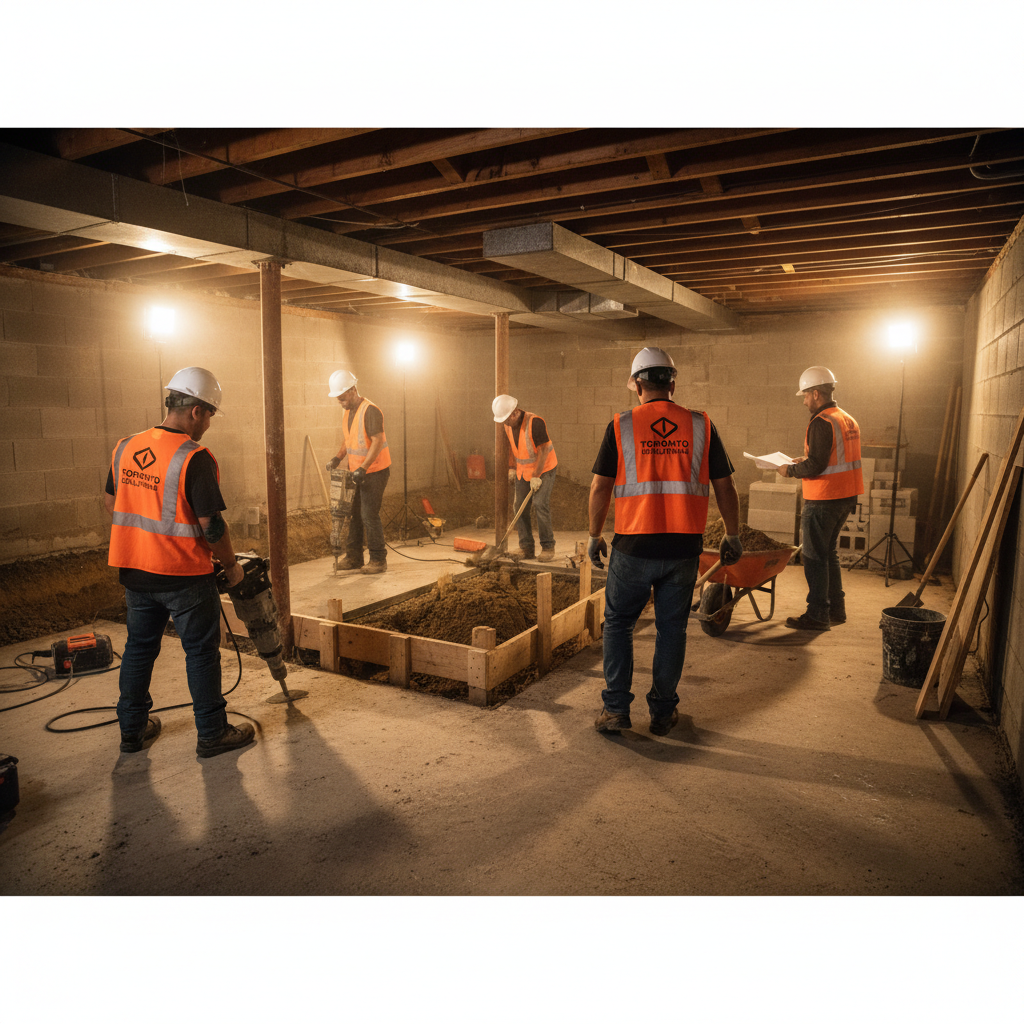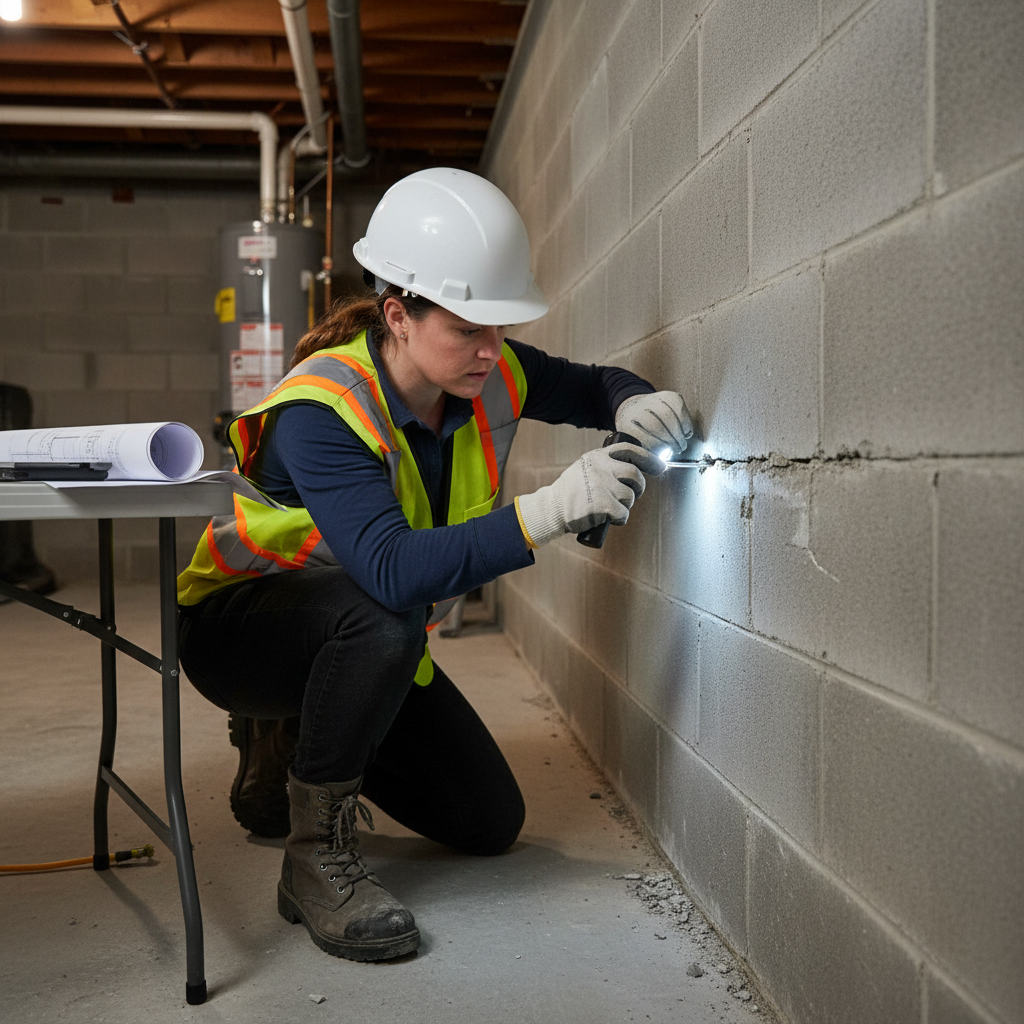
Not every foundation crack is a structural emergency. Not every structural problem requires underpinning. The challenge for Toronto homeowners is understanding which side of that line their specific crack falls on, because getting it wrong in either direction is expensive: unnecessarily underpinning a stable crack wastes $60,000 to $80,000, while injecting a crack that is actively settling gives you false confidence while the real problem gets worse.
This guide provides the diagnostic framework engineers and experienced contractors use to distinguish between cracks that can be sealed and cracks that indicate the need for structural intervention.
Understanding What Crack Injection Does and Does Not Do
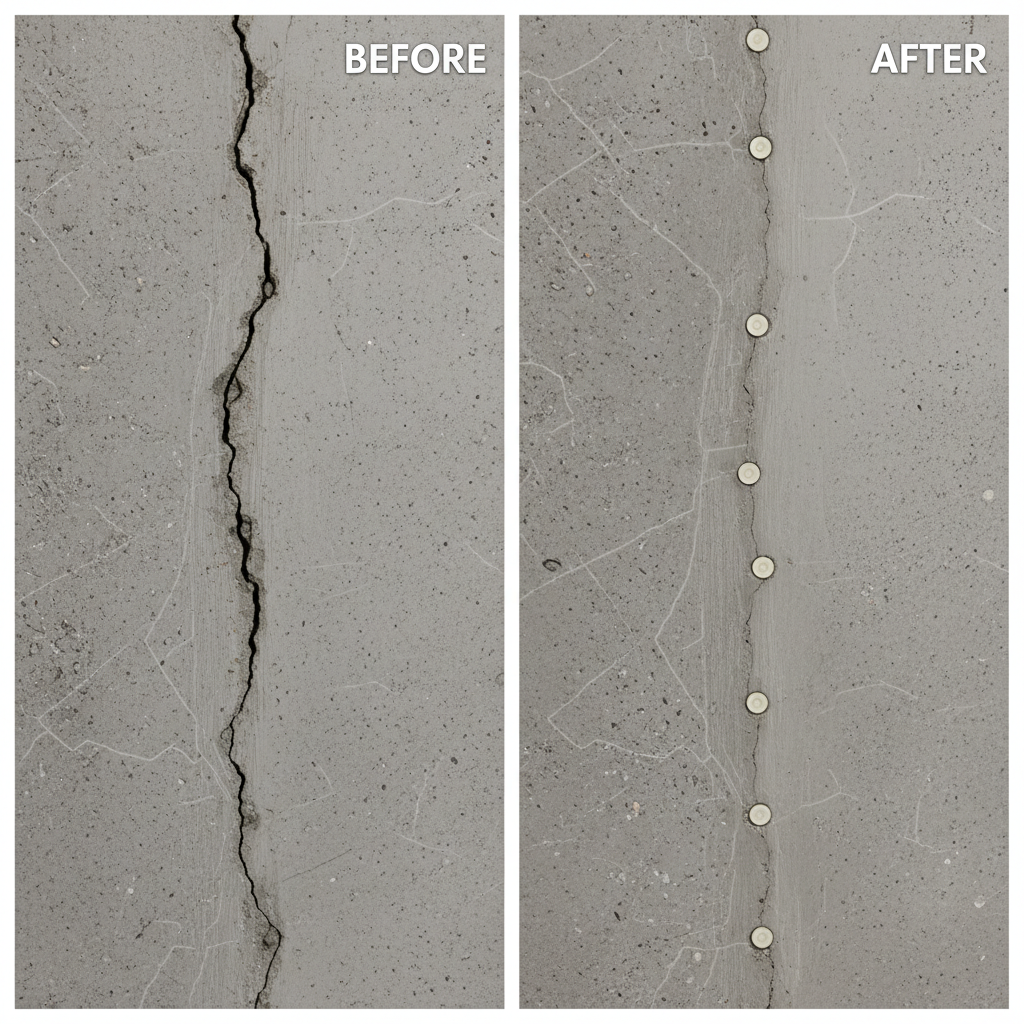
Crack injection fills an existing crack with either polyurethane foam or epoxy resin to prevent water entry and, in the case of epoxy, restore some tensile strength across the crack plane.
What crack injection does:
- Prevents water entry through an existing crack
- Fills the crack void to prevent it from becoming a collection point for ice and freeze-thaw debris
- Restores some structural integrity across the crack (epoxy only, when properly specified)
- Addresses cosmetic appearance
What crack injection does NOT do:
- Stop foundation movement that is causing new cracks
- Improve the bearing capacity of a footing
- Correct settlement that has already occurred
- Prevent future cracking if the underlying cause is active
If the cause of the crack is ongoing (active settlement, soil pressure, frost heave that recurs every winter), injection is a temporary measure at best. The crack will reopen or a new crack will form adjacent to the injection point.
Crack Classification: What Each Type Tells You
Vertical Cracks in Poured Concrete Walls
Vertical cracks running straight up and down the face of a poured concrete wall are usually caused by concrete shrinkage during curing or minor thermal movement. These are the most common type in Toronto homes built after 1950, when poured concrete foundations replaced rubble stone and brick.
A vertical crack with no displacement (both sides of the crack are at the same level) and no widening trend is typically a candidate for injection, particularly if it is allowing water entry.
A vertical crack that is wider at the top than the bottom (indicating the foundation is bowing or tipping at one corner) is a different matter and warrants engineering assessment.
Horizontal Cracks in Block or Poured Concrete Walls
Horizontal cracks are the most serious type. They indicate that lateral soil pressure is overwhelming the wall’s ability to resist. In block foundation walls (common in Toronto homes from the 1940s to 1970s), a horizontal crack at mid-wall height is a sign that the wall is actively bowing inward.
Injection will not solve a horizontal crack. The wall requires either carbon fibre reinforcement straps, wall anchors, or in severe cases, replacement of the wall section. If the wall has already bowed more than 25mm inward, wall replacement is typically required.
Stair-Step Cracks in Brick or Block Walls
Stair-step cracks following the mortar joints in a brick or concrete block foundation indicate differential settlement. One section of the footing is dropping relative to another. The crack pattern follows the weakest path, which is the mortar joint.
A stable stair-step crack (not widening, not displacing) in a pre-war Toronto home is sometimes simply the result of decades of minor settling that has reached equilibrium. An active stair-step crack that is widening seasonally or showing ongoing displacement requires engineering assessment and likely underpinning of the settled section.
Diagonal Cracks
Diagonal cracks at corners of window openings or at wall corners indicate differential movement at specific points. These are often associated with inadequate footings at corners or with soil conditions that cause uneven bearing. Engineering assessment is required before any repair.
Diagnostic Criteria: When Injection Is Appropriate
Crack injection is appropriate when all of the following are true:
- The crack is in a poured concrete wall (not block or brick)
- The crack is vertical or slightly diagonal without displacement
- There is no evidence of ongoing settlement (floors are level, doors and windows operate normally, crack width has not changed in the past 12 months)
- The purpose of repair is primarily waterproofing (stopping water entry through the crack)
Even in cases that meet these criteria, an engineer assessment confirms whether the crack is stable. A simple monitoring exercise (marking the crack ends with a date and re-measuring in 30 and 90 days) gives meaningful data before committing to injection.
Diagnostic Criteria: When Underpinning Is Required
Underpinning is required when crack evidence points to active settlement or inadequate footing bearing capacity. Specific indicators:
- Horizontal crack in any foundation wall. Lateral soil pressure that is sufficient to crack the wall needs more than injection to resolve.
- Active displacement across the crack face. One side of the crack is higher than the other, and the displacement is measureable.
- Floor slope. A basement floor or main floor that slopes measurably toward a wall or corner indicates footing settlement at that location.
- Recurring cracks after previous injection. If a crack was previously injected and has reopened at the same location or adjacent to it, the cause is structural movement, not shrinkage.
- Doors and windows sticking. In pre-war Toronto homes, seasonal sticking is normal. Year-round sticking that worsens progressively is a sign of cumulative settlement.
- Multiple cracks forming a pattern. A single shrinkage crack is not alarming. A pattern of cracks forming a coherent settlement pattern is.
Cost Comparison
| Repair Type | Typical Cost Range | What It Addresses |
|---|---|---|
| Polyurethane crack injection | $500 to $900 per crack | Water entry through stable crack |
| Epoxy crack injection | $700 to $1,200 per crack | Structural restoration of stable crack |
| Carbon fibre straps (horizontal crack) | $3,000 to $8,000 | Reinforcing bowing wall, halting movement |
| Wall anchors | $5,000 to $12,000 | Stabilizing and recovering bowed wall |
| Localized underpinning (one side) | $12,000 to $30,000 | Active settlement at one footing section |
| Full perimeter underpinning | $50,000 to $120,000 | Foundation inadequacy across full perimeter |
Toronto-Specific Scenarios
Pre-war brick semi in the Annex: Stair-step crack in the brick foundation wall at one corner, worsening over 2 years. Floor slopes noticeably toward the affected corner. This pattern is active differential settlement and requires underpinning at the settled section, not injection. The crack is a symptom, not the problem.
1950s North York bungalow: Single vertical crack in poured concrete wall, 2mm wide, seeping water during spring thaw. No displacement, no widening trend. Doors and windows operate normally. This is a good candidate for polyurethane injection to stop water entry, after confirming crack stability with a monitoring period.
Annex Victorian rowhouse: Horizontal crack at mid-height of a block foundation wall, with visible inward bow of approximately 20mm. The wall is under active lateral pressure. Injection will not work here. The wall needs carbon fibre reinforcement or anchor plates, and the underlying drainage condition that is building soil pressure against the wall needs to be addressed with interior waterproofing.
The Engineer’s Role in the Decision
For any crack that is not obviously a simple cosmetic shrinkage crack, a structural engineering assessment is the correct starting point. The engineer will:
- Measure crack width, length, and displacement
- Assess whether the crack is active or dormant
- Review other structural indicators (floor level, door operation, exterior grade)
- Recommend the appropriate repair approach
- Provide sealed drawings if structural work is required for a permit
Contact a foundation repair specialist if you are seeing cracks that show any of the serious indicators listed in this guide.
For further context, read our guides on Foundation Repair Cost and Signs Your Basement Needs Waterproofing.
Not sure whether your foundation crack requires injection or something more significant? Get a free assessment from our team and we will give you an honest answer based on what we actually see on site.