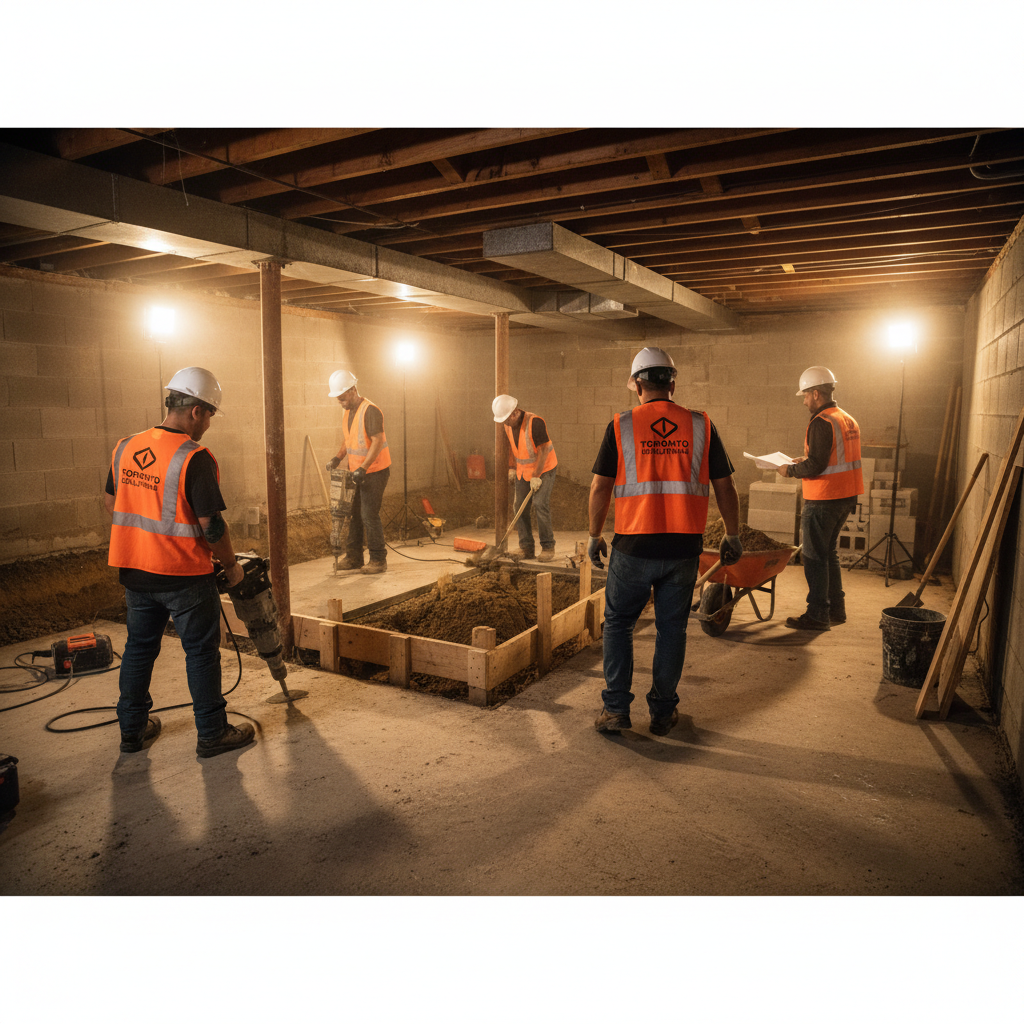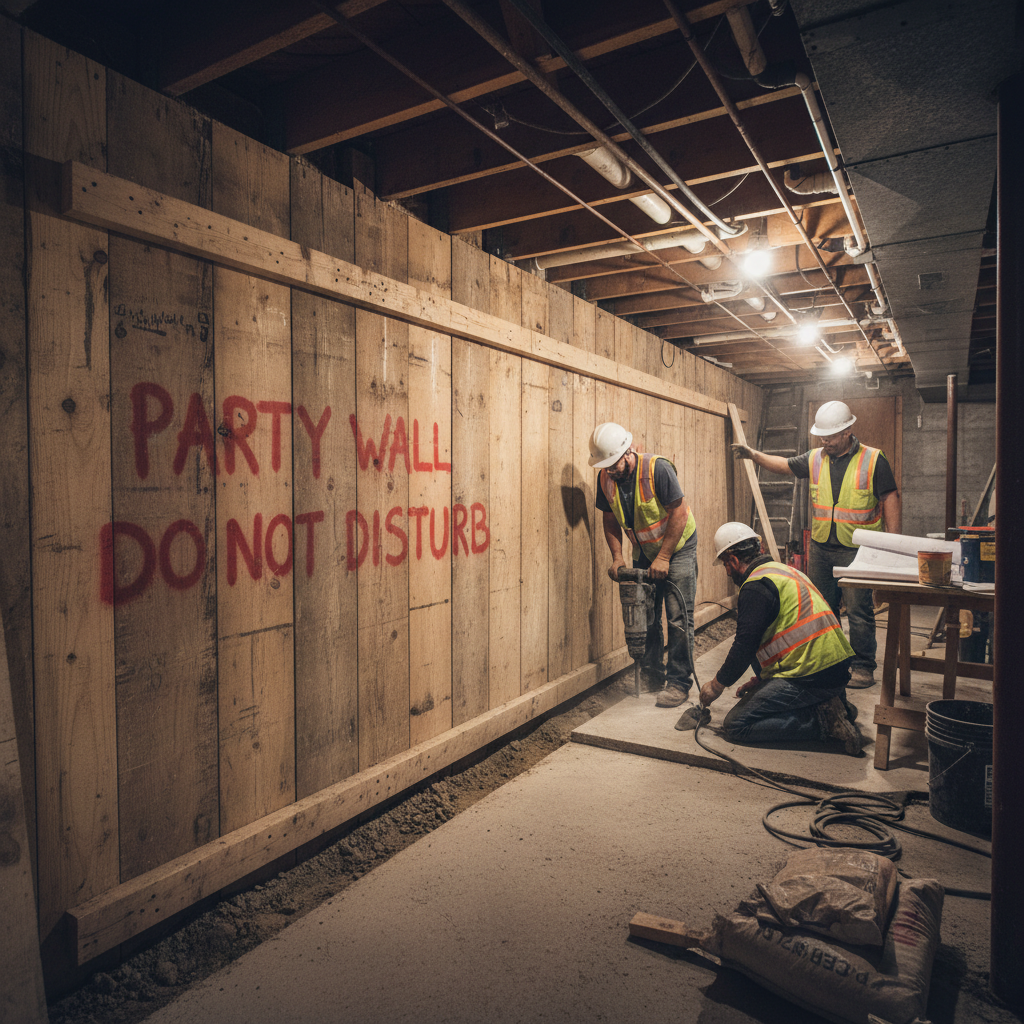
About 40 percent of Toronto’s residential housing stock is semi-detached. Neighbourhoods like the Annex, Riverdale, Leslieville, East End, Roncesvalles, and Trinity Bellwoods are defined by the twin-home streetscapes that give them their character. If your home is one of these semis, and most of them were built before 1950 with low basements, underpinning involves an additional layer of complexity that detached home owners do not face: the party wall.
This guide explains everything you need to know about underpinning a semi-detached Toronto home, from the structural implications of the party wall to the legal mechanics of a Party Wall Agreement.
What a Party Wall Is and Why It Matters for Underpinning
The party wall is the shared structural wall between two semi-detached homes. Structurally, it carries the floor and roof loads of both homes. Both foundations provide support for both homes at the shared wall location.
This structural interdependency means that when you excavate below the footing near the party wall during underpinning, you are temporarily affecting the support of a footing that also carries your neighbour’s structure. That is the core of the party wall concern in underpinning projects.
In well-designed underpinning projects, this concern is addressed systematically:
- The structural engineer analyzes the party wall footing as part of the underpinning design
- The party wall sections (those closest to the party wall) are specified for last in the underpinning sequence
- The new footings on both sides of the party wall section are all fully cured before the party wall section itself is excavated
- The depth and dimensions of the party wall section excavation are specified by the engineer based on the existing footing design
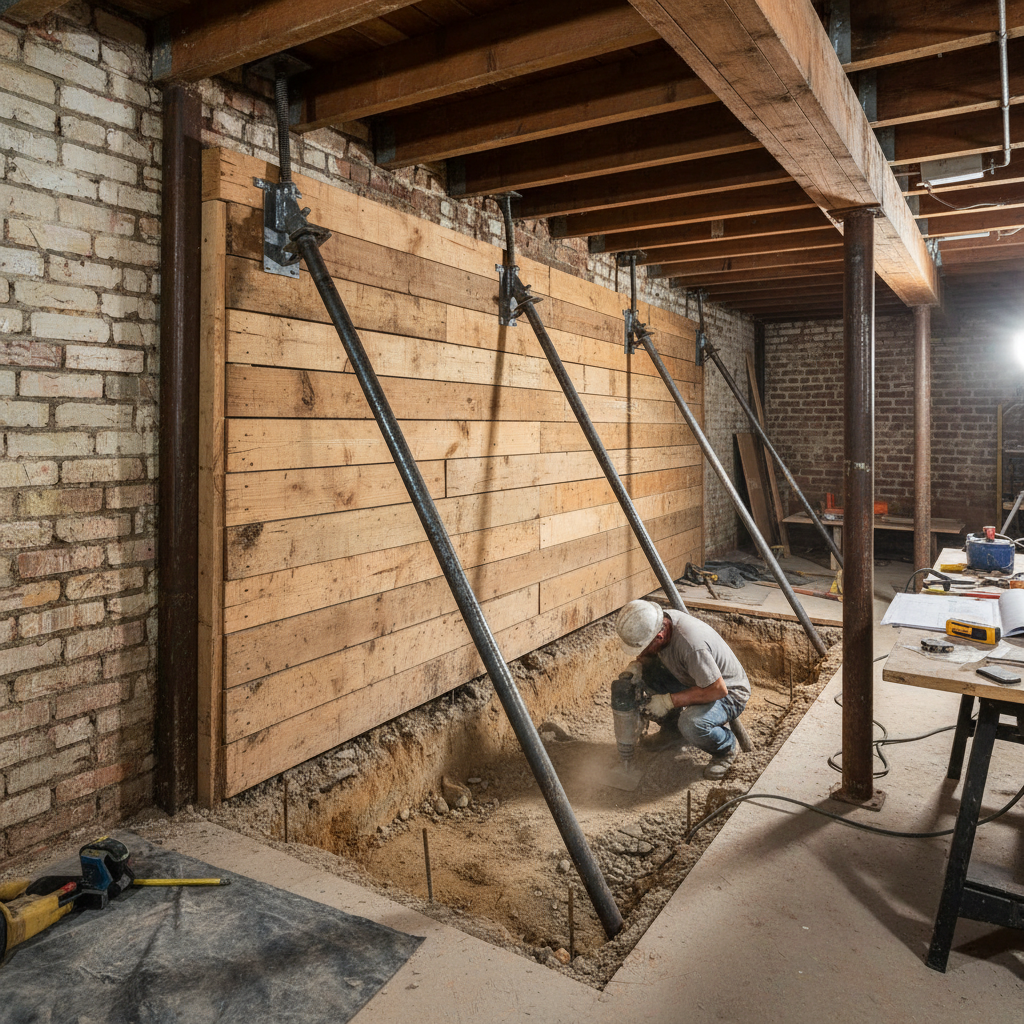
When this sequencing is followed correctly, the party wall is never unsupported during the underpinning process.
The Party Wall Agreement: What It Is and Why You Need One
A Party Wall Agreement is a written document that formalizes the relationship between the two homeowners during a construction project that affects or is near the party wall.
For underpinning projects, the agreement typically includes:
- Description of the planned underpinning scope (depth, perimeter, pin sections)
- The structural engineer’s confirmation that the work will not affect the neighbour’s structural integrity
- Notification of the start date and expected construction duration
- Agreement on hours of operation during construction
- A process for documenting the condition of the neighbour’s property before work begins (typically a photo survey of interior and exterior)
- Process for resolving any claims of damage that the neighbour attributes to the construction
- Insurance confirmation (contractor and homeowner)
The Party Wall Agreement is prepared by a lawyer with input from the structural engineer. Cost to prepare: $1,500 to $3,000, typically split between the two parties or paid entirely by the party initiating the work.
Neighbour Notification: What Is Required and When
Toronto’s building permit process requires the building permit holder to notify adjacent property owners when excavation will occur within 4.5 metres (approximately 15 feet) of the adjacent property line. For a semi-detached underpinning project, this notification is mandatory.
The notification must be in writing and typically precedes the start of construction by a minimum period specified in the permit conditions. Notification does not require the neighbour’s approval; it is an informational requirement.
However, practical experience strongly suggests going beyond notification to a genuine conversation with your neighbour before the permit is even applied for. Semi-detached homes share walls, foundations, and many years of neighbourly proximity. A project that catches your neighbour by surprise and appears to threaten their home creates conflict that is difficult to resolve once construction has begun.
The best approach: speak with your neighbour early in the assessment phase, explain what underpinning is and how it is done safely, share the engineer’s role in protecting both properties, and invite them to review the Party Wall Agreement before construction begins.
The Construction Sequence Near the Party Wall
The most technically sensitive part of underpinning a semi-detached home is the sequence of the pin sections that are adjacent to the party wall footing.
Standard practice for party wall sections:
Leave party wall sections for last. All other pin sections around the perimeter are excavated and poured first, in sequence. Only after all other sections have achieved sufficient strength (typically 7 to 28 days) are the party wall sections addressed.
Minimum pin section width near party wall. The structural engineer specifies the maximum width of each excavation near the party wall. This is typically narrower than sections in the interior of the foundation, often 2 to 3 feet (600mm to 900mm) rather than the 4 to 6 feet used elsewhere.
No simultaneous excavation on both sides. If both properties are being underpinned simultaneously (an increasingly common scenario when neighbours decide to coordinate), the engineers for both projects must communicate and confirm that the party wall sections are not being excavated at the same time.
Post-pour monitoring. After the party wall sections are poured, both the underpinning contractor and ideally a third-party observer verify that no cracking or movement has occurred in either property.
Cost Premium for Semi-Detached Underpinning
Underpinning a semi-detached home typically costs 10 to 20 percent more than an equivalent detached home project of the same size. The premium components are:
| Additional Cost Item | Typical Cost |
|---|---|
| Structural engineer party wall analysis (additional scope) | $500 to $1,500 |
| Party Wall Agreement preparation | $1,500 to $3,000 |
| Pre-construction condition survey (neighbour’s property) | $500 to $1,500 |
| Additional concrete test reports for party wall sections | $300 to $600 |
| Additional inspector and engineer oversight at party wall pour | $300 to $800 |
| Total premium | $3,100 to $7,400 |
On a $70,000 underpinning project, this premium represents 4 to 11 percent. On a smaller project, the percentage impact is higher.
The premium is real but not prohibitive. It is the cost of doing the work correctly and protecting both properties.
Which Toronto Neighbourhoods Have the Most Semi-Detached Stock
If you live in one of the following neighbourhoods, your home is very likely a semi-detached and this guide is directly relevant to your underpinning project:
The Annex: Victorian and Edwardian semi-detached homes, largely pre-1920 construction. Deep setbacks and shared party walls that run the full three-storey height. Party wall complexity here is maximum.
Riverdale and Leslieville: Heavily semi-detached, largely 1890s to 1920s construction. Many homes share party walls at the property line with very tight clearances to the side yard.
Roncesvalles and Parkdale: Pre-war semi-detached and row housing, 1900 to 1940 construction. Some of the lowest basement heights in the city.
East End (Greenwood, Danforth Village): 1920s to 1940s semi-detached bungalows and two-storey homes. High demand for basement conversions to secondary suites.
Trinity Bellwoods: Mixed Victorian and Edwardian semi-detached. Narrow lots with tight party walls.
North Toronto (Leaside, Lawrence Park area): Some semi-detached stock from 1920s to 1950s, but more detached than the inner city.
When the Neighbour Has Already Underpinned
One scenario that is increasingly common: your neighbour (on the semi-detached pair) has already underpinned their side. This changes the party wall situation because:
- The neighbour’s party wall footing may now be at a different depth than yours (they already have a deeper footing)
- The structural engineer must account for this asymmetric condition in designing your underpinning
- The engineering may specify that your party wall section must match the neighbour’s depth or must interface with their existing new footing
This is manageable but requires the engineer to review the existing condition of the neighbour’s work, ideally with as-built drawings from their permit.
For further context, read our guides on City of Toronto Building Permit for Basement Underpinning and Underpinning vs Bench Footing.
Living in a semi-detached Toronto home and considering underpinning? Contact our team for an assessment that accounts for the structural engineering of your specific party wall condition from day one.