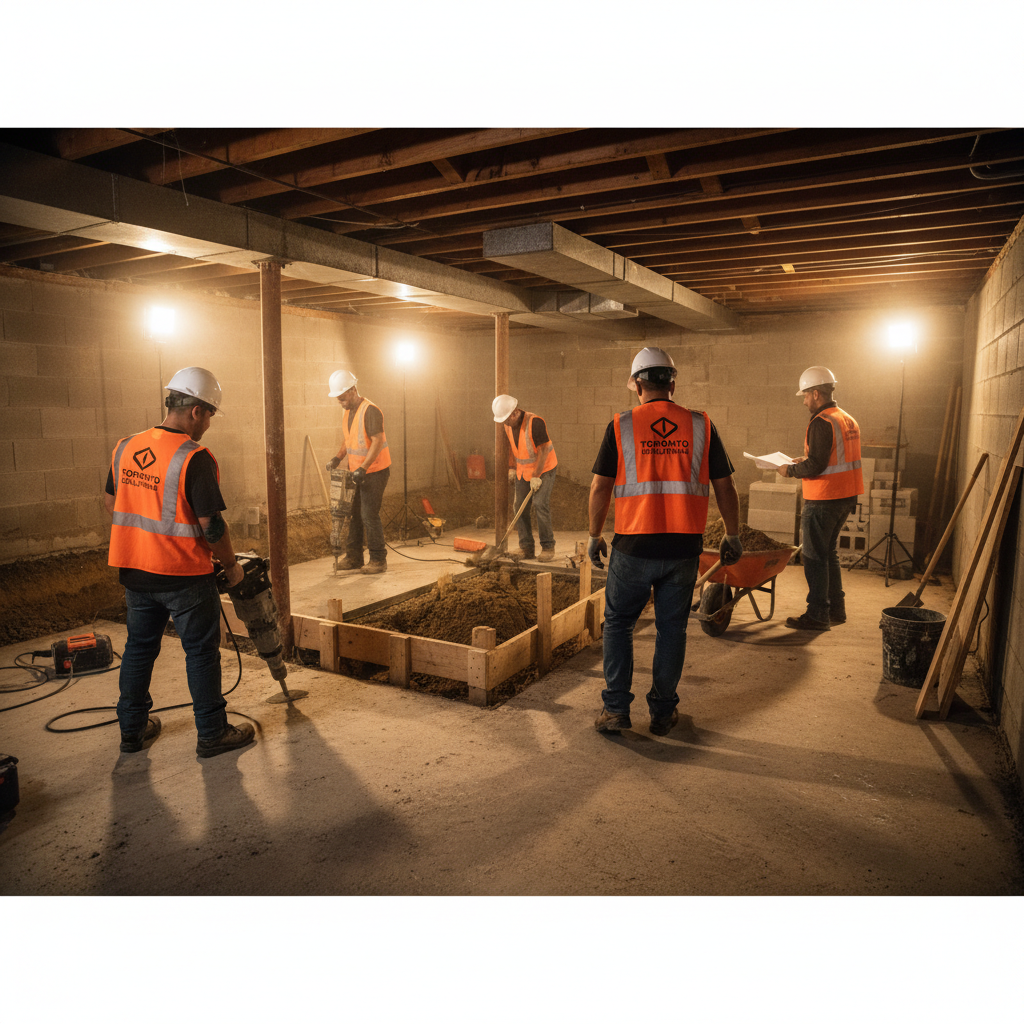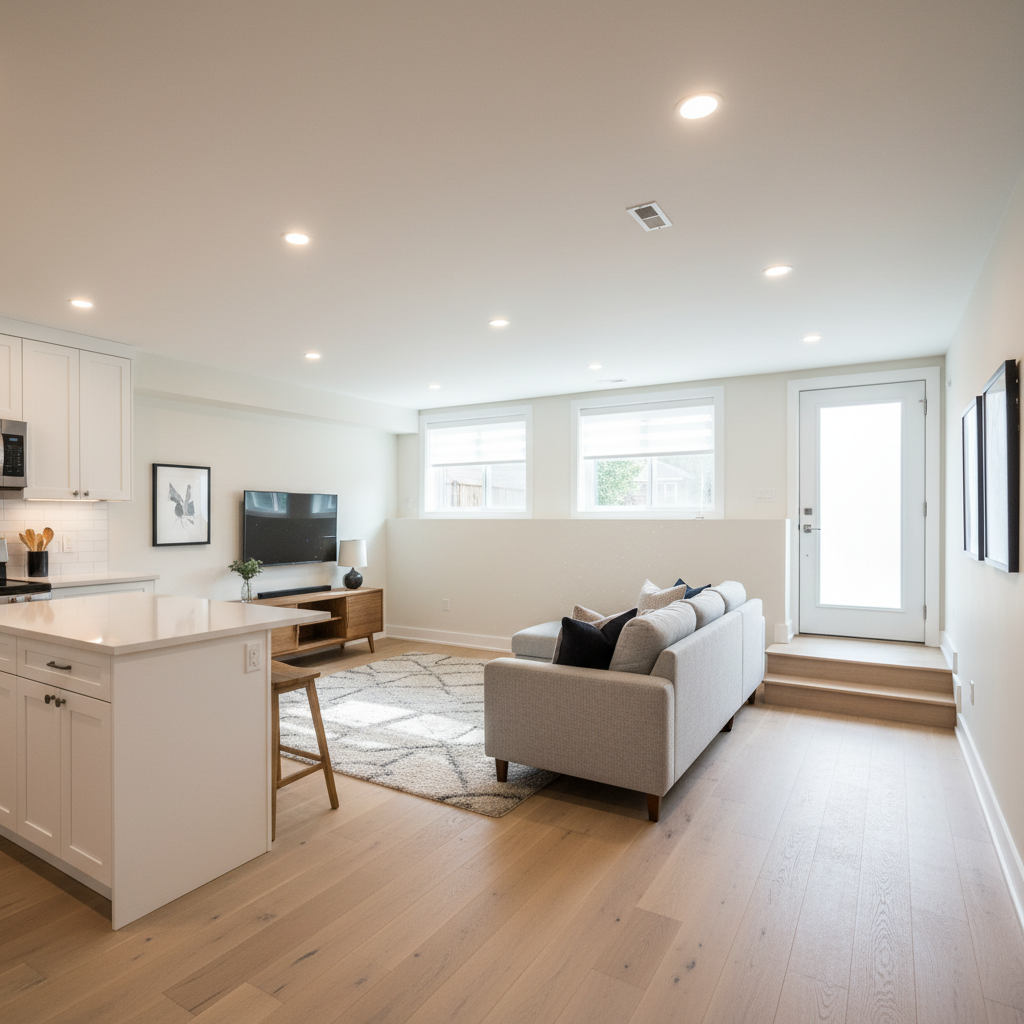
Toronto has a housing shortage. The city needs more rental units, and the province knows it. Since Ontario’s More Homes Built Faster Act came into force in 2022, the barriers to creating legal secondary suites in Toronto have been significantly reduced: parking requirements eliminated, zoning approvals simplified, and the financial case for basement apartments stronger than ever.
For Toronto homeowners with pre-1960 homes in neighbourhoods like Leslieville, Roncesvalles, the Annex, or North York, the single biggest obstacle to a legal basement apartment is almost always the ceiling height. And the solution to that obstacle is underpinning.
This guide covers the full project from start to rent check: why underpinning is required, the complete project sequence, combined costs, rental income potential, and the ROI timeline that makes this one of the most financially compelling renovations available in Toronto.
Why Low Ceiling Height Is the Core Problem
OBC Section 9.36 requires a minimum ceiling height of 1.95 metres (6 feet 5 inches) in all habitable rooms of a secondary suite, measured from finished floor to lowest obstruction.
Toronto homes built before 1960 routinely have raw basement heights of 6’0” to 6’8” (1.83m to 2.03m). After accounting for a finished floor (1.5 to 2 inches) and a drywall ceiling (1 to 1.5 inches), the effective finished height drops to approximately 5’9” to 6’4” (1.75m to 1.93m).
That means the majority of pre-1960 Toronto homes fail to meet the secondary suite ceiling height requirement by anywhere from 2 to 8 inches, and no amount of creative design or material choices can resolve a physical dimension shortfall.
Underpinning solves this definitively. By lowering the basement floor by 12 to 24 inches (300mm to 600mm), the effective ceiling height after finishes typically reaches 7’6” to 8’0” (2.3m to 2.4m), well above the 1.95m minimum and giving the suite a comfortable, above-grade feel.
When Underpinning Is and Is Not Required for a Suite
Underpinning is required when the existing basement height after finishes will not meet 1.95m. It is NOT required when:
- The existing basement has a raw height of 7’0” or better (common in homes built after 1960)
- A bench footing approach achieves the necessary height in the central living area without full perimeter underpinning
Before committing to underpinning, have a contractor take actual measurements at multiple points. Basements in the same neighbourhood and era vary, and yours may be taller than the typical range for its decade. Some North York bungalows from the late 1950s have raw heights of 6’10” to 7’0” that, with an efficient floor and ceiling finish, may just meet the secondary suite minimum without structural work.
The Complete Project Sequence
Creating a legal basement apartment through underpinning involves six distinct phases that must happen in order.
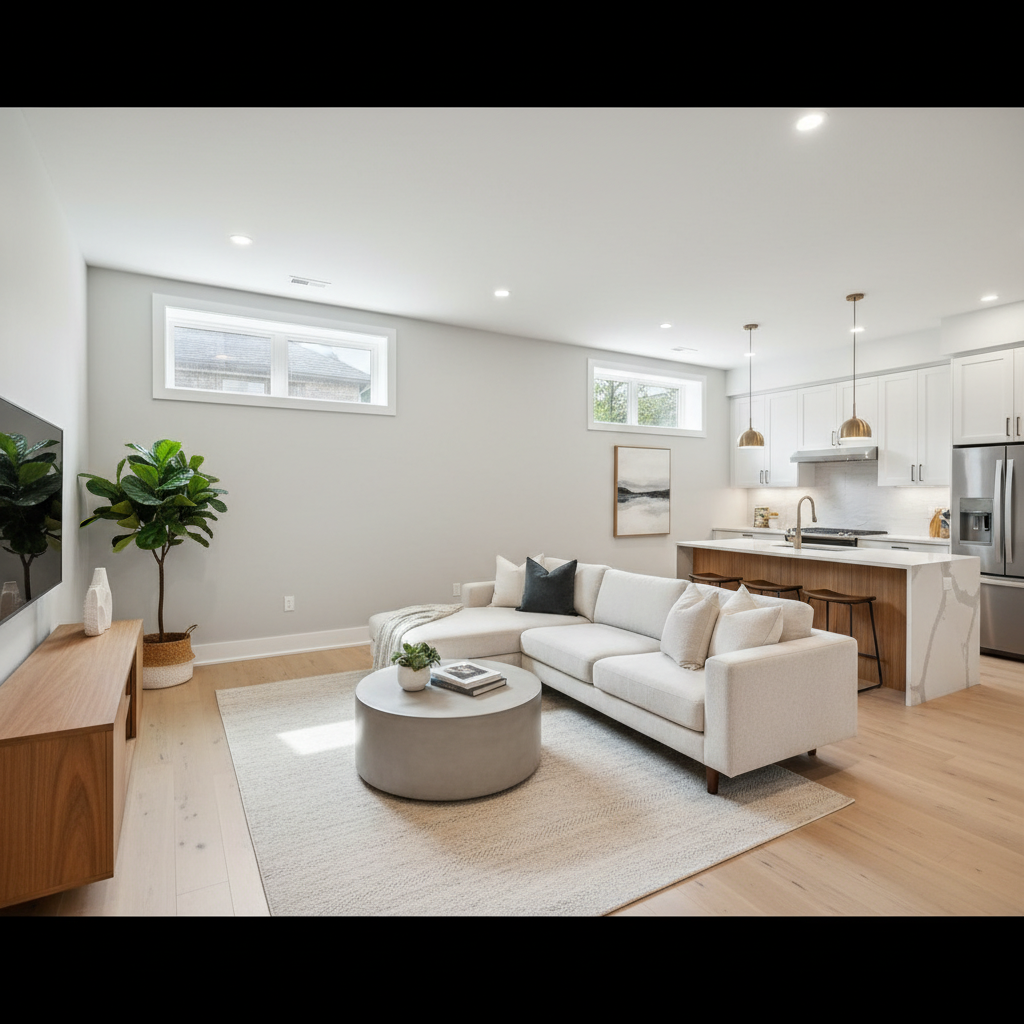
Phase 1: Assessment and Design (2 to 4 Weeks)
A structural engineer and experienced contractor assess the existing foundation, measure ceiling heights, review soil conditions, and develop a preliminary project scope. This phase also includes early decisions about the suite layout: number of bedrooms, bathroom location, kitchen configuration, separate entrance design.
Getting the layout right at this phase is critical because bathroom drain locations, the separate entrance position, and egress window locations are all determined now and have implications for permit drawings and cost.
Phase 2: Permits (8 to 16 Weeks)
The permit package for a combined underpinning and secondary suite project is comprehensive:
- Structural drawings for underpinning (signed and sealed by P.Eng.)
- Architectural drawings for the secondary suite (room layout, ceiling heights, egress windows, fire separation, separate entrance)
- Plumbing drawings (below-slab drain rough-ins, bathroom, kitchen)
The City of Toronto reviews this combined package. Plan review for a complex combined permit of this type currently takes 8 to 14 weeks.
Learn more about the building permit process for underpinning.
Phase 3: Underpinning Construction (4 to 8 Weeks)
With the permit in hand, underpinning begins. The pin-section excavation and pour sequence proceeds as engineered, typically taking 3 to 8 weeks of active construction depending on the perimeter length and depth.
Key events during this phase:
- Footing inspections at each pin section before pour
- Below-slab plumbing rough-in by licensed plumber after footings are complete (before slab pour)
- Waterproofing drainage channel installation before slab pour
- New slab pour and initial cure period (28 days minimum)
Phase 4: Basement Finishing (8 to 14 Weeks)
After the slab is cured and the structural permit phase is complete, finishing begins. The finishing scope for a legal one-bedroom secondary suite includes:
- Rough framing, electrical (ESA rough-in inspection required), plumbing above-slab, HVAC
- Insulation (closed-cell spray foam on below-grade walls)
- Fire-rated drywall assembly between suite and main floor
- Egress window installation (if not already done during underpinning)
- Separate entrance construction
- Kitchen installation (full kitchen with sink, range, refrigerator)
- Bathroom tile and fixture installation
- Flooring (LVP recommended for moisture resistance)
- Finishes, trim, paint
Phase 5: Inspections and Permit Close-Out (2 to 4 Weeks)
Final inspections required before occupancy:
- Building permit final inspection
- ESA electrical final inspection
- Plumbing final inspection
All three must be passed and closed before the suite can be registered.
Phase 6: Suite Registration (1 to 3 Weeks)
Registration with the City of Toronto through the Multi-Tenant Housing Registry. This requires uploading permit close-out documentation and paying a registration fee. After registration is confirmed, the suite is legally rentable.
Complete Project Timeline
| Phase | Duration |
|---|---|
| Assessment and design | 2 to 4 weeks |
| Permit preparation and review | 8 to 16 weeks |
| Underpinning construction | 4 to 8 weeks |
| Slab cure | 4 weeks minimum |
| Finishing construction | 8 to 14 weeks |
| Final inspections and close-out | 2 to 4 weeks |
| Suite registration | 1 to 3 weeks |
| Total: assessment to first rent | 5 to 8 months |
Combined Project Cost Breakdown
| Scope Item | Typical Cost Range |
|---|---|
| Structural engineering and drawings | $3,000 to $6,000 |
| Building permit | $3,000 to $5,000 |
| Underpinning (structural) | $50,000 to $120,000 |
| Interior waterproofing (during underpinning) | $9,000 to $15,000 |
| Below-slab plumbing rough-in | $3,000 to $8,000 |
| Basement finishing (basic to mid-range suite, 700 to 1,000 sqft) | $50,000 to $90,000 |
| Egress window installation | $2,500 to $5,000 |
| Separate entrance (door and stairwell) | $5,000 to $18,000 |
| Total | $125,500 to $267,000 |
For a typical Toronto detached home with a 1,000 sqft basement and underpinning depth of 18 inches, the all-in cost typically falls in the $130,000 to $180,000 range for a complete, permitted, registered one-bedroom legal suite.
Return on Investment Analysis
At $2,000 per month in rental income:
| Scenario | Total Project Cost | Annual Rental Income | Simple Payback |
|---|---|---|---|
| Suite only (no underpinning needed) | $60,000 to $80,000 | $24,000 | 2.5 to 3.5 years |
| Incremental suite cost over basic underpinning | $60,000 to $80,000 | $24,000 | 2.5 to 3.5 years |
| Full project cost (including underpinning) | $130,000 to $180,000 | $24,000 | 5.5 to 7.5 years |
The full project payback period of 5.5 to 7.5 years does not capture the home value increase from the underpinned, finished basement and legal suite, which is a separate and significant additional return.
Toronto’s Housing Context
Toronto’s housing shortage is severe and structural. Rental vacancy rates have been near 1 percent for several years. Demand for affordable basement apartments from students, young professionals, and newcomers consistently exceeds supply. The city’s explicit policy direction (Bill 23, the Secondary Suite program) is to encourage more homeowners to create legal suites.
For homeowners with low-ceiling pre-1960 basements, underpinning to create a legal suite is one of the few renovations that pays for itself in cash flow while also permanently increasing the property’s market value.
For further context, read our guides on Basement Finishing After Underpinning and What to Expect During Basement Underpinning.
Ready to explore whether your home is a candidate for this project? Contact our team for an honest assessment of the ceiling height requirement, a realistic cost range, and the full project sequence from permit and drawings through suite registration.