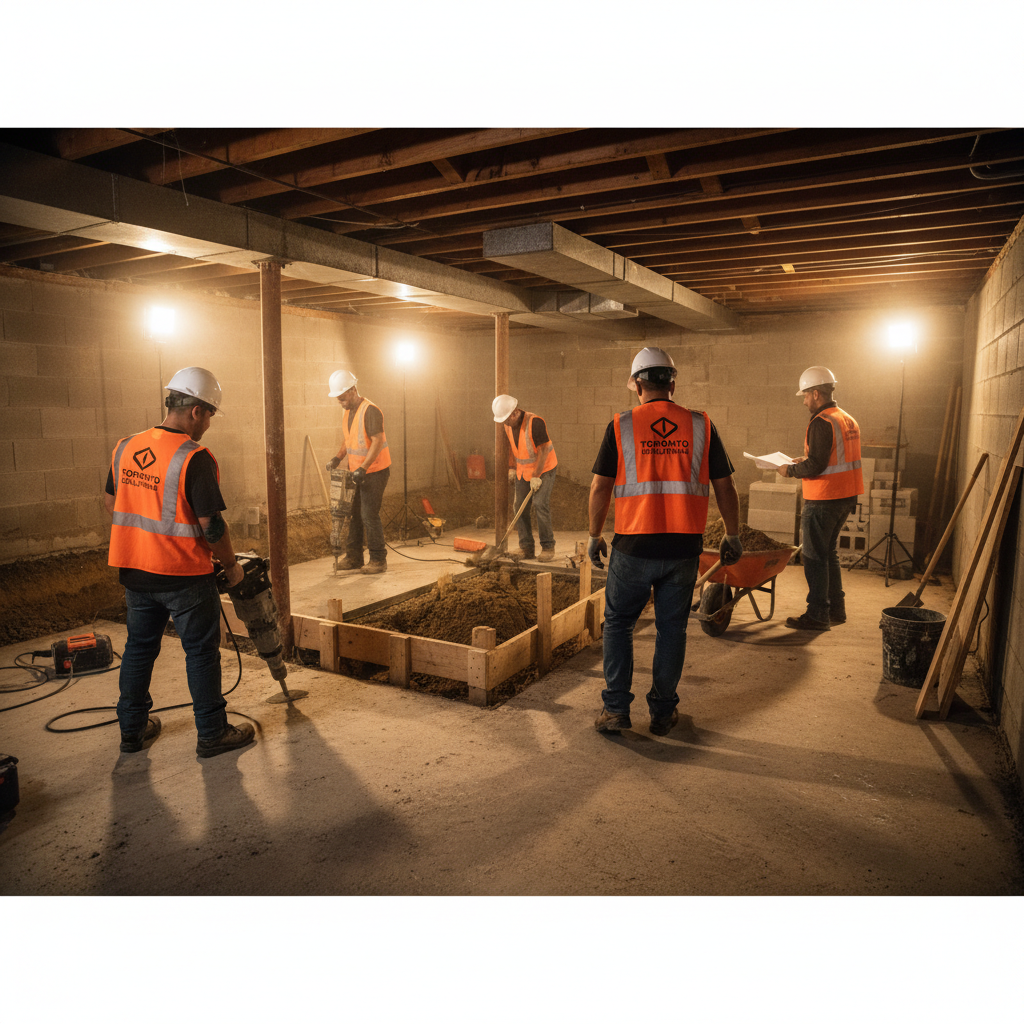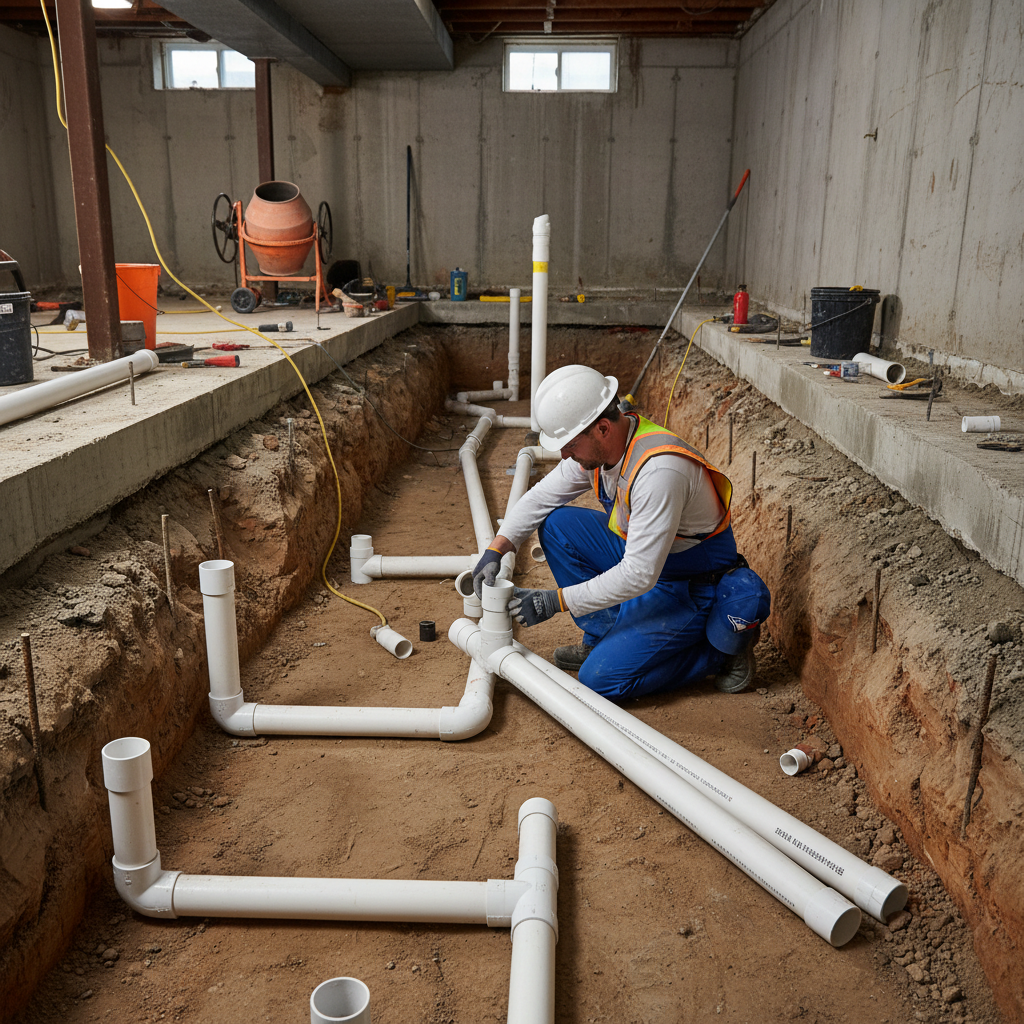
When an underpinning contractor breaks up the concrete slab and exposes the soil beneath your Toronto basement, they have created something rare and valuable: full access to everything below the slab. Every drain line, every cleanout, every connection point that is normally buried under 4 inches of concrete and 3 feet of fill is now exposed and accessible.
This window closes when the new slab is poured. After that point, any plumbing work below the slab means concrete cutting, excavation, new concrete, and all the mess and cost of working in a finished space. The cost of adding a bathroom drain after the slab is poured is 2x to 3x the incremental cost of adding it during underpinning.
This guide explains what plumbing work makes sense to add during underpinning, how the sequencing works, and what the cost and consequence comparison looks like for each item.
Why Below-Slab Access Is So Valuable
A typical Toronto home’s basement drain system includes a main sanitary drain (4-inch cast iron or PVC) running under the slab to the city connection at the street, floor drains in the laundry area, a connection to the main stack (the vertical pipe running through the house), and in many cases a cleanout access point.
None of this is visible or accessible without opening the slab. The only way to add new connections, replace deteriorated pipe, or install new drain rough-ins is to cut the concrete, excavate the fill below it, do the work, and pour new concrete.
During underpinning, the concrete is already removed. The excavation is already done. The crew is already in the space. Adding plumbing work at this stage costs the additional labour of a plumber, the cost of pipe and fittings, and the cost of a plumbing permit. It does not cost the concrete cutting, the excavation, or the soil disposal that would be required if done separately.
Work That Should Be Assessed for Every Underpinning Project
Main Drain Inspection and Potential Replacement
Toronto homes built before 1960 were originally plumbed with cast iron main drains. Cast iron has a service life of 50 to 80 years. A home built in 1945 now has a drain that is past its expected service life. Common failure modes include:
- Internal corrosion reducing pipe diameter (causing slow drains and backup risk)
- Root intrusion through bell joints
- Pipe collapse or sag causing drain backup
- Failing gaskets at bell joints allowing soil infiltration
During the underpinning assessment, a camera inspection of the main drain from the cleanout or stack connection can confirm the current condition of the pipe. This is a $300 to $600 service that can save you from a $15,000 emergency repair later.
Cost comparison:
- Replacing main drain during underpinning (while slab is open): $3,000 to $8,000
- Emergency main drain replacement after the new slab is poured: $8,000 to $18,000 (includes concrete cutting and repair)
For homes built before 1960, this is almost always worth doing. For homes built after 1970 with PVC drains, camera inspection may confirm the drain is in good condition and replacement is not necessary.
Bathroom Floor Drain Rough-Ins
If the finished basement will include a bathroom (which it almost certainly should for a secondary suite or a well-used rec room), the below-slab portion of the bathroom plumbing must be installed before the slab is poured.
The below-slab bathroom rough-in includes:
- Toilet rough-in: The 3-inch drain connection and soil stack connection, typically roughed to 12 inches from the finished wall centerline
- Shower drain: A 2-inch drain stub at the shower floor location
- Floor drain: A 2-inch floor drain at the lowest point of the bathroom floor
- Vent connection: Connection from the drain system to the vent stack
Finalizing the bathroom location during the design phase (before the slab is poured) is essential. Moving a toilet rough-in after the slab is poured means cutting concrete, which adds $1,500 to $3,000 per drain location.
Backwater Valve Installation
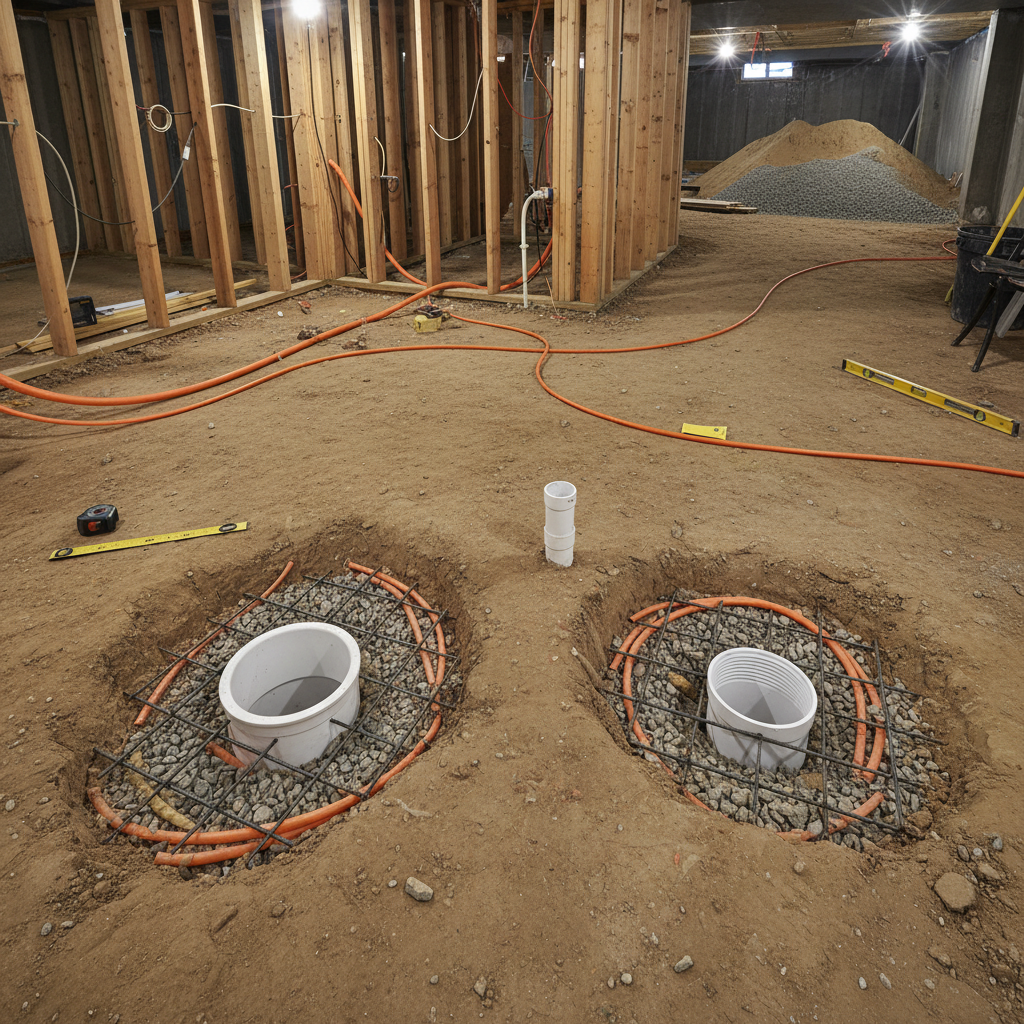
A backwater valve is a one-way valve installed on the main drain line that prevents city sewer backpressure from sending sewage into the basement. It is most important for pre-1980 Toronto homes on combined sewer systems.
During underpinning, the main drain is already accessible. Installing a backwater valve at this stage costs approximately $1,500 to $2,500 in additional labour and materials. Installing it independently (requiring concrete cutting) runs $3,500 to $5,500.
The City of Toronto Basement Flooding Protection Subsidy Program provides up to $1,750 toward a permitted backwater valve installation, which offsets a significant portion of this cost.
Laundry Drain and Floor Drain
If the laundry area is being relocated as part of the basement redesign, now is the time to rough in the laundry drain. Similarly, adding a new floor drain in the mechanical room or utility area is trivially easy during underpinning and would require significant concrete work afterward.
Supply Line Repositioning
While the floor is open, any repositioning of water supply lines (hot and cold copper) that are inconveniently routed or in the way of the planned basement layout can be done before the slab. This is a smaller item but one that is much simpler with full access.
Plumbing Rough-In Sequencing
The critical sequencing rule: all below-slab plumbing must be installed and inspected before the new slab is poured.
The typical sequence during combined underpinning and plumbing:
- Underpinning excavation and footing pours proceed per the pin-section sequence
- After the last footing section cures, the licensed plumber installs all below-slab drain rough-ins (main drain, bathroom stubs, backwater valve)
- Plumbing rough-in inspection by the City is scheduled and completed
- After the inspection is passed, the drainage channel for waterproofing is installed (if waterproofing is also in scope)
- Gravel bed, drain channel, and reinforcing for the slab are placed
- New slab is poured over all below-slab systems
Any changes after the slab pour require concrete cutting. This is why the design conversation must happen before underpinning begins, not after.
Cost of Combined Plumbing During Underpinning
| Plumbing Item | Cost During Underpinning | Cost After Slab | Savings |
|---|---|---|---|
| Main drain replacement | $3,000 to $8,000 | $8,000 to $18,000 | $5,000 to $10,000 |
| Bathroom rough-in (3 connections) | $3,000 to $6,000 | $6,000 to $12,000 | $3,000 to $6,000 |
| Backwater valve | $1,500 to $2,500 | $3,500 to $5,500 | $2,000 to $3,000 |
| Floor drain addition | $500 to $1,200 | $1,500 to $3,500 | $1,000 to $2,300 |
For a project that combines main drain replacement, one bathroom rough-in, and a backwater valve, the total savings from doing the work during underpinning rather than afterward range from $10,000 to $19,000.
Permit Requirements
All plumbing work during underpinning requires a plumbing permit separate from the building permit for the structural work. Your licensed plumber pulls this permit and it covers all drain modifications and new connections.
The plumbing inspection must be passed before the slab is poured. Schedule the inspection as soon as the rough-in is complete; do not pour concrete over uninspected plumbing.
A licensed plumber is required for all drain work that connects to the city sewer system. This is not optional and not a DIY scope.
For further context, read our guides on Waterproofing During Underpinning and What to Expect During Basement Underpinning.
Planning an underpinning project and want to include the plumbing work in the same scope? Contact our team and we will coordinate the plumbing, structural, and waterproofing scopes into a single efficiently sequenced project.