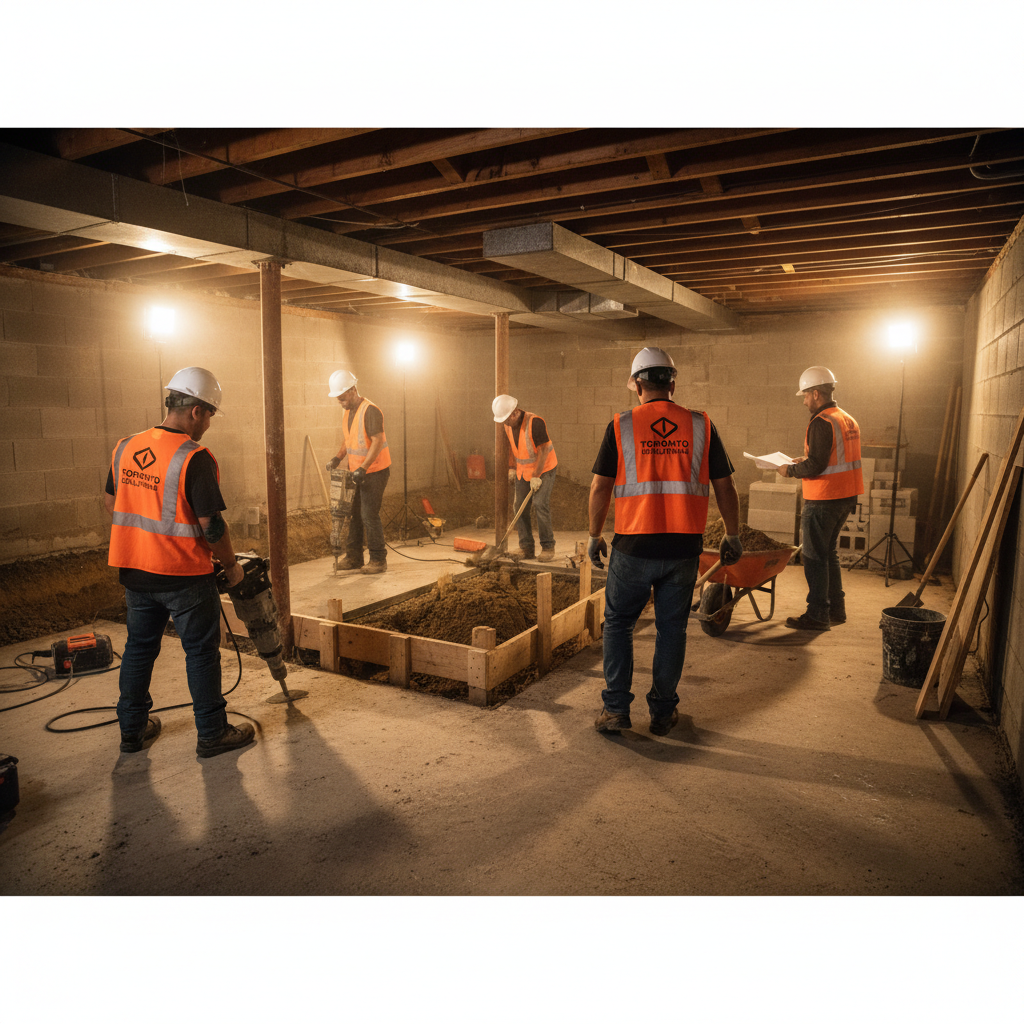
When homeowners first learn what basement underpinning involves, the natural reaction is concern. You are excavating underneath the existing foundation of a house that people are living in. You are removing the soil that the footing currently sits on. That sounds dangerous.
The honest answer is: properly engineered and permitted underpinning using the standard pin-section method is a mature, well-understood structural process with an excellent safety record. Underpinning is performed on thousands of Toronto homes every year without incident. Understanding why it is safe helps you ask the right questions when choosing a contractor and gives you confidence in the process when construction begins.
Why Underpinning Does Not Cause Collapse
The key to underpinning safety is the pin-section method, which is the standard engineered approach used by every reputable contractor in Toronto.
The fundamental principle: never unsupport more than a small section of the footing at one time.
How the Pin-Section Method Works
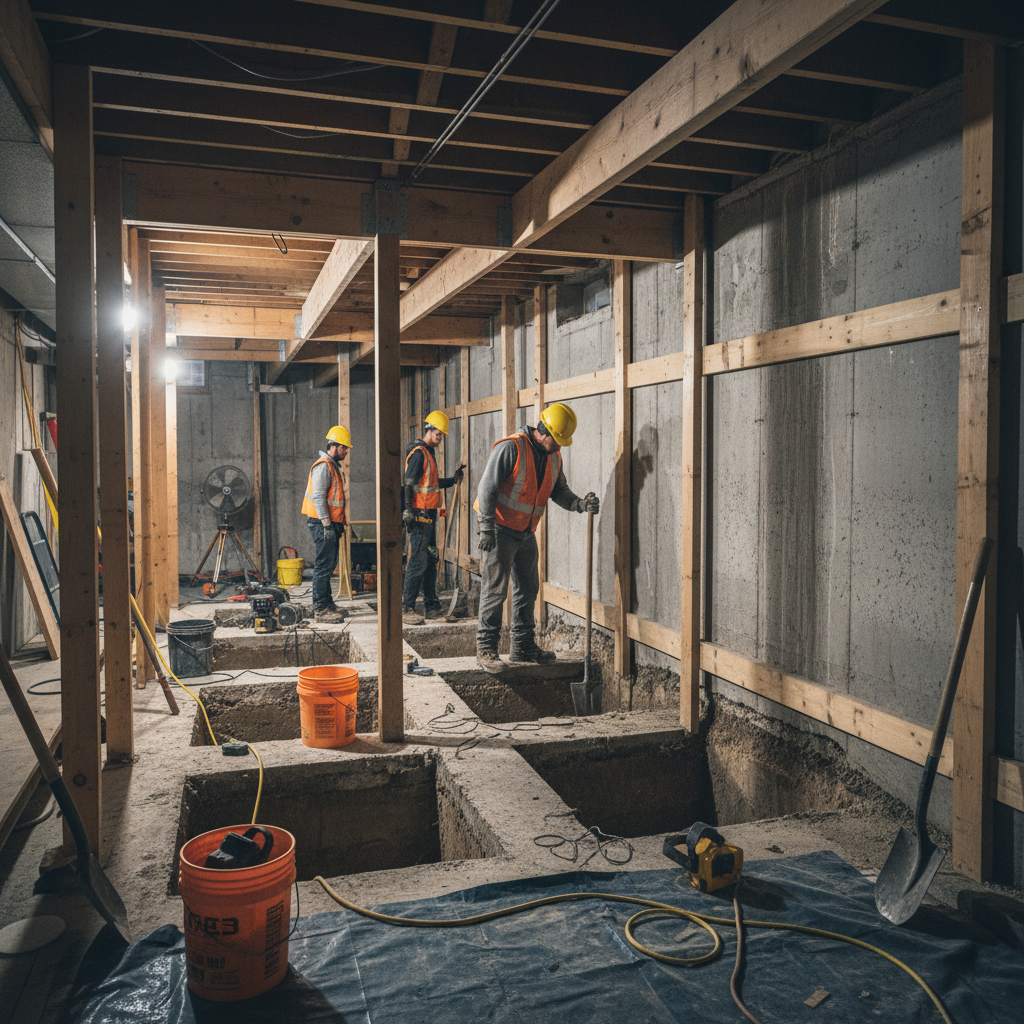
The existing foundation perimeter is divided into sections on the engineer’s drawings. Each section is typically 3 to 6 feet wide (900mm to 1800mm). The engineer specifies the maximum section width based on the existing footing’s bearing capacity and the soil type.
The underpinning sequence proceeds as follows:
- Section 1 is excavated below the existing footing while all adjacent sections remain fully supported
- The new deeper footing is formed and poured in Section 1
- Section 1’s new concrete cures for a minimum of 3 days (typically 7 days) before the adjacent section is excavated
- Only when Section 1 is confirmed cured does Section 2 begin excavation
- This alternating pattern continues until all sections are complete
The sequence is specifically engineered to ensure that at no point are two adjacent sections unsupported simultaneously. Every section that is being excavated has cured, solid concrete on both sides providing lateral support.
What Can Go Wrong and How the System Prevents It
The theoretical risks in underpinning are footing settlement during excavation (if too large a section is open at once) and soil collapse into the excavation (if the soil is unstable or if excavation is too wide).
The pin-section method addresses both: small sections mean the unsupported length is short, limiting bending stress on the footing above. The engineer’s soil bearing assessment confirms whether the existing footing can span across each open section without settling.
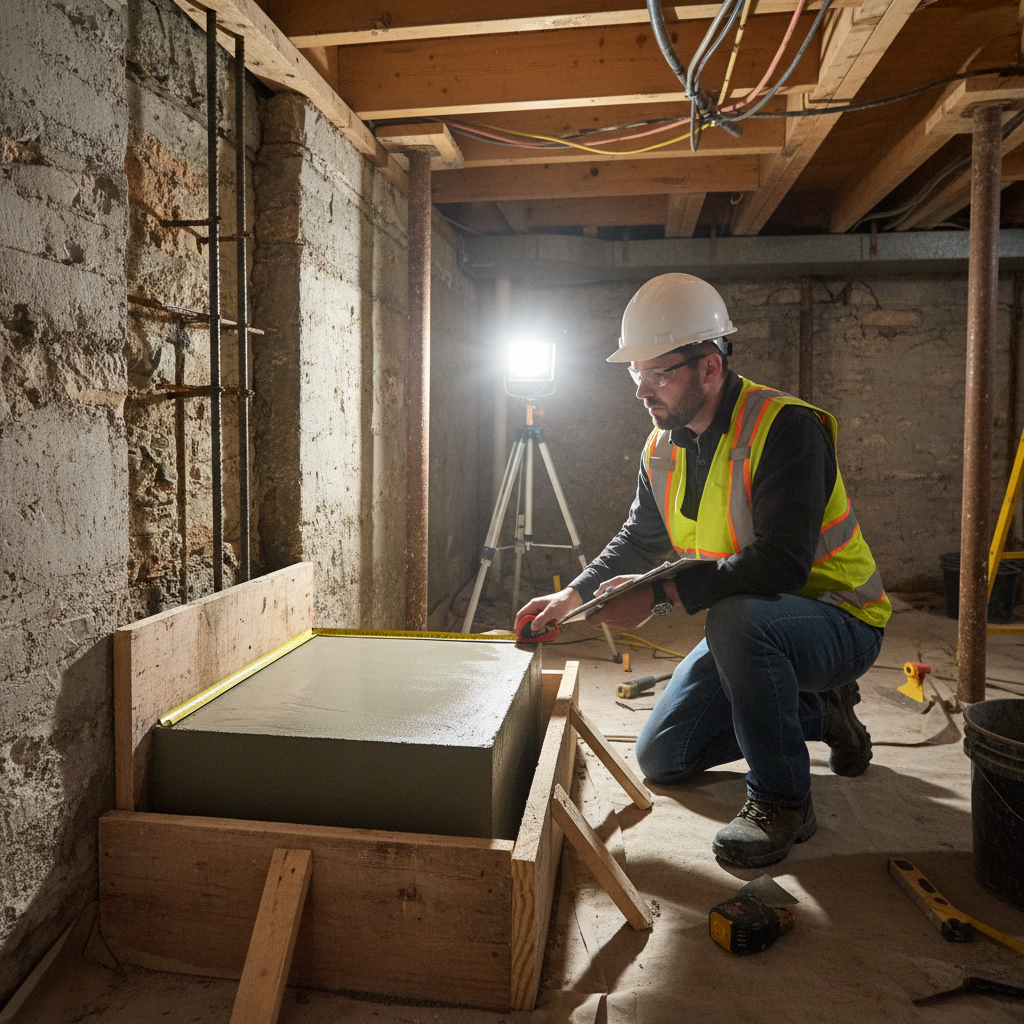
The City of Toronto inspection system provides an additional safety backstop: the inspector must examine each excavated section before the concrete is poured. If the footing or soil conditions look different from the engineer’s assumptions, the pour does not happen until the engineer is consulted. This inspection requirement means two qualified professionals are reviewing the critical moment in the process.
Party Wall Safety in Semi-Detached Homes
Approximately 40 percent of Toronto’s housing stock is semi-detached, and semi-detached homes share a party wall that is part of both homes’ structural systems. Underpinning a semi-detached home introduces specific considerations around the party wall.
The sections of footing that are closest to the party wall are the most sensitive. The sequence plan always addresses these sections last, after all other sections have been poured and have achieved significant strength. By the time the party wall sections are excavated, the rest of the new footing is solid and providing perimeter support.
The engineer’s drawings specify the minimum distance from the party wall that excavation can reach. In most cases, this is a very small section, or the party wall footing sections are treated as a shared responsibility requiring consent and coordination with the neighbor.
For the neighbor’s home to be safe during the underpinning, the party wall itself must remain continuously supported. Experienced underpinning contractors in Toronto have extensive experience with party wall conditions and will not deviate from the engineered sequence.
A Party Wall Agreement (a written document between the two homeowners) is required before any semi-detached underpinning project begins. This agreement documents the work scope, the engineer’s specifications, and the responsibilities of each party. Learn more about underpinning semi-detached homes.
The Role of the Structural Engineer
A licensed structural engineer (P.Eng., licensed in Ontario) is not optional for underpinning projects in Toronto. The engineer is responsible for:
- Assessing the existing footing dimensions and soil bearing capacity
- Specifying the maximum section size for the pin sequence
- Determining the depth to which the new footing must be poured
- Designing the new slab reinforcement
- Sealing the permit drawings
- Being available for consultation if conditions during excavation differ from assumptions
The engineer’s stamp on the drawings and the City’s building permit together create a safety chain. The contractor must follow the engineer’s sequence. The inspector must verify compliance at each hold point. No single party can deviate from this system without breaking the chain.
What Homeowners Should Do During Construction
Once underpinning is underway, your primary responsibility is to stay out of the excavated areas. The open pin sections are active construction zones where falls or disturbance of the formwork are genuine risks.
Safe practices during underpinning:
- Do not enter the basement during active excavation hours without the contractor’s knowledge
- Keep children and pets out of the basement entirely during construction
- Do not disturb or place weight near any section that has active formwork or fresh concrete
- If you notice anything that concerns you (a crack that appears upstairs, a door that suddenly will not close, unusual movement), notify the contractor and engineer immediately and suspend work until it is assessed
Upstairs in the home, normal activities can continue throughout the project. Underpinning done correctly does not affect the main floor.
Insurance During Construction
Before underpinning begins, contact your home insurer to confirm your policy remains in force during construction. Some policies have exclusions for work that alters the structural foundation. Your insurer may require a copy of the building permit and confirmation that a licensed engineer is overseeing the work.
The contractor should carry general liability insurance and WSIB coverage for their workers. Request certificates of both before work begins.
How Underpinning Safety Compares to Other Structural Renovations
Basement underpinning, done properly, is not dramatically riskier than other major structural renovations. Removing a load-bearing wall, for example, requires temporary shoring that supports the structure while the new beam is installed, which is conceptually similar to the pin-section method. Both rely on sequenced temporary support and engineered specifications.
What makes underpinning get more attention is the scale of the excavation and the fact that the entire foundation is involved. But the engineering fundamentals are well-established, and Toronto’s permitting system is specifically designed to verify compliance at the most critical moments.
For further context, read our guides on Underpinning Semi-Detached Homes and City of Toronto Building Permit for Underpinning.
Ready to discuss an underpinning project with a team that takes safety as seriously as you do? Contact us for an assessment with a licensed structural engineer and full permit and engineering process from day one.